|
Colt Firearms Collector |
by Dave Campbell - Thursday, April 8, 2021 NRA
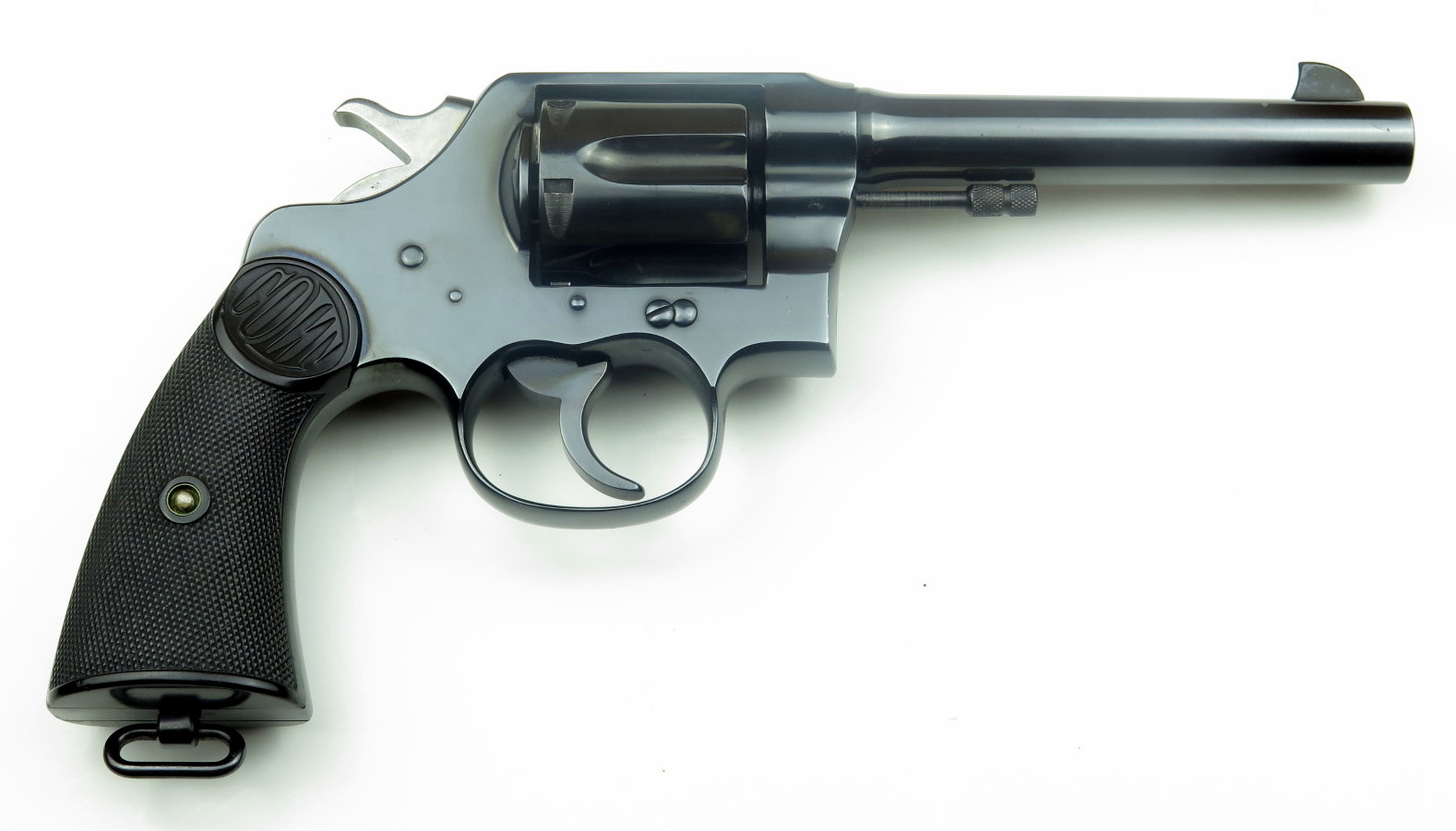
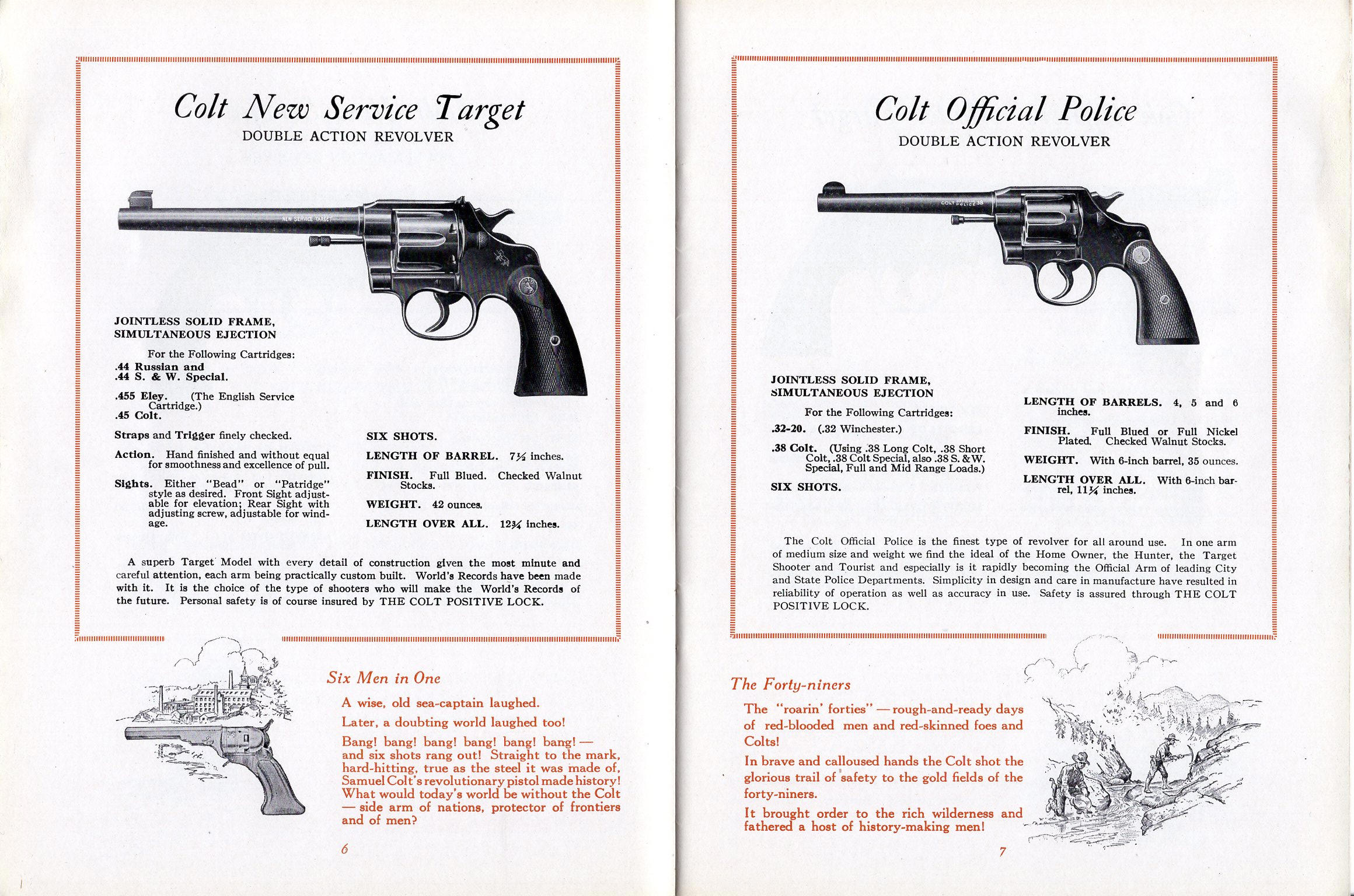
As shown in the Colt 1928 catalog and an example from this collection
|
As early as 1857, Colt was
working on the concept of a double-action revolver. The company even
patented a design for a trigger-cocking revolver, but this design
never saw production. William Mason, a patternmaker and engineer at
Remington, patented a swing-out cylinder with a star-type ejector
operated by a rod in the center of the cylinder that ejected all of
the cases in the cylinder in 1865, patent number 51,117.
Mason later teamed up with Carl J. Ehbets to combine the
double-action revolver with a swing-out cylinder and integral
star-type ejector. Though he left Colt in 1882, Mason gets credit
for helping develop the Colt Model 1889 double-action revolver.
Shooters, lawmen and especially the Army were simply not satisfied
with the .38 Long Colt cartridge. A 150-gr. lead round-nose bullet
at 777 fps generates a paltry 210 ft.-lbs. of energy at the muzzle
and can't be depended upon to stop an assailant, be it a Moro
tribesman or a critter larger than a rabbit.
The New Service was an immediate hit. Backcountry travelers and law
officers liked the robust revolver and its hard-hitting cartridges.
By 1909, Colt had made some lockwork changes, replacing several of
the smaller leaf springs with coil springs, thus minimizing
breakages.
Because of the abject failure of the .38 Long Colt cartridge, and
the limited manufacturing capabilities in turning out the 1911
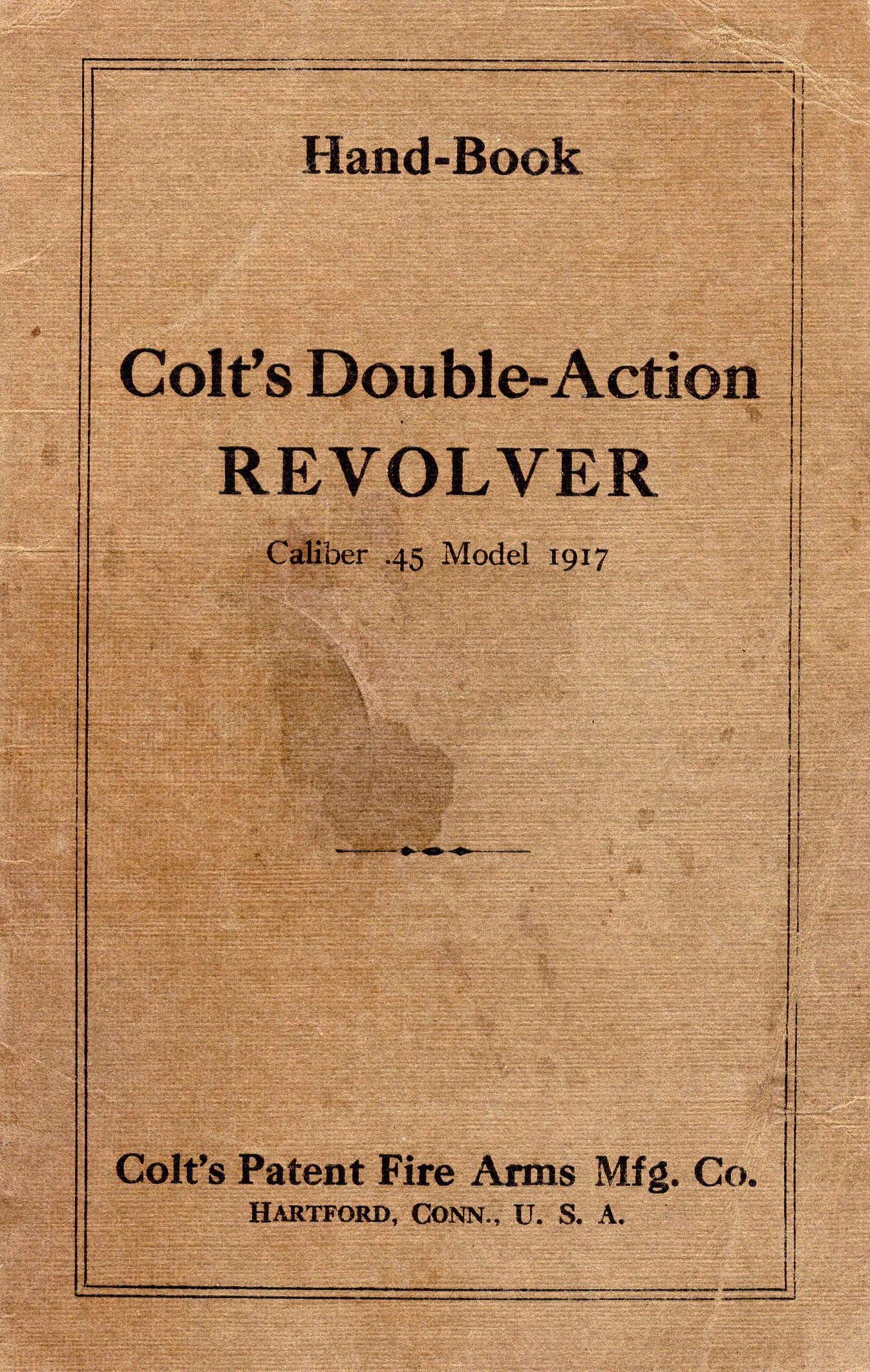
pistol, the New Service was drafted as a military pistol during
World War I. The Model 1917 Colt was similar to the 1917 Smith &
Wesson'a large-frame, fixed-sight revolver chambered in .45 ACP and
issued with half-moon clips to facilitate extraction from a
revolver's cylinder.
By 1918, Colt had sent 151,700 Model 1917 revolvers to the Army. Between the world wars the 1917 revolvers, 'both Smith & Wessons and Colts' lay in storage, though some were used by federal agencies, including the Border Patrol, Post Office, Justice and Treasury Departments. During this time, Colt dropped .44 Russian, .450 Boxer, and .476 Enfield chamberings and added the .38 Special. In 1936, the .357 Magnum was added to the New Service stable of cartridges.
The New Service found favor outside the United States. In Canada,
the New Service replaced the less-than-stellar Enfield Mk II
revolver. The hoplophobic Brits pined for New Service revolvers
during World War I, chambered for the proper British .455 Webley
cartridge, of course.
When World War II rolled around, as is typical, gun warehouses were raided for anything that shoots, and some 96,000-plus Model 1917 Colts were reconditioned and issued to military police and training units. Production of the New Service ceased in 1946, with about 357,000 revolvers made.
Colt also made a target version of the New Service. Manufactured
from 1900 until 1940, it featured adjustable front and rear sights
atop a flat-top frame and was chambered in .44 Special, .44 Russian,
.45 Colt, and .45ACP. Most were made with a 7.5" barrel, but a few
were assembled with 6" barrels. The trigger and back strap were
checkered on the target version.
Colt did not offer a shrouded ejector rod until the 1970s on any of its double-action revolvers. The New Service was Colt's only large-frame double-action revolver until the Anaconda was introduced in 1990. Like all vintage Colts, the New Service commands quite a premium to collectors of such art that shoots.
Return to Colt New Service Page
For the best experience, please view this Colt website with a format larger than a cell phone
|