|
Colt Firearms Collector |
1922
New York City
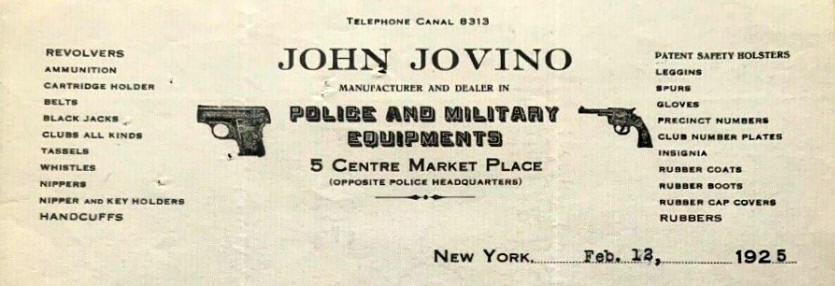
John Jovino gun store invoices
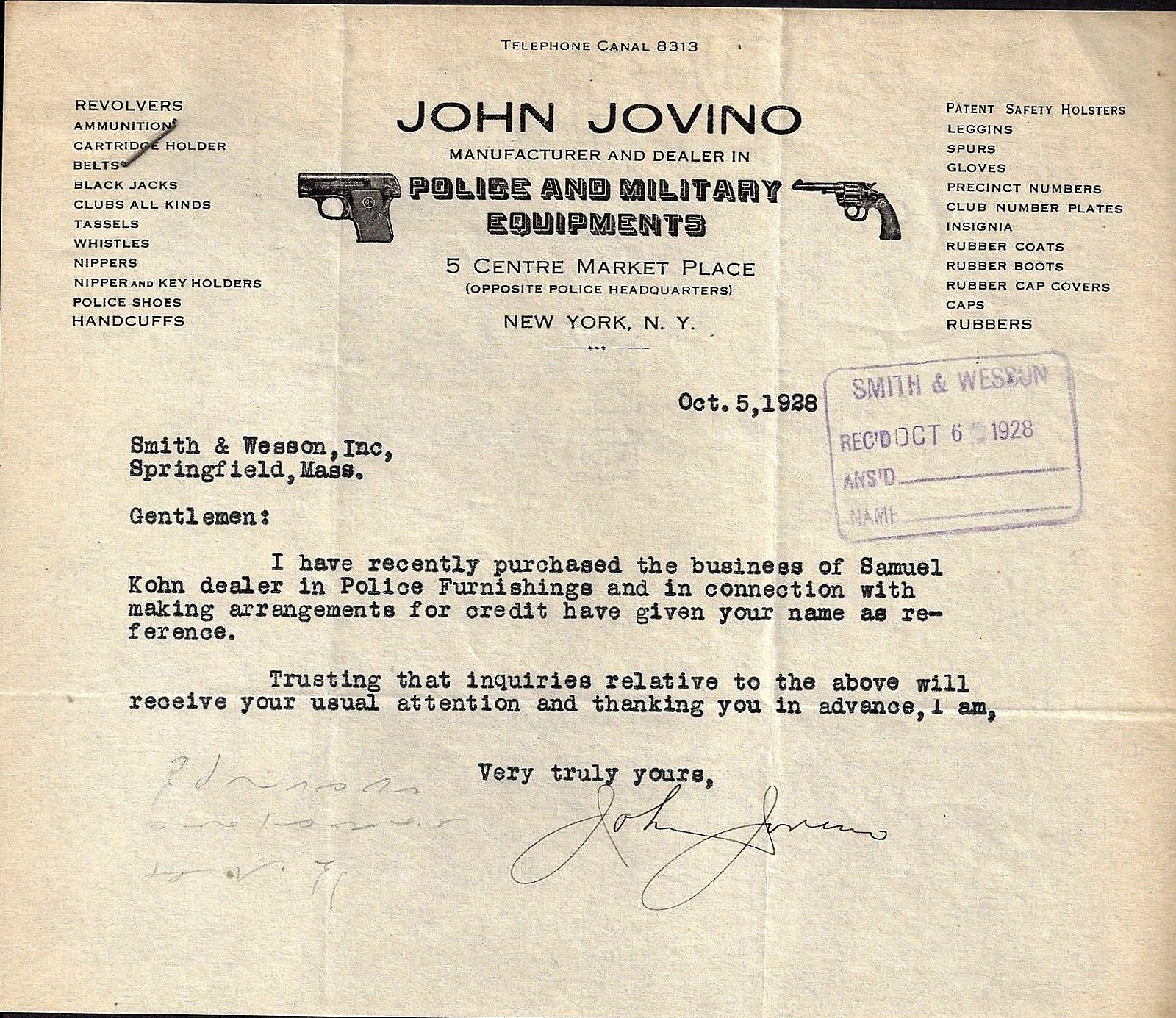
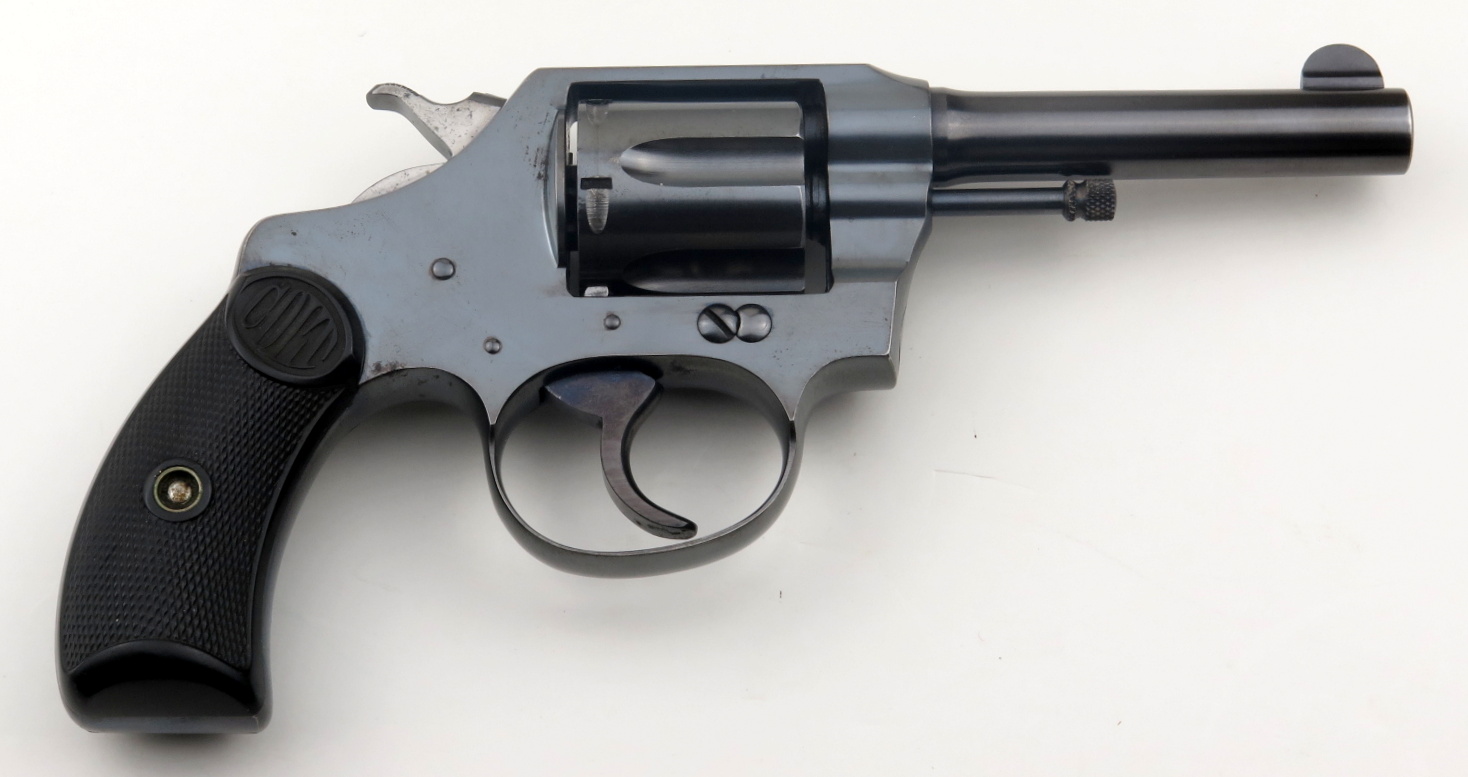
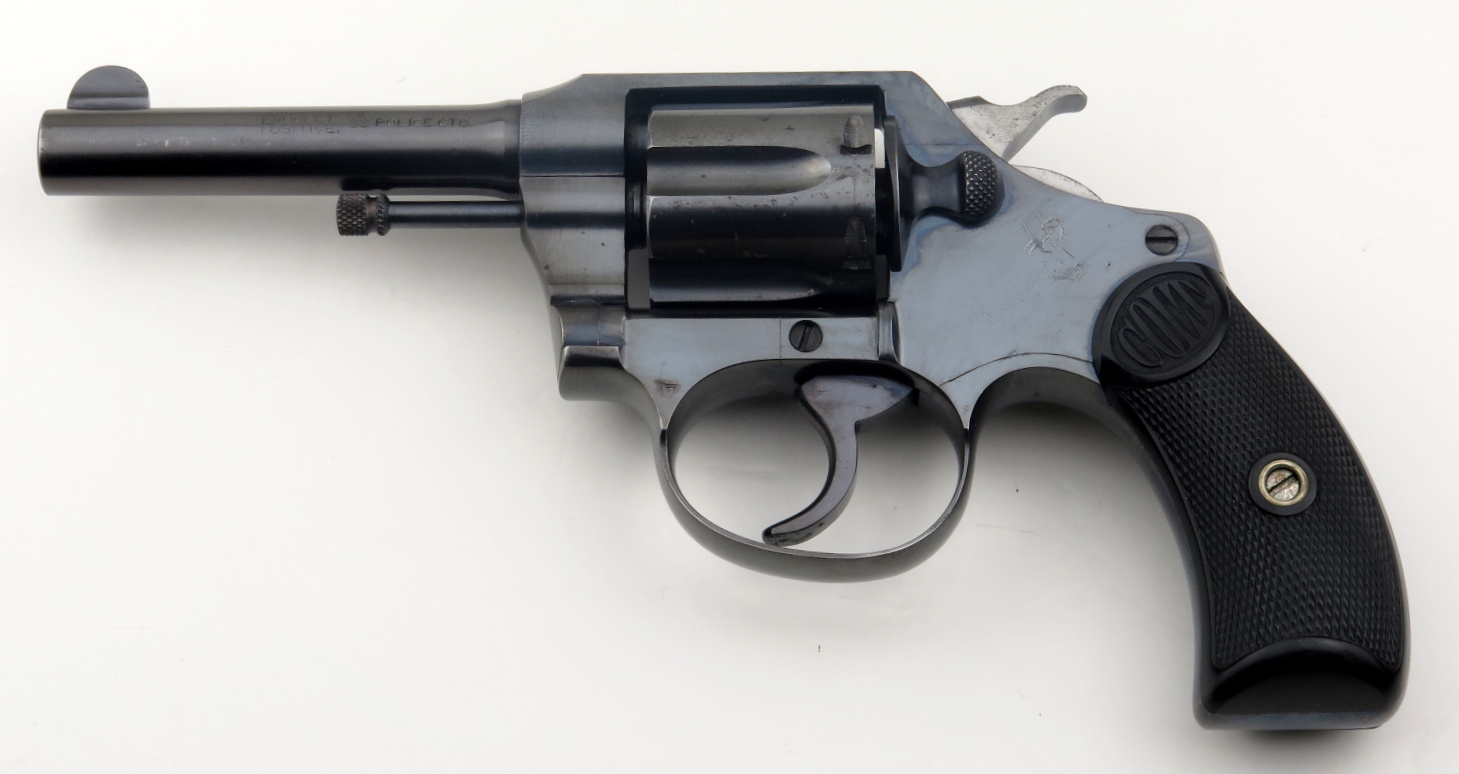
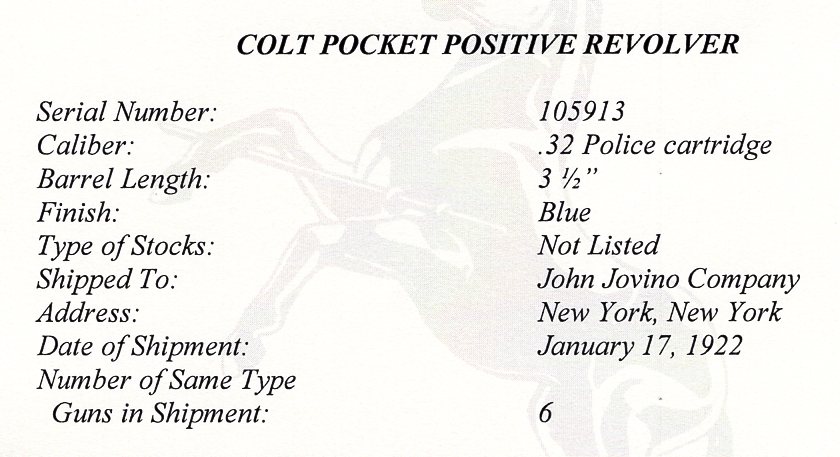
This Colt Pocket Positive revolver was shipped to:
The John Jovino Gun Shop in 1922
|
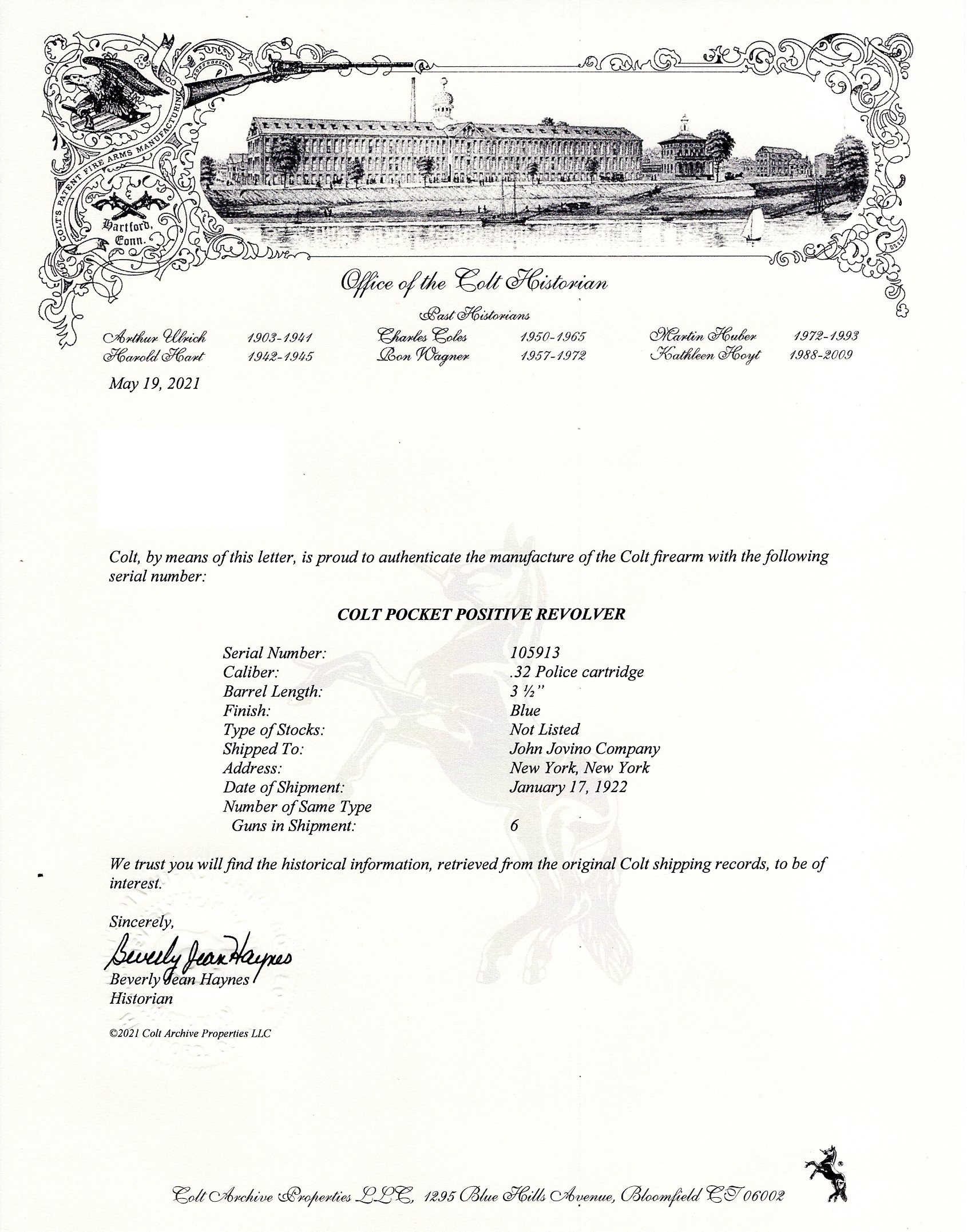
Purchased for this collection via GunBroker in 2000.This excellent condition .32 caliber Colt revolver is ?lady? size or small enough for concealed carry today. Below is the Colt factory letter showing to whom the gun was sold in 1922: The John Jovino Gun Shop in New York City. This is a story of a successful small gun shop in New York City with a history of mob customers and ownership.
Colt Firearms Archive factory letter May 19, 2021
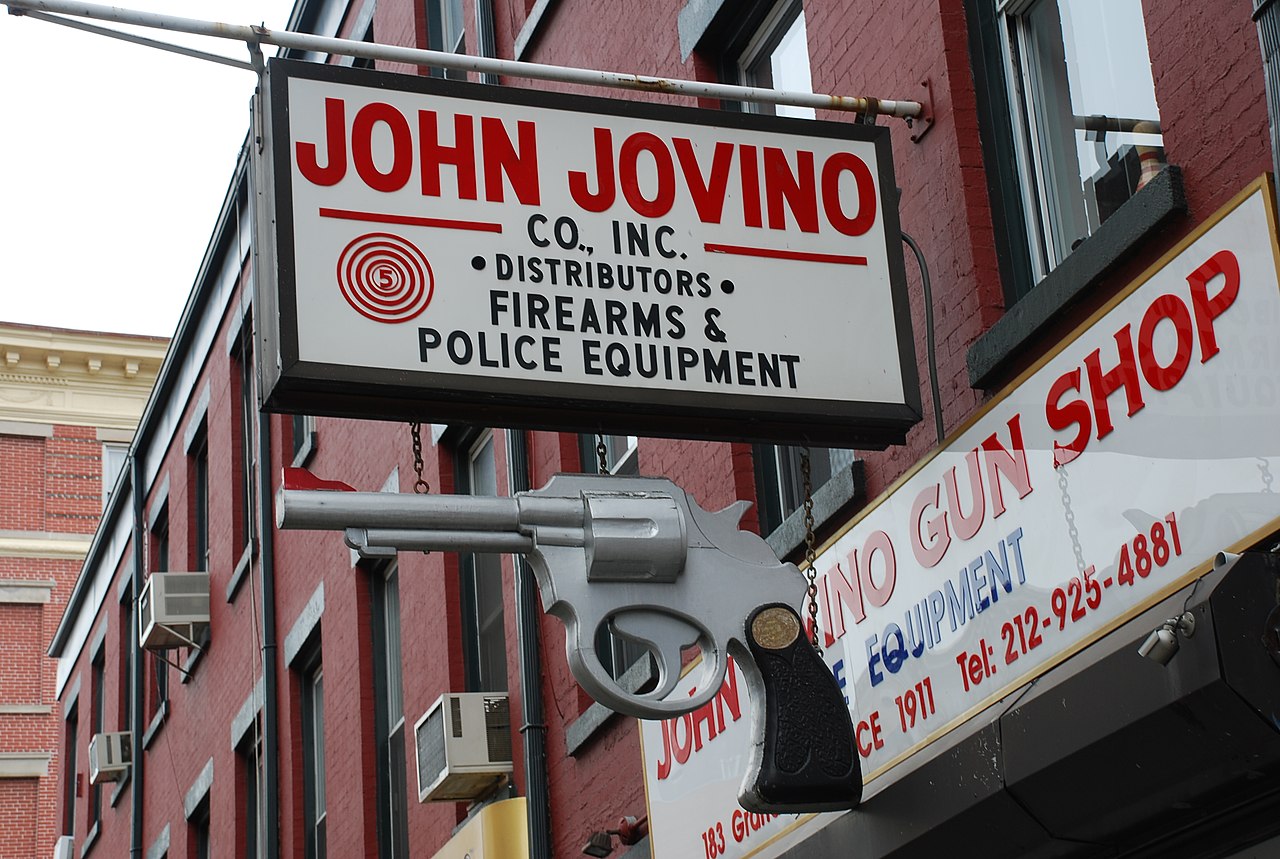
John Jovino Gun Shop or the 'John Jovino Company' was a firearms dealer and factory located at 183 Grand Street, in Little Italy, a neighborhood of the New York City borough of Manhattan. It was the oldest gun retailer in New York City and said to be the oldest gun shop in the United States.
The store "does about $1 million worth of business annually", a figure which was higher before the New York Police Department opened an internal firearms bureau. Although many of its customers are in law enforcement, the company was near the top of a list of sellers whose guns were linked to New York City crimes in a 2003 report by a Columbia University researcher using data from the Bureau of Alcohol, Tobacco and Firearms. Some 102 guns of 11,700 used in crimes and later identified came from the Jovino shop. According to current owners, until the 1980s the Jovino Company was "one of the biggest dealers in the country" and sold guns to many police departments. The study did not suggest any wrongdoing by the dealers listed (the store is not legally responsible for how people use the products they legally sell) and did not take into account that a store that has a higher volume of sales would most likely have a higher number of sales to people who later used the firearms in crimes, even if the store had a lower ratio of firearms used in crimes bought from the store per total sales than a store with a smaller volume of sales. A 2007 Village Voice article raised questions about the store's sales to United Nations diplomats from the Democratic Republic of Congo. The shop was seen in the film "Serpico" in both season one, episode 13 ("A Death In The Family") and season 2, episode 5 ("Wedded Bliss") of Law & Order, very briefly in Mean Streets as well as "The Brave One". The shop's Centre Market Street location was seen in the 1957 television series "Decoy", appearing in the first season, episode four, titled "To Trap a Thief". (Edit: Wikipedia Jovino article) |
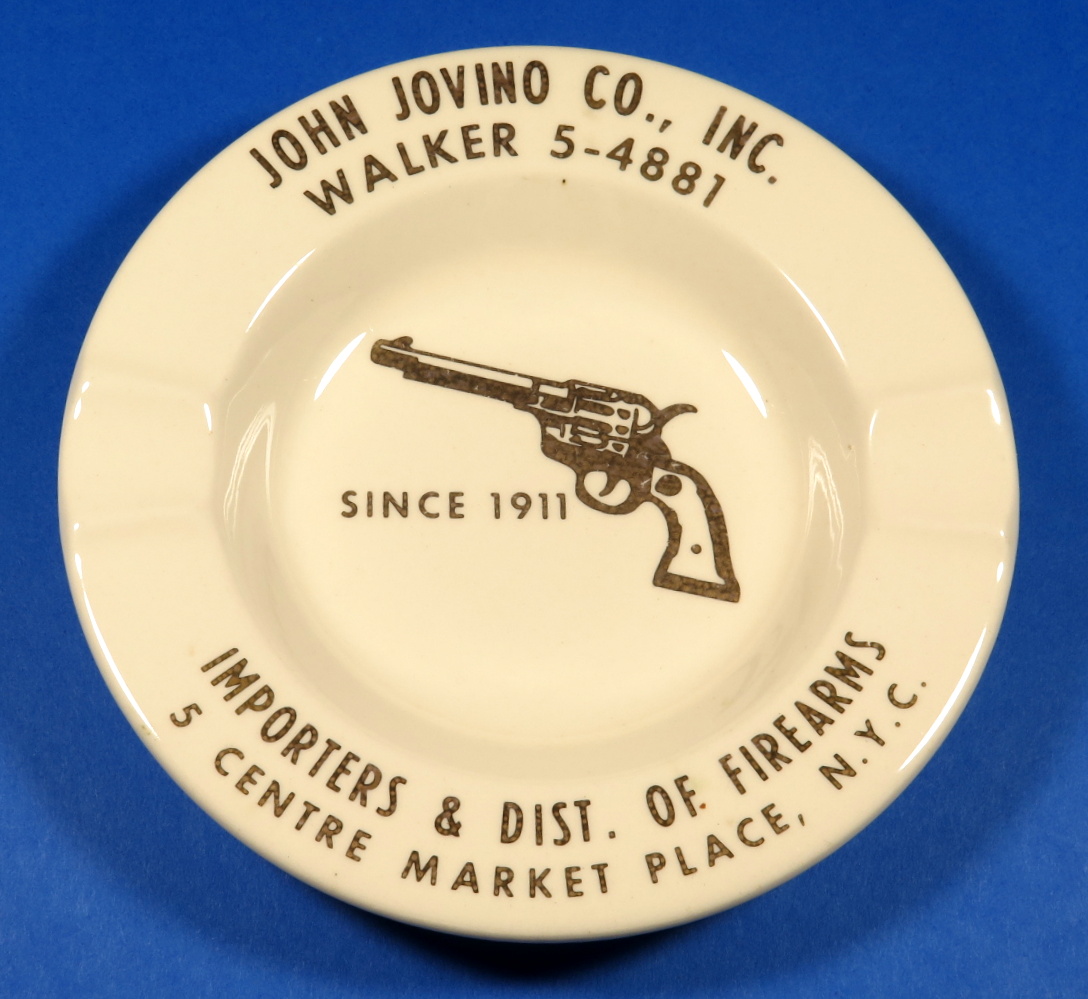
A promotional give-away ash tray
from the John Jovino store with address
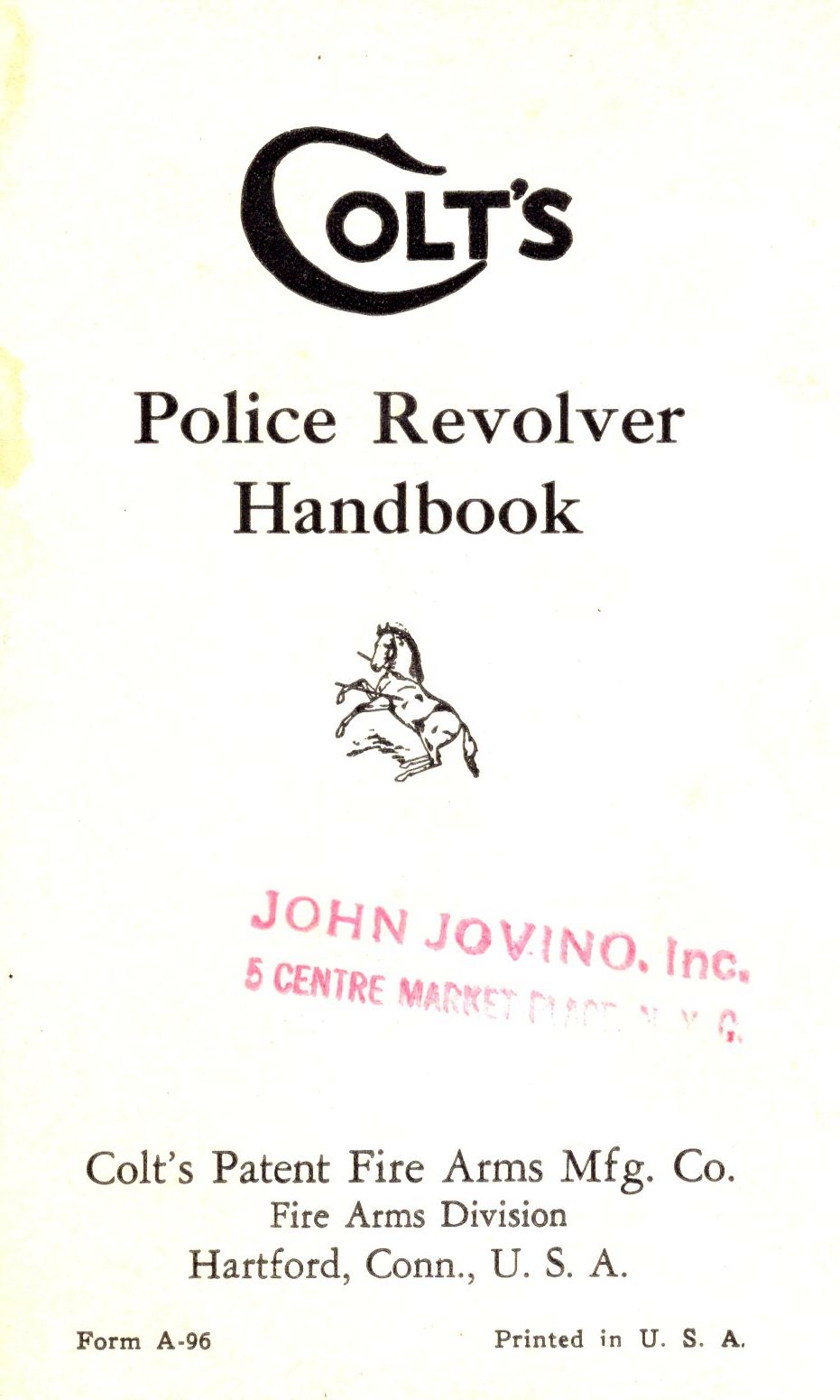
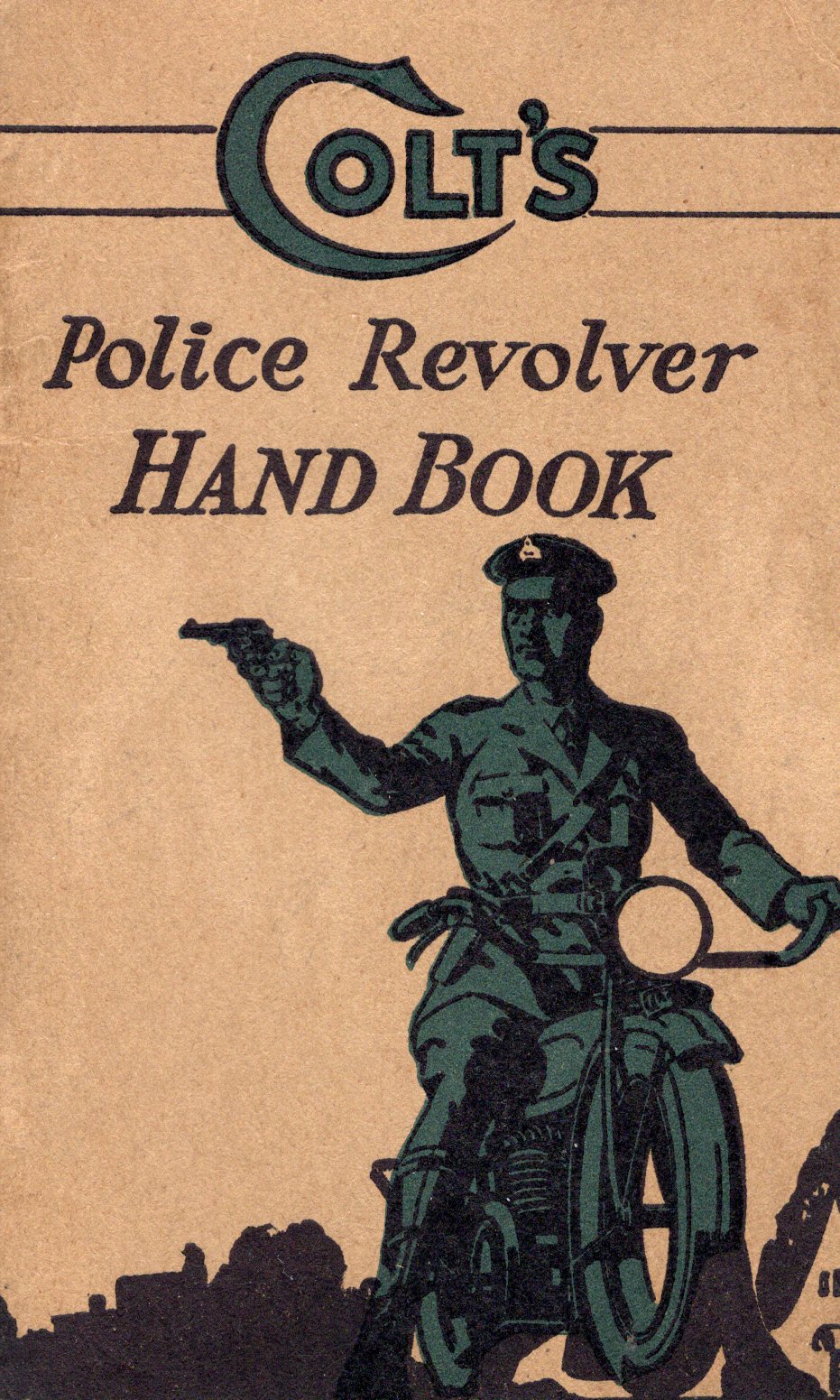
1940's Police Revolver Handbook stamped "John Jovino, Inc."
For the best experience, please view this Colt website
with a format larger than a cell phone
 The store, which
was known for its sign depicting a revolver, was founded in 1911 by
John Jovino who sold it to the Imperato family in the 1920s. It
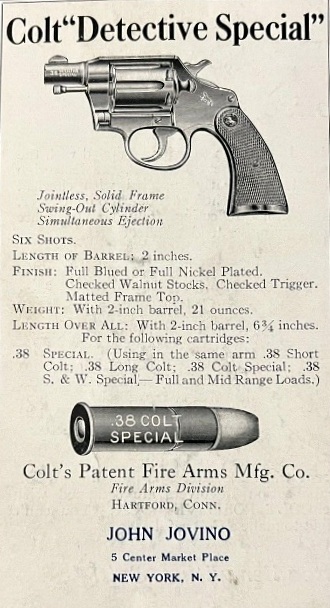
remains in the family. The store was once located at 5 Centre Market
Place, part of a gun district behind the former police headquarters
on Centre Street, but later moved to its present location.
The store, which
was known for its sign depicting a revolver, was founded in 1911 by
John Jovino who sold it to the Imperato family in the 1920s. It
remains in the family. The store was once located at 5 Centre Market
Place, part of a gun district behind the former police headquarters
on Centre Street, but later moved to its present location.