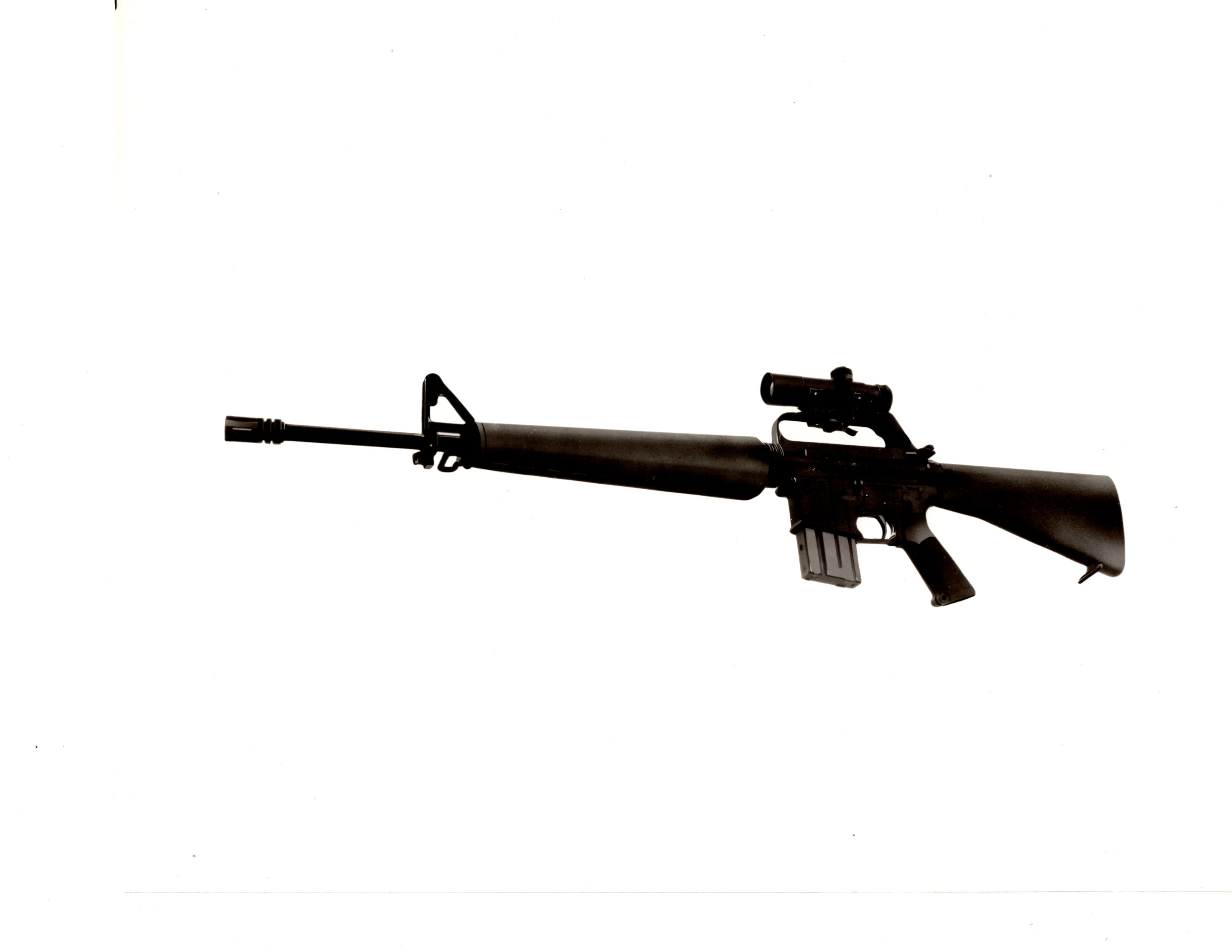
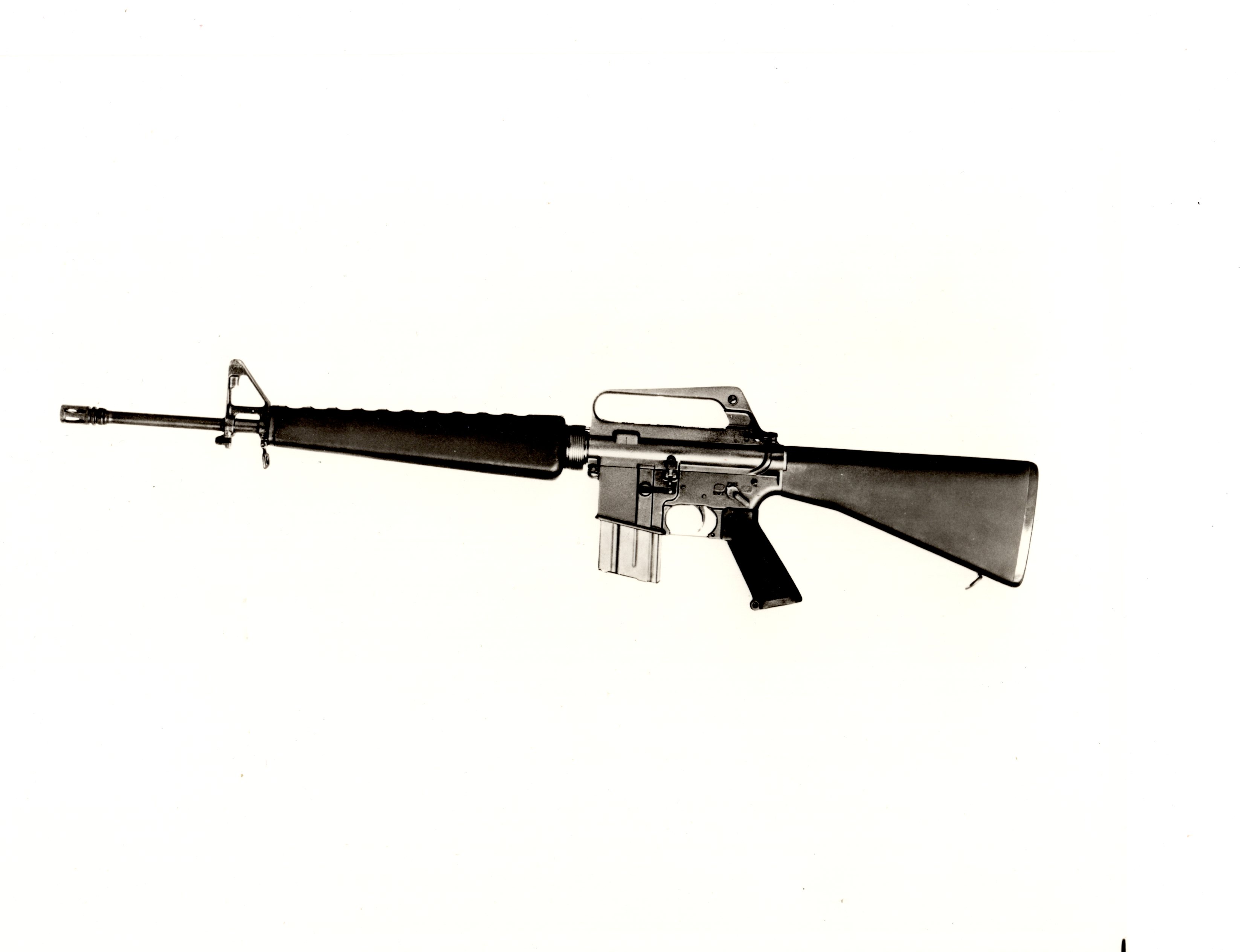
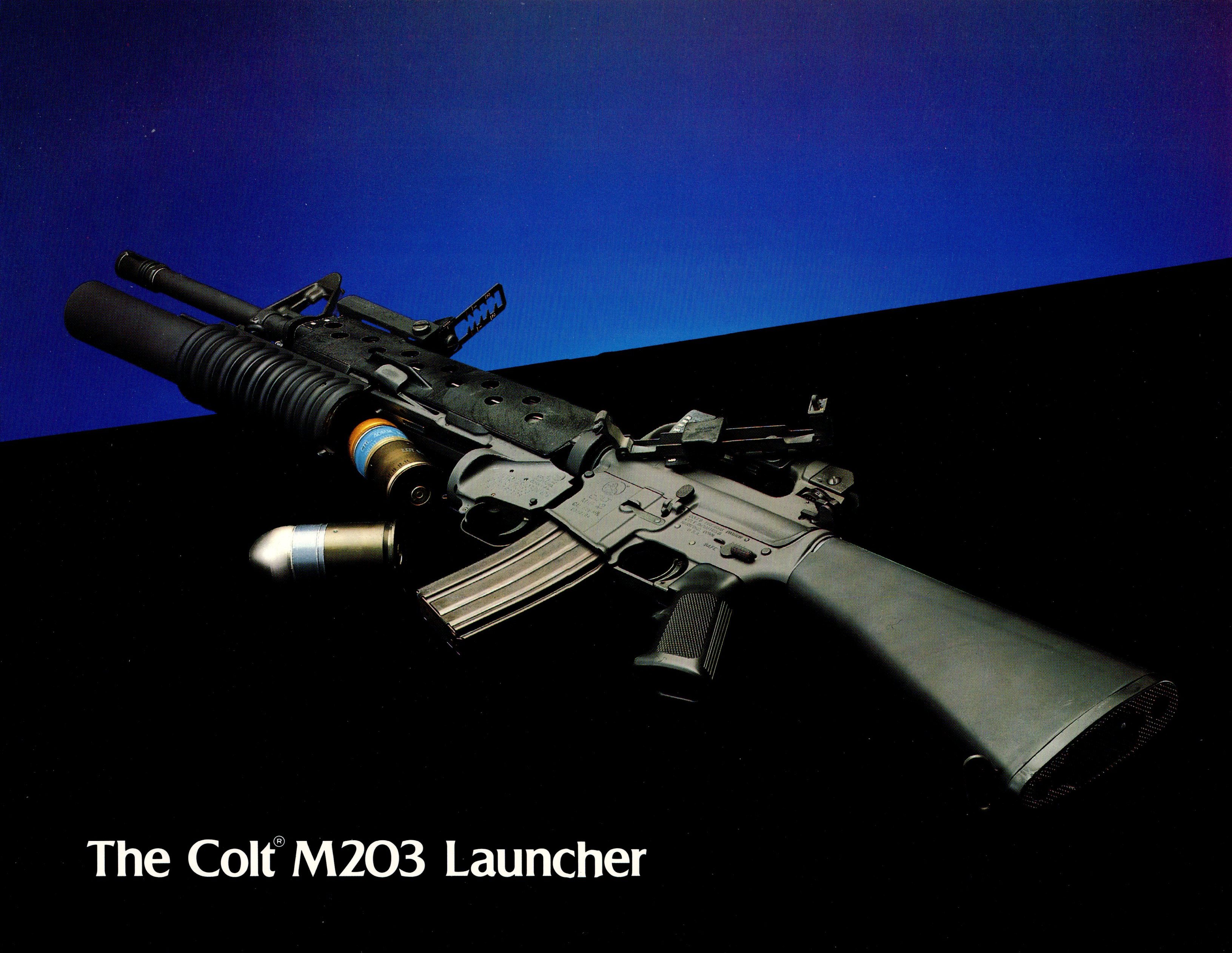
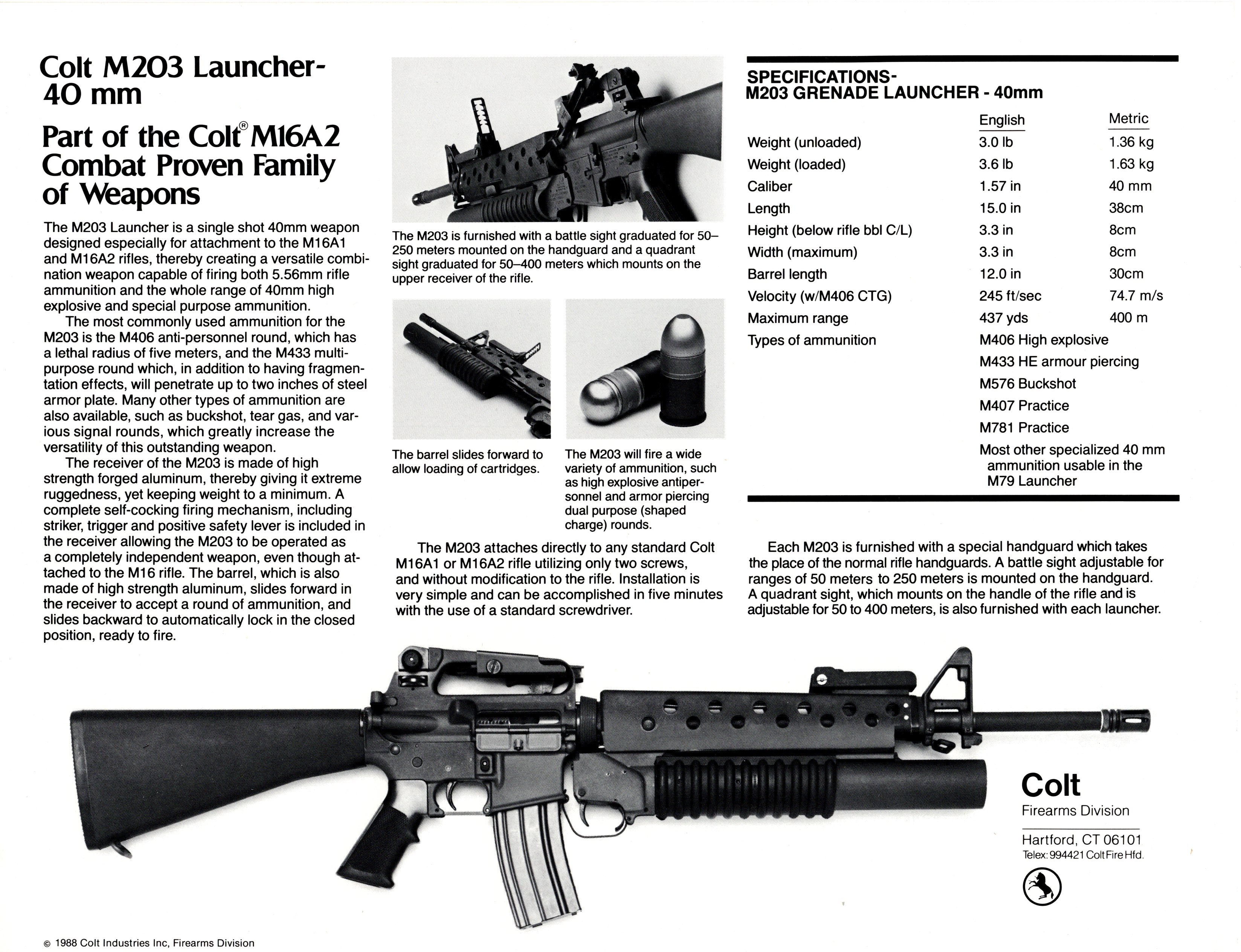
|
The development of the M16A2 rifle
was originally requested by the United States Marine
Corps as a result of combat experience in Vietnam with
the XM16E1 and M16A1. It was officially adopted by the
Department of Defense as the "US Rifle, 5.56 mm, M16A2"
in 1982. The Marines were the first branch of the U.S.
Armed Forces to adopt it, in the early/mid-1980s, with
the United States Army following suit in the late 1980s.
The weapon's reliability allowed it to be widely used
around the Marine Corps' special operations divisions as
well.
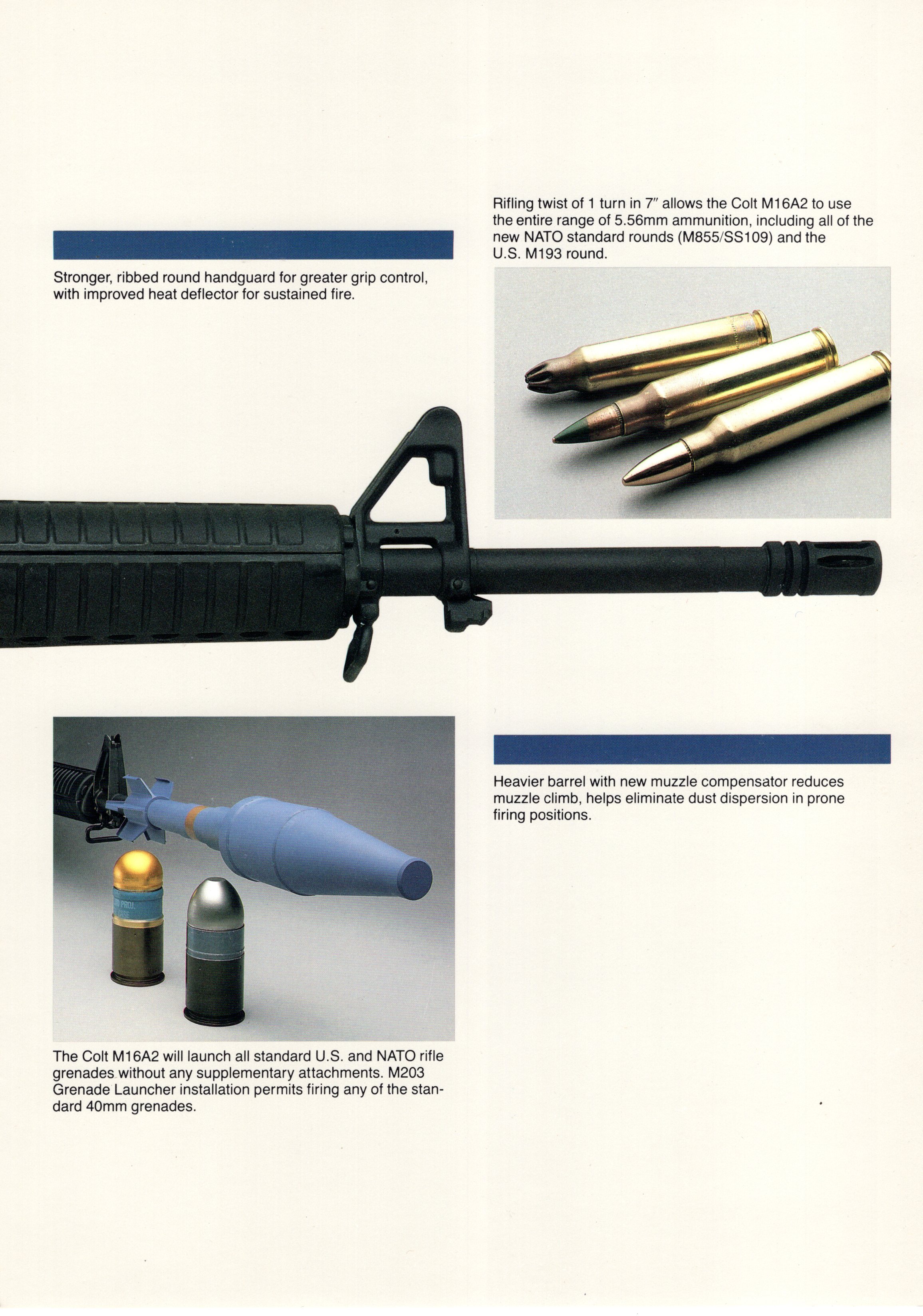
Modifications to the M16A2 were
extensive. The flash suppressor was again modified, this
time to be closed on the bottom so it would not kick up
dirt or snow when being fired from the prone position,
and acting as a recoil compensator.
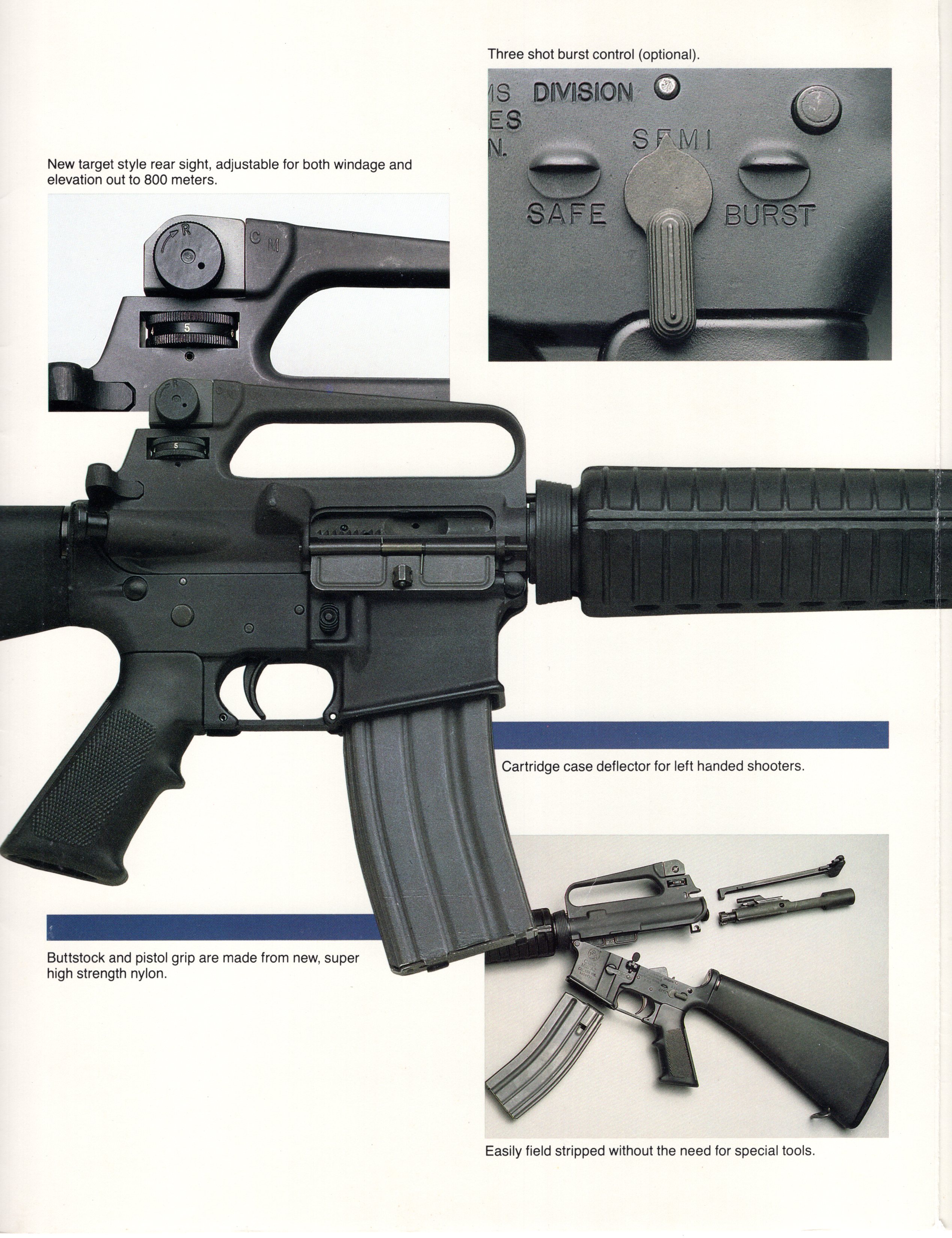
A spent case deflector was
incorporated into the upper receiver immediately behind
the ejection port to prevent cases from striking
left-handed users. The action was also modified,
replacing the fully automatic setting with a three-round
burst setting. When using a fully automatic weapon,
inexperienced troops often hold down the trigger and
"spray" when under fire. The U.S. Army concluded that
three-shot groups provide an optimum combination of
ammunition conservation, accuracy, and firepower. The
USMC has retired the M16A2 in favor of the newer M16A4;
a few M16A2s remain in service with the U.S. Army
Reserve and National Guard, Air Force, Navy and Coast
Guard.
The handguard was modified from the
original triangular shape to a round one, which better
fit smaller hands and could be fitted to older models of
the M16. The new handguards were also symmetrical so
armories need not separate left- and right-hand spares.
The handguard retention ring was tapered to make it
easier to install and uninstall the handguards. A notch
for the middle finger was added to the pistol grip, as
well as more texture to enhance the grip. The buttstock
was lengthened by 5⁄8 in (15.9 mm). The new buttstock
became ten times stronger than the original due to
advances in polymer technology since the early 1960s.
Original M16 stocks were made from cellulose-impregnated
phenolic resin; the newer stocks were engineered from
DuPont Zytel glass-filled thermoset polymers. The new
stock included a fully textured polymer buttplate for
better grip on the shoulder, and retained a panel for
accessing a small compartment inside the stock, often
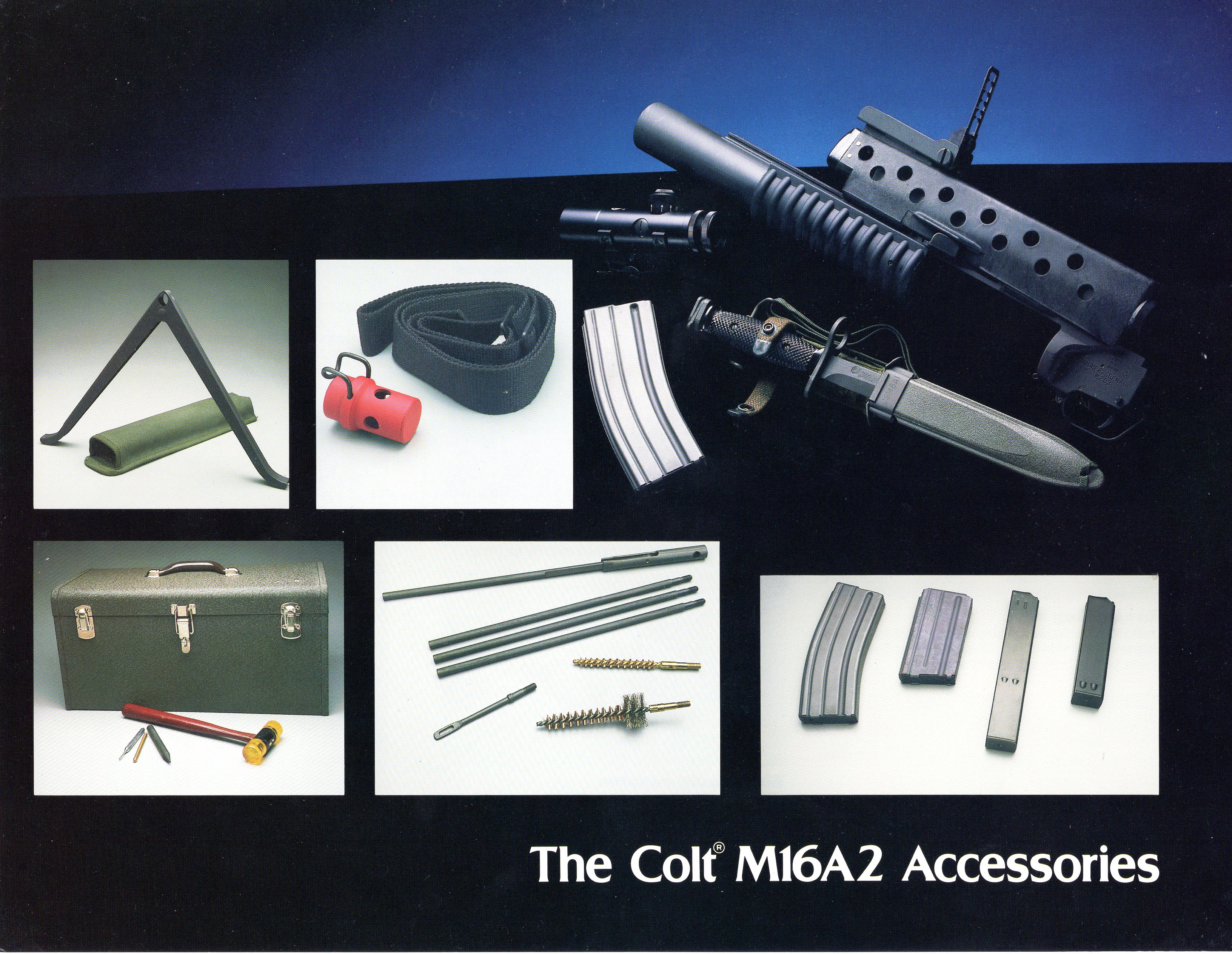
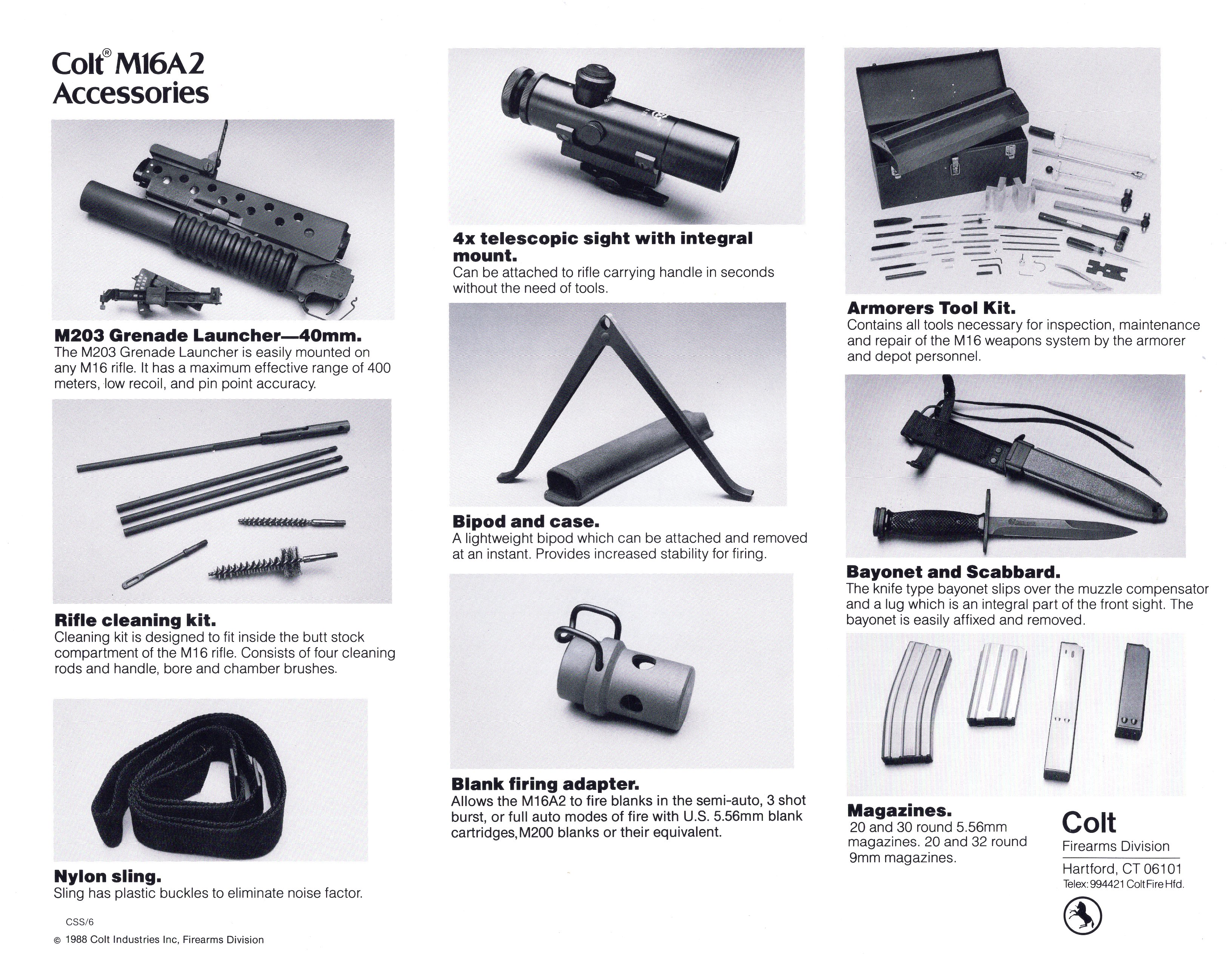
used for storing a basic cleaning kit. (Wikipedia) |