|
Colt Firearms Collector |
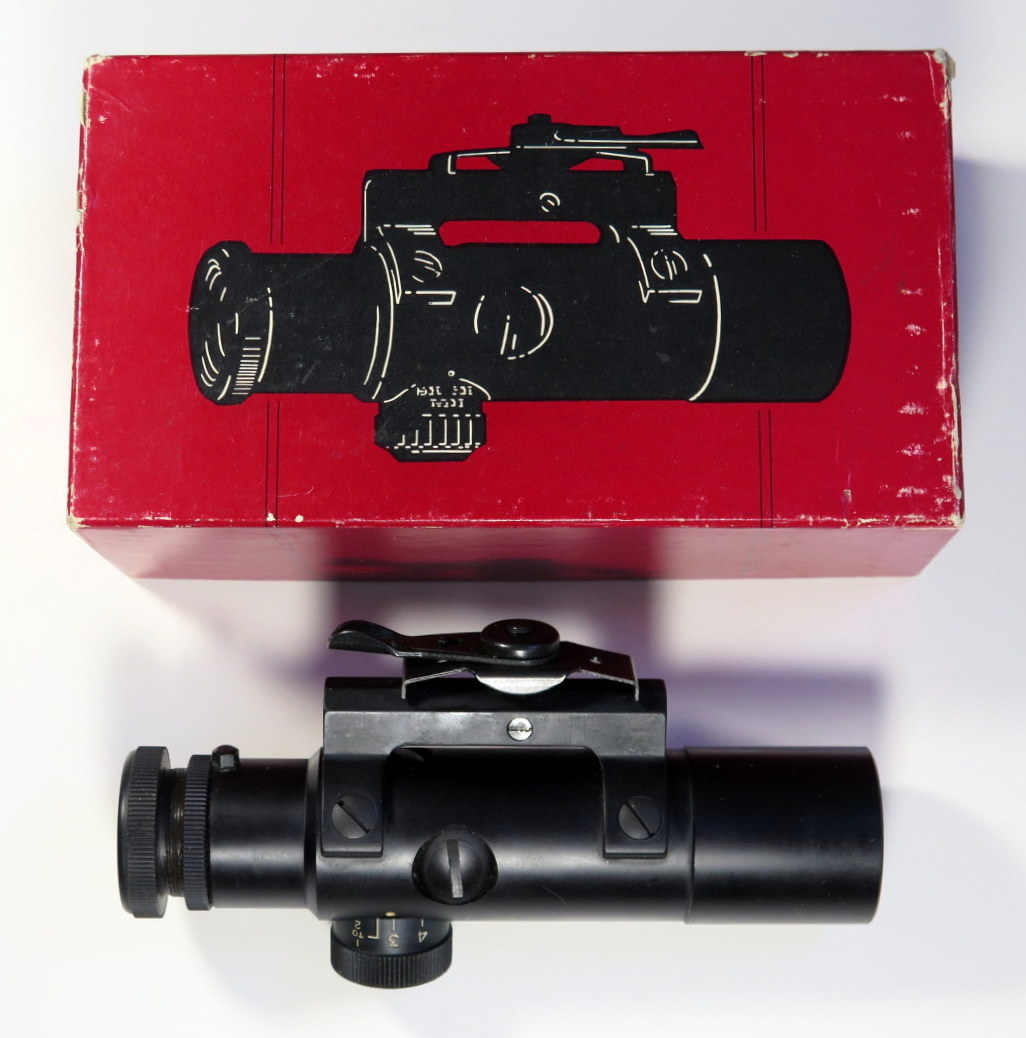
by Realist, Sold in a Red Picture Box ( RARE)
1965-1968
Research NotesColt Realist 3 x 20 BDC 5.56From: Sniperglass.com
In early 1962,
The
David White Company, Realist Riflescope Division, developed the
Realist 3X20 20mm objective Ballistic Drop Compensating cam (BDC
100-400 yards) telescopic sight for the Armalite AR-15/M-16
rifle.
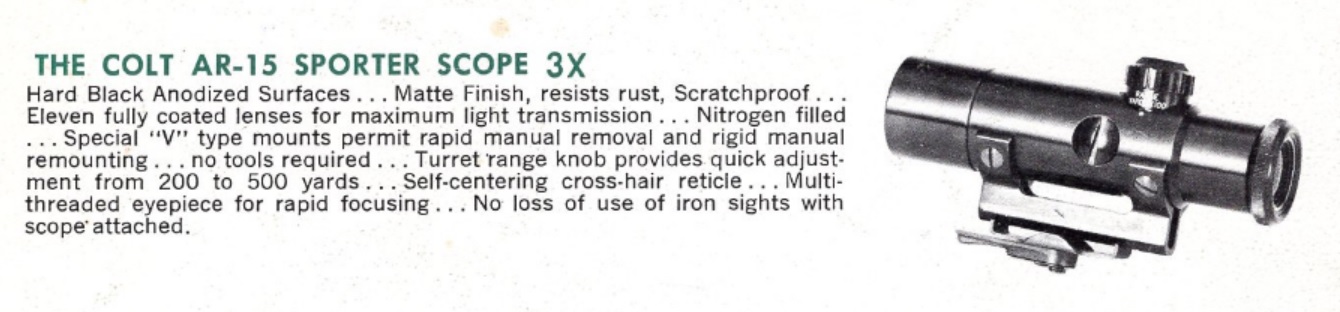
Manufactured by Realist under a "private label brand" contract with Colt Industries, the 3x20 scope, shown below, was marketed as the Colt AR-15 Sporter Rifle Scope for their AR-15, 5.56 rifle and later also under a "private label brand" contract with Fairchild-ArmaLite, the 3x20 scope was marketed as the Military Weapon System for their AR-18, 5.56 selective fire battle rifle. The BDC capability for the 3x20 scope mounted on the M-16 battle rifle enabled the rifle to effectively server as a light squad sniper rifle at combat ranges up to 400 yards. As the intensity of the Vietnam war expanded in 1968, Colt Industries purchased from Realist the patent rights of the 3x20 scope with Colt entering into an exclusive manufacturing contract with Japanese optical company TASCO on a much larger scale than the capacity of Realist. Realist is estimated to have manufactured less than 900 non-serialized 3x20 scopes from 1965-1968 (marked on top of the scope tube "COLT MADE IN USA" and shown below) while TASCO manufactured in excess of 12,000 scopes from 1968-1973 (marked on top of the scope tube "COLT / MADE IN JAPAN", also shown below for comparison).
3x20 optic ad in the Colt Catalog for 1968 The Realist scopes were primarily issued to U.S. Special Forces, USMC Force Recon and MACV-SOG units while the TASCO scopes were primarily issued to the U.S. Army 1st Cavalry Division. The external appearance of the Realist made and TASCO, both shown below, made scopes are almost identical. The Realist scope reticle was a conventional heavy crosshair, while the TASCO scope featured either a duplex reticle or an inverted post crosshair reticle. Ref: “The Long Range War” by Peter Senich, pages 126-138. |
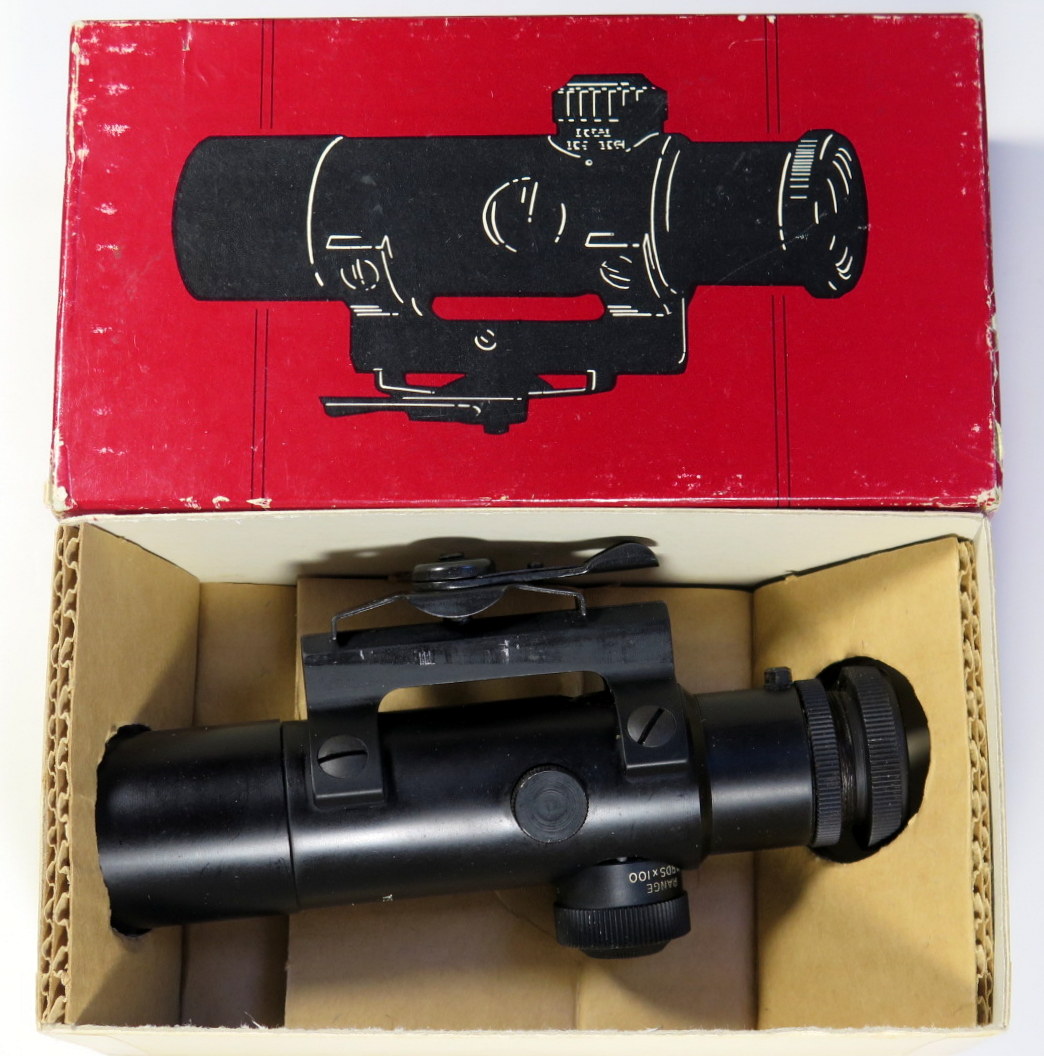
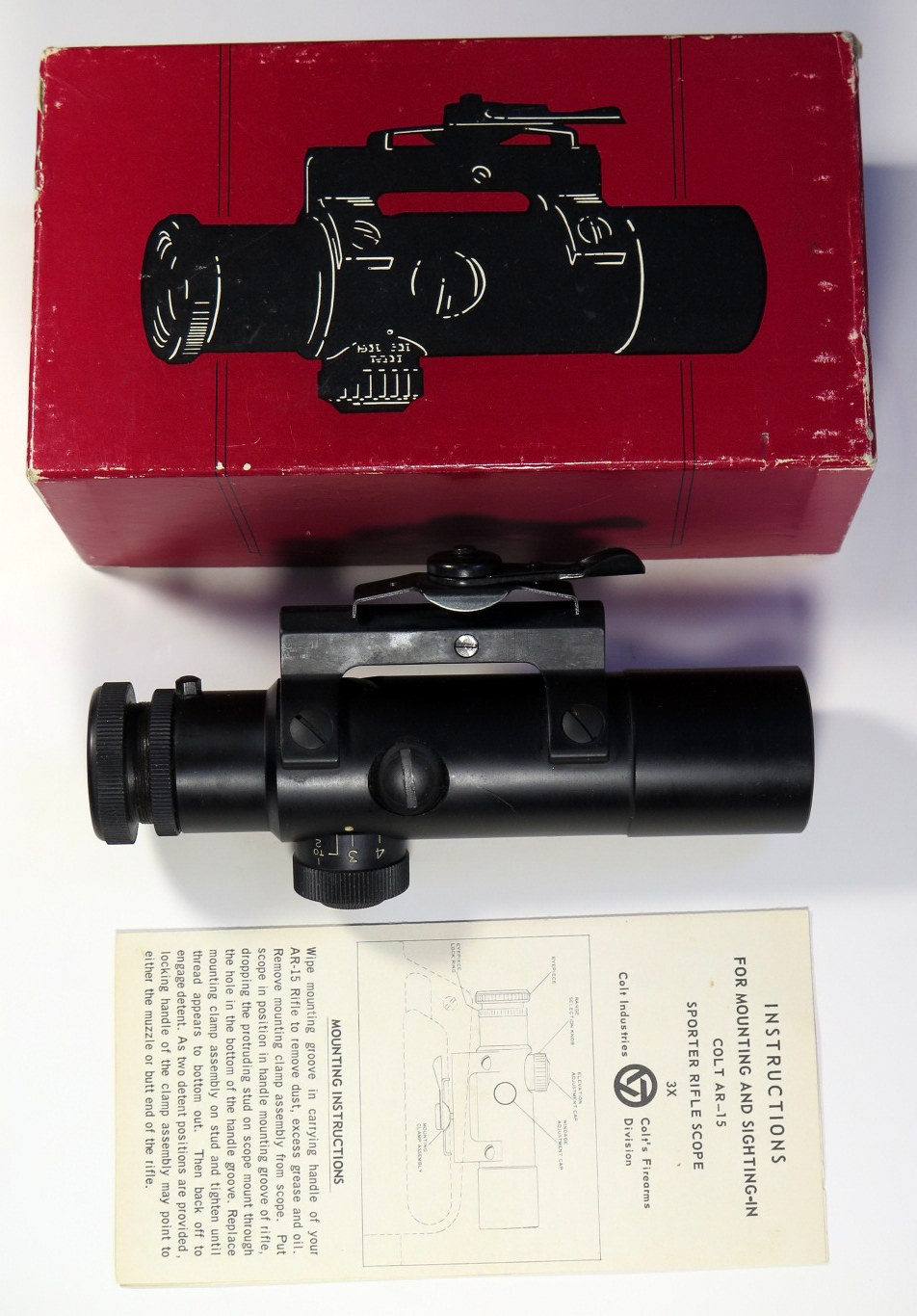
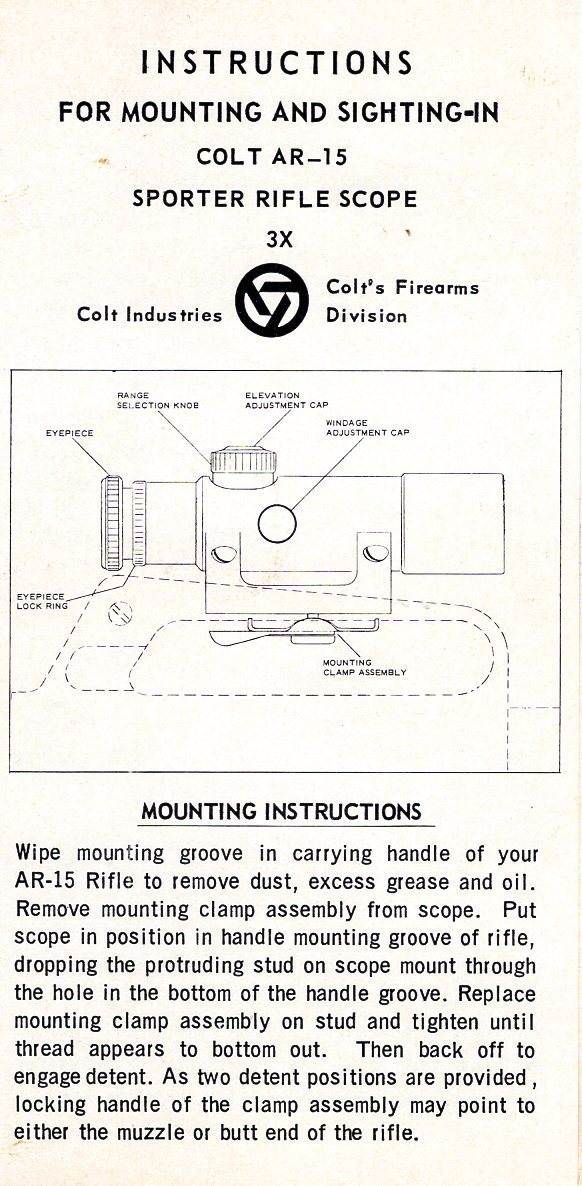
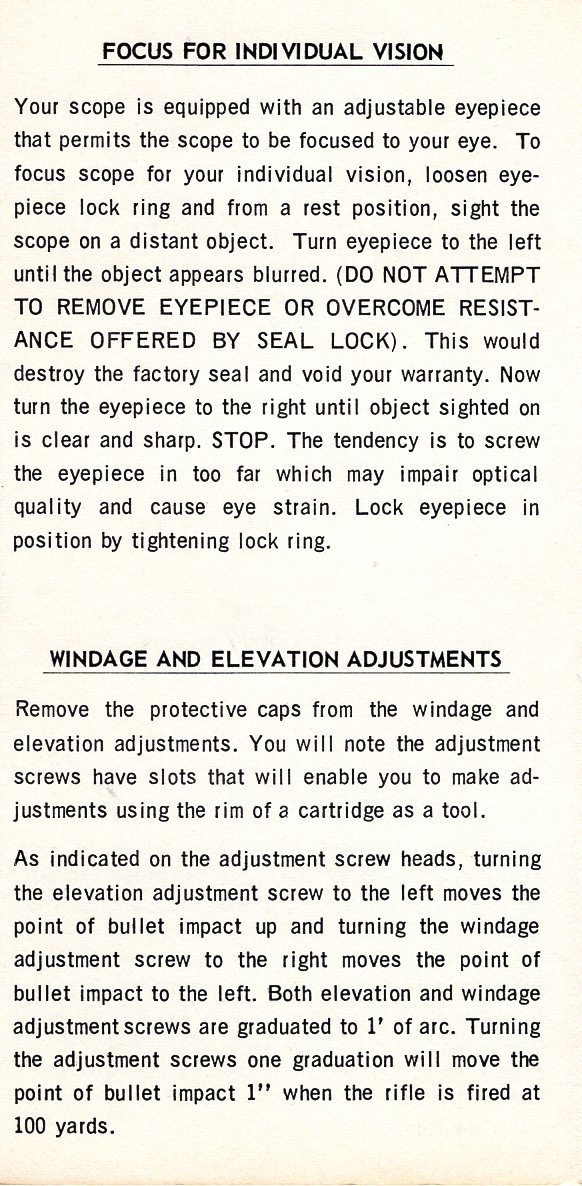
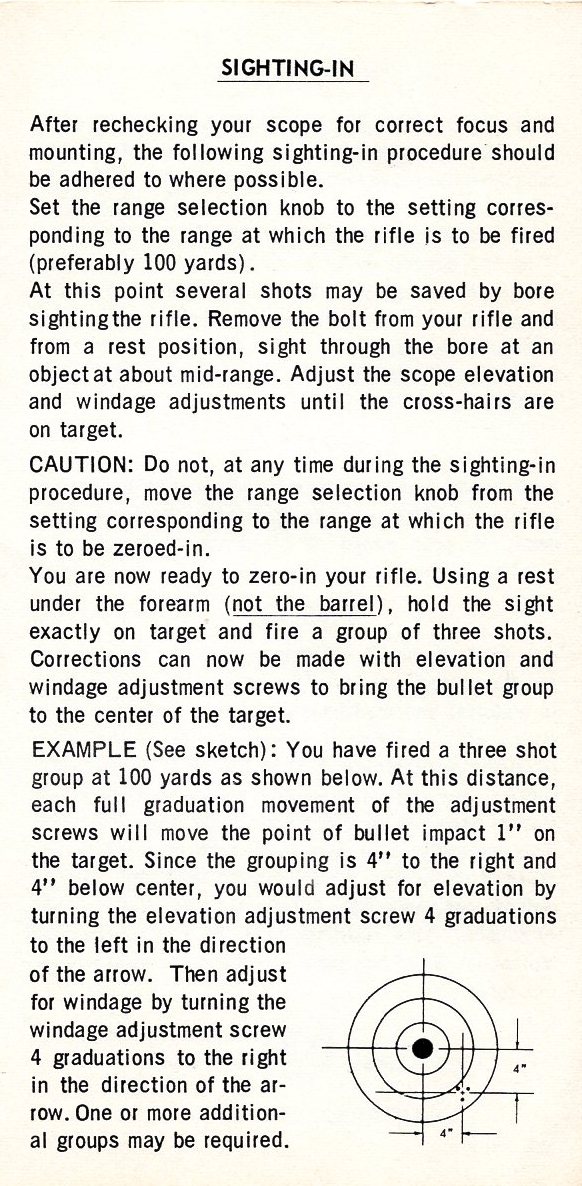
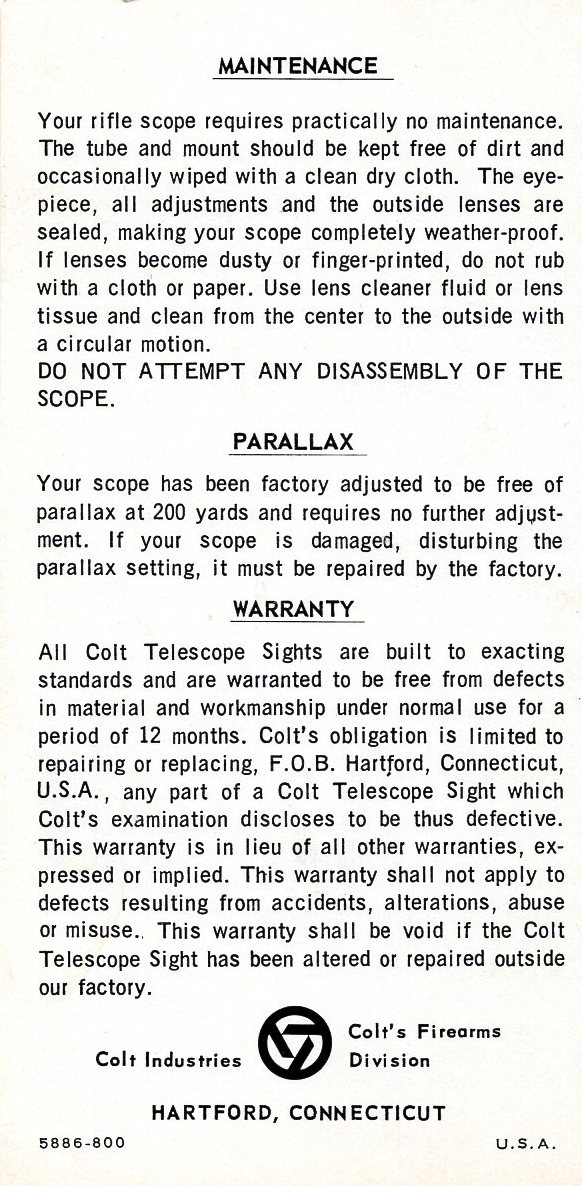
Note above: correct 1960s paperwork for this scope
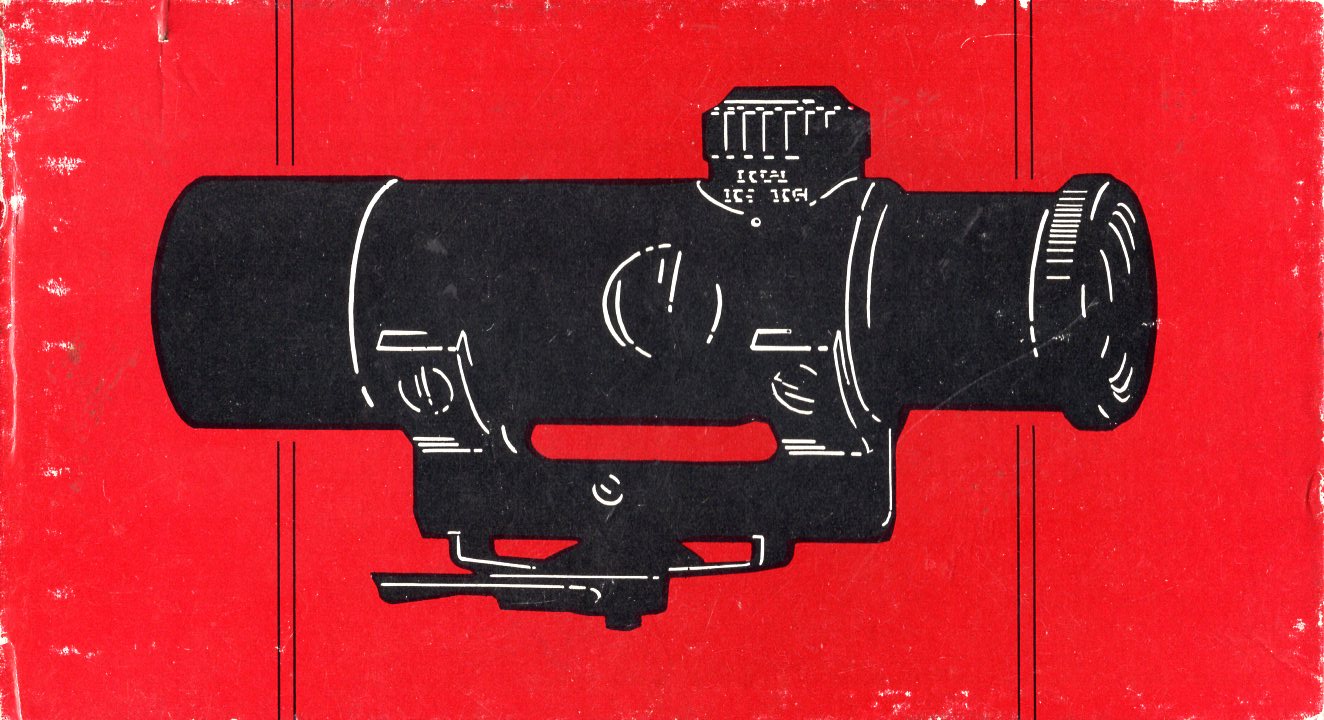
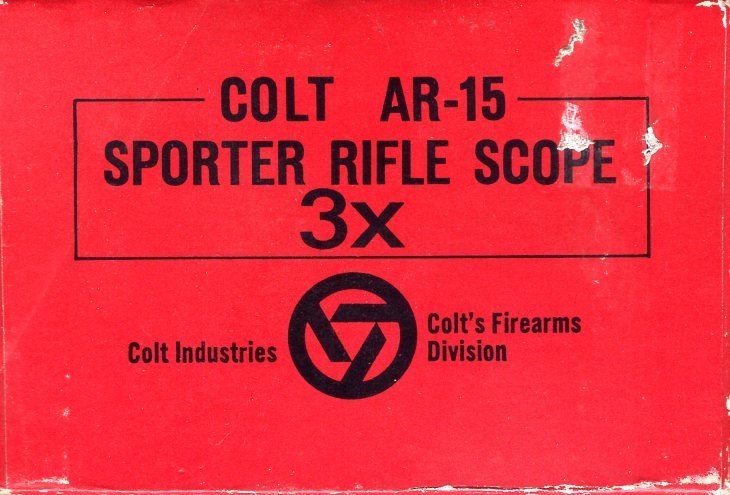
In 1964 Colt ( a Fairbanks-Whitney Co.) became Colt Industries
with Colt becoming a 'Firearms Division' of Colt Industries during the Vietnam War
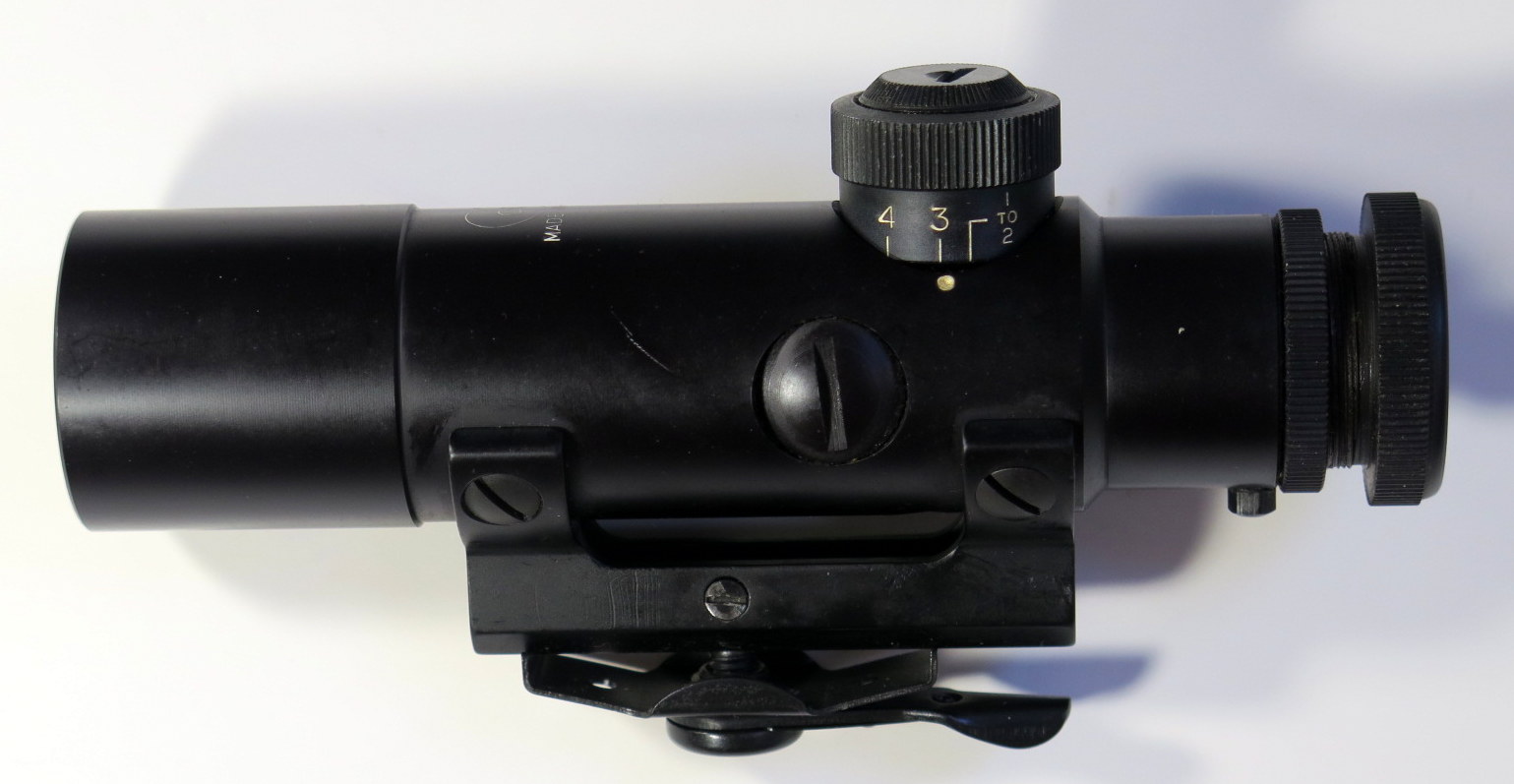
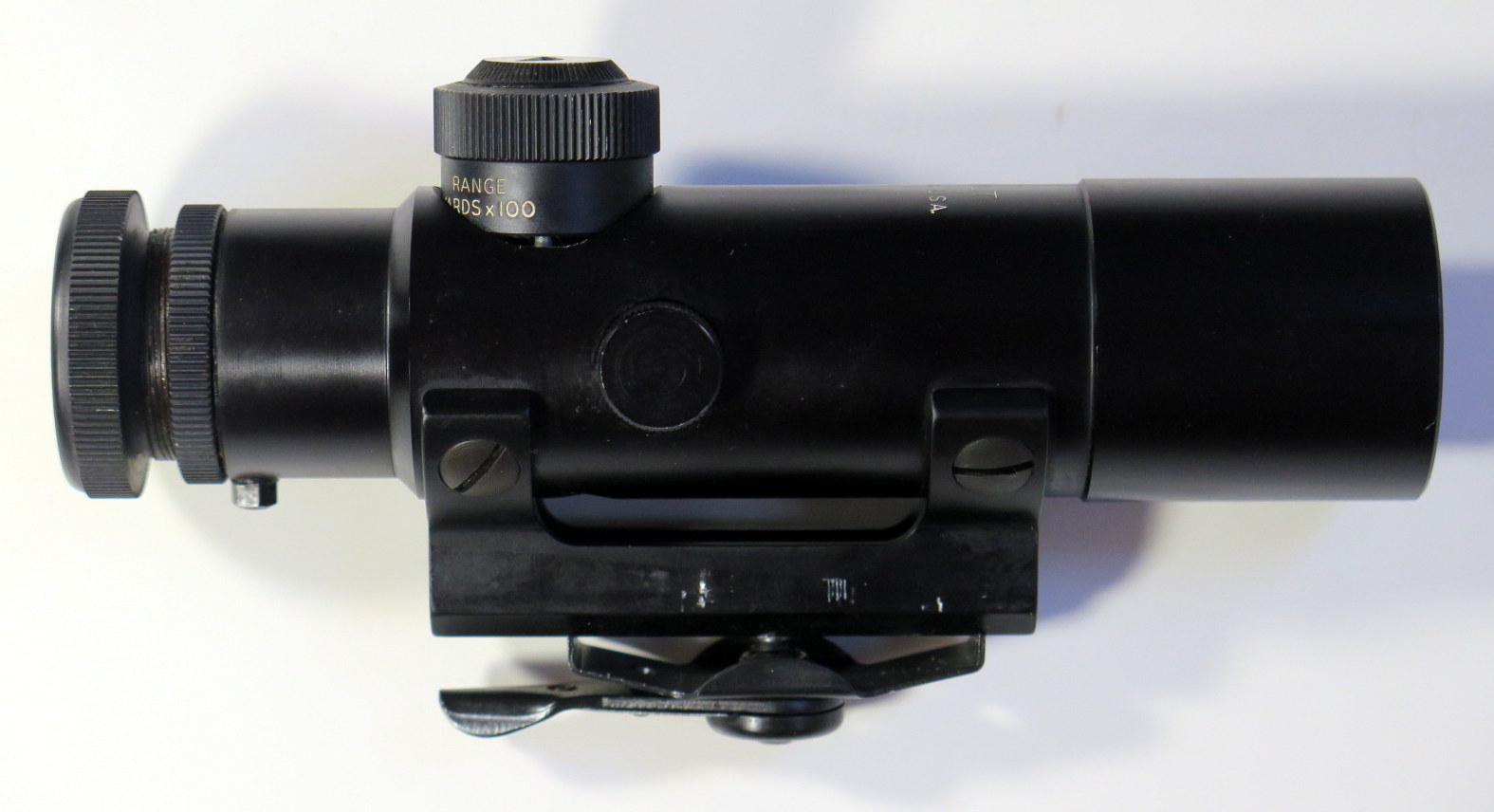
Side views of Colt Realist sope
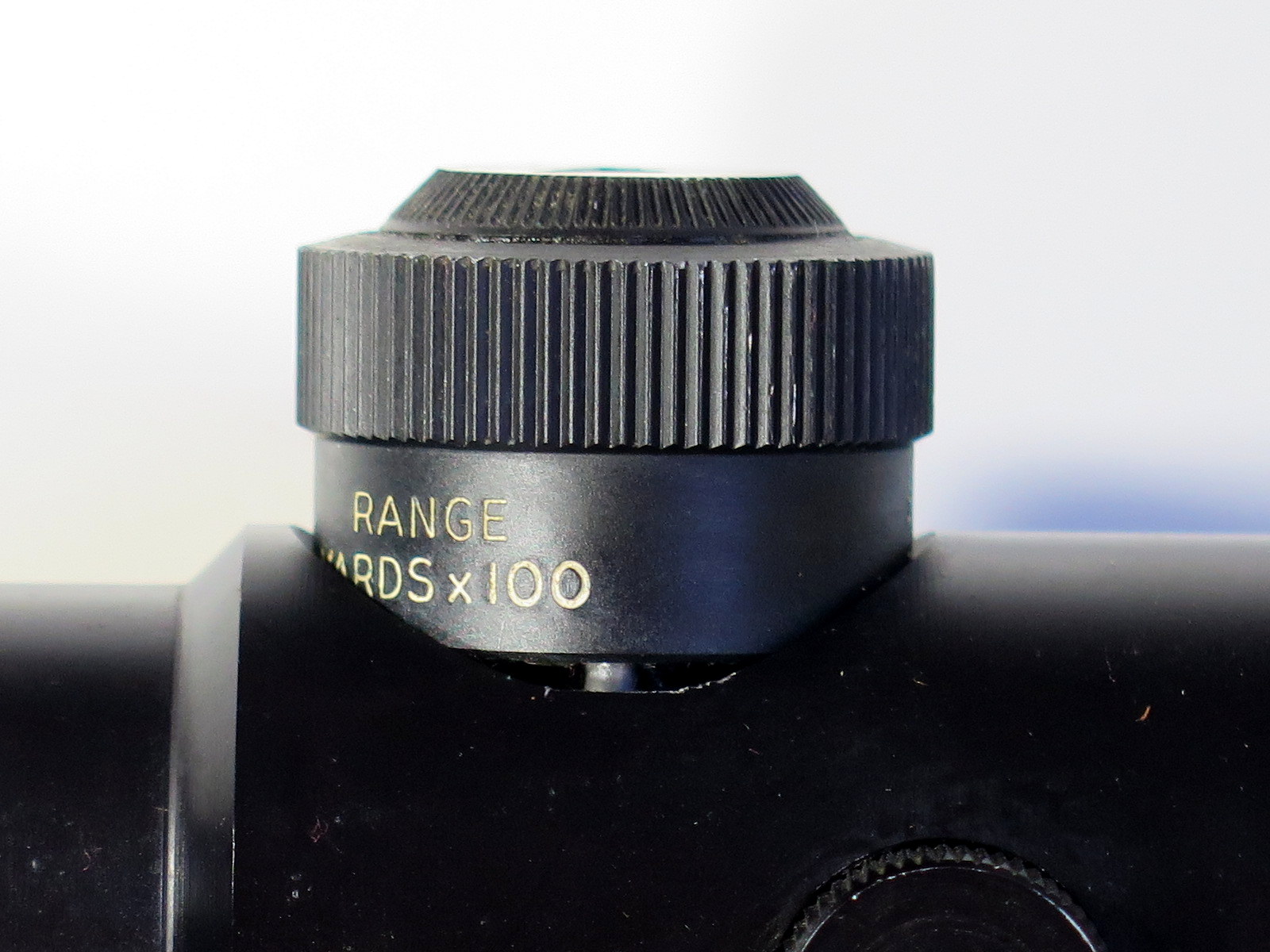
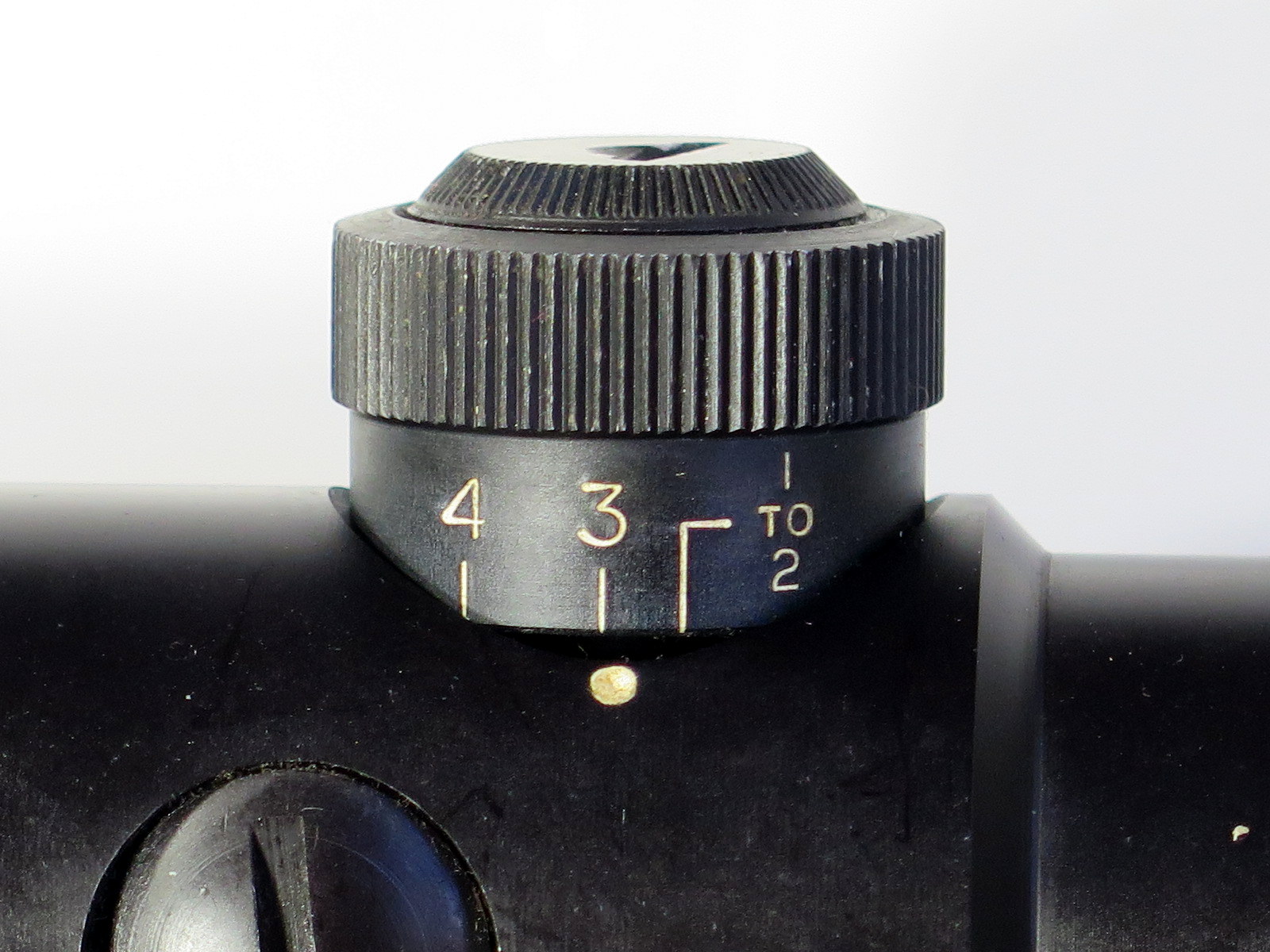
Top turret on Colt Realist scope
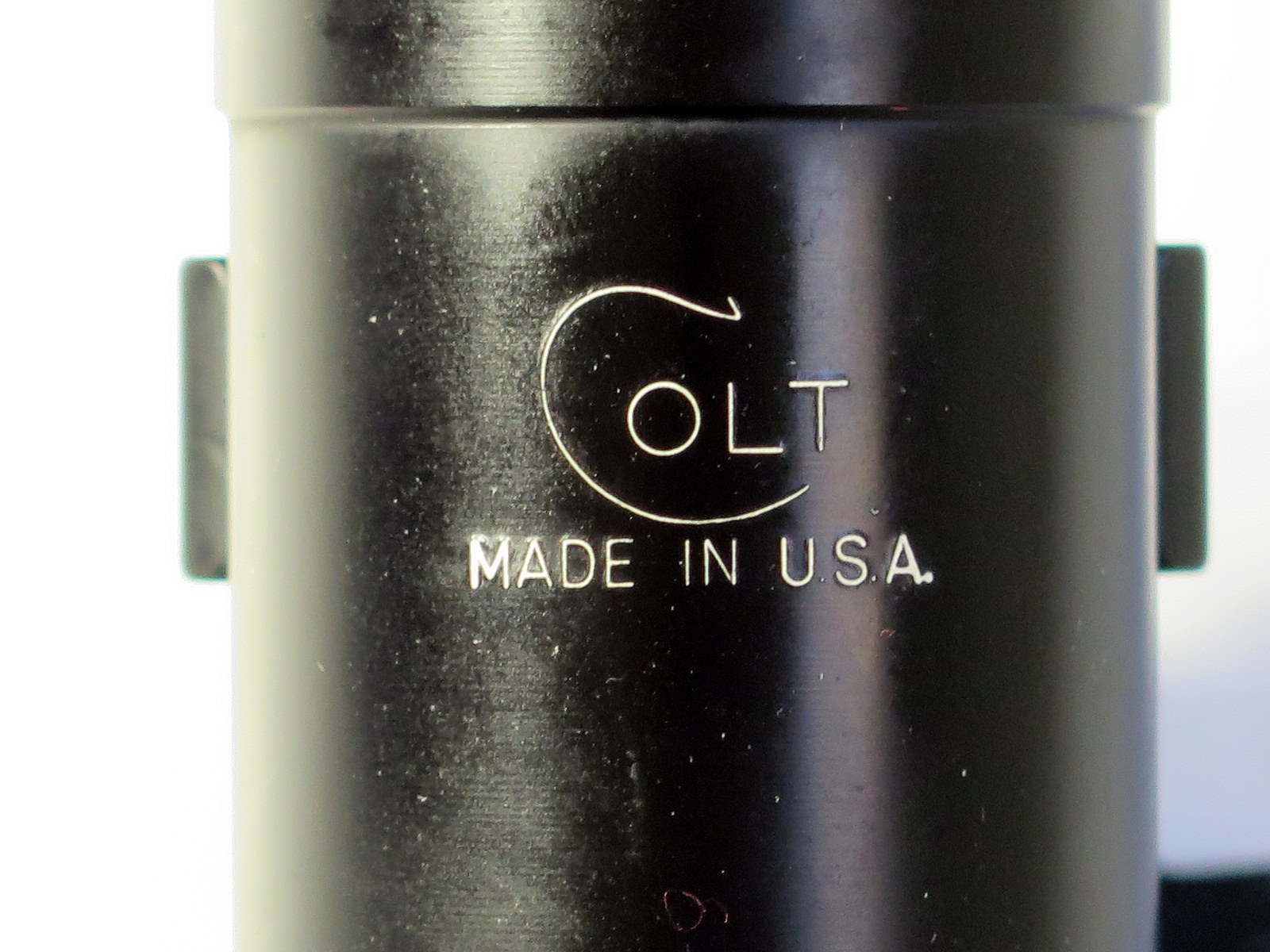
Colt Realist Made in U.S.A. engraved logo
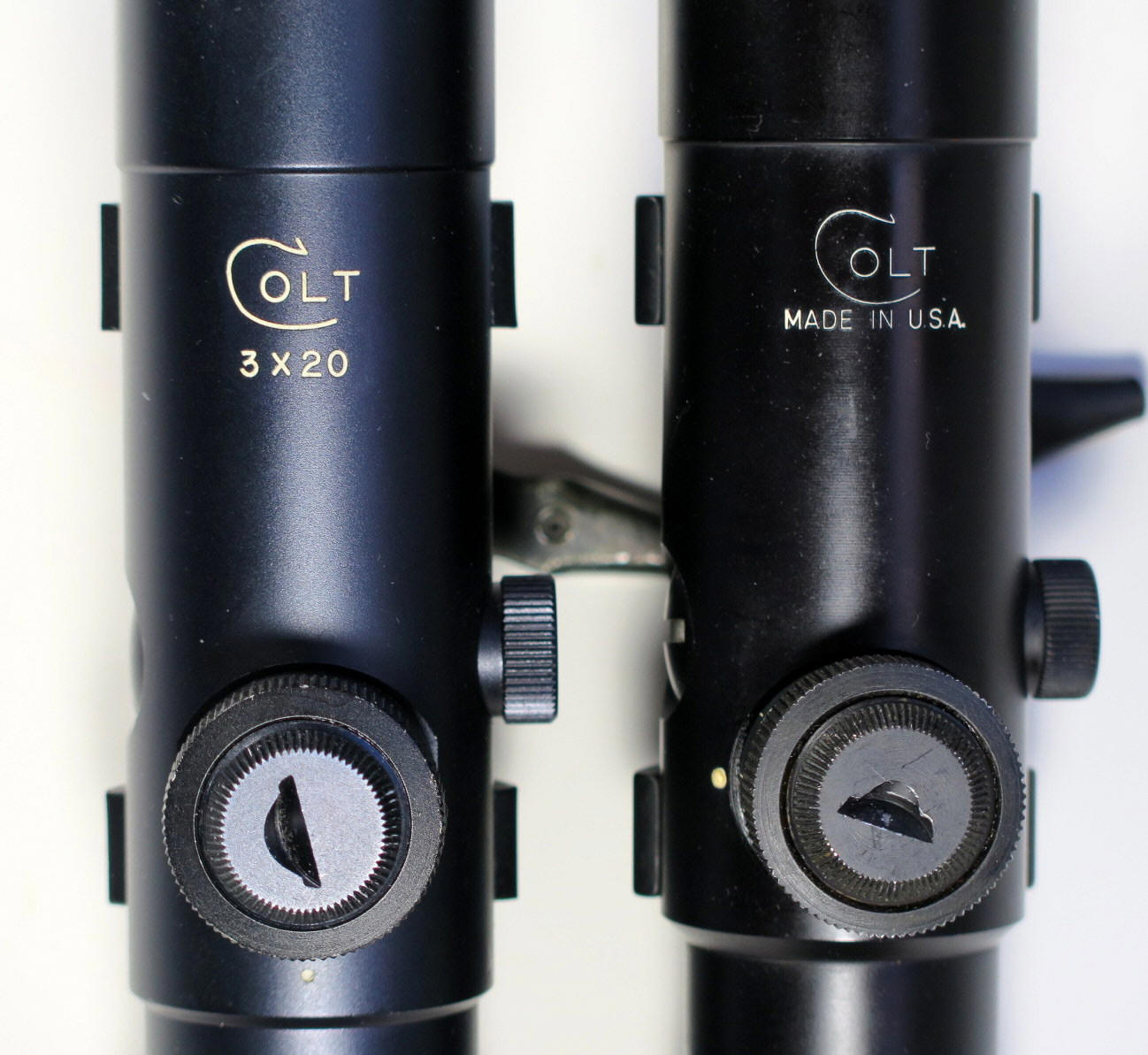
Left: painted logo Colt / 3 x 20 by Tasco
Right: engraved Colt / Made in USA by Realist
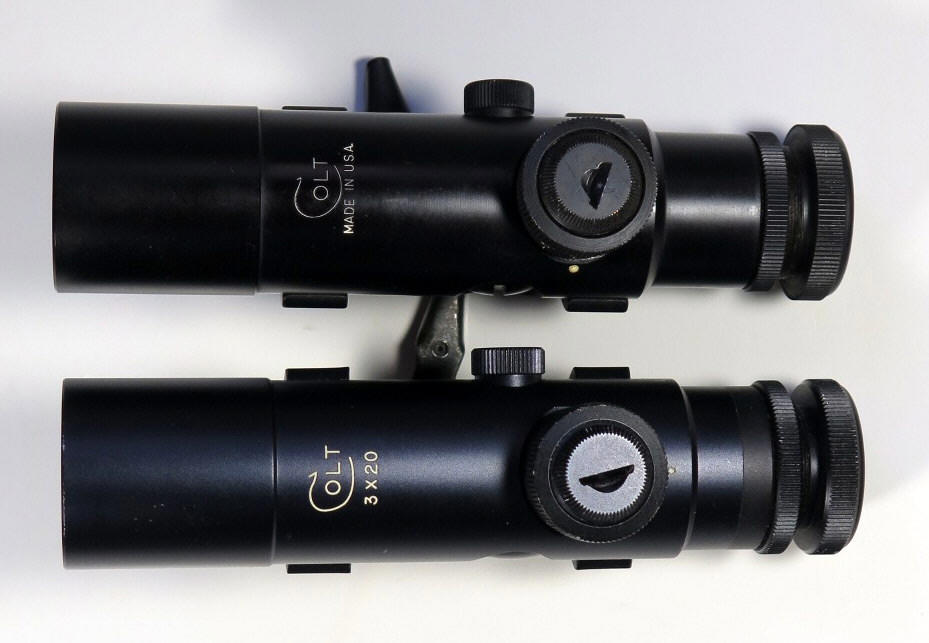
Upper: Made by Realist Lower: Made by Tasco
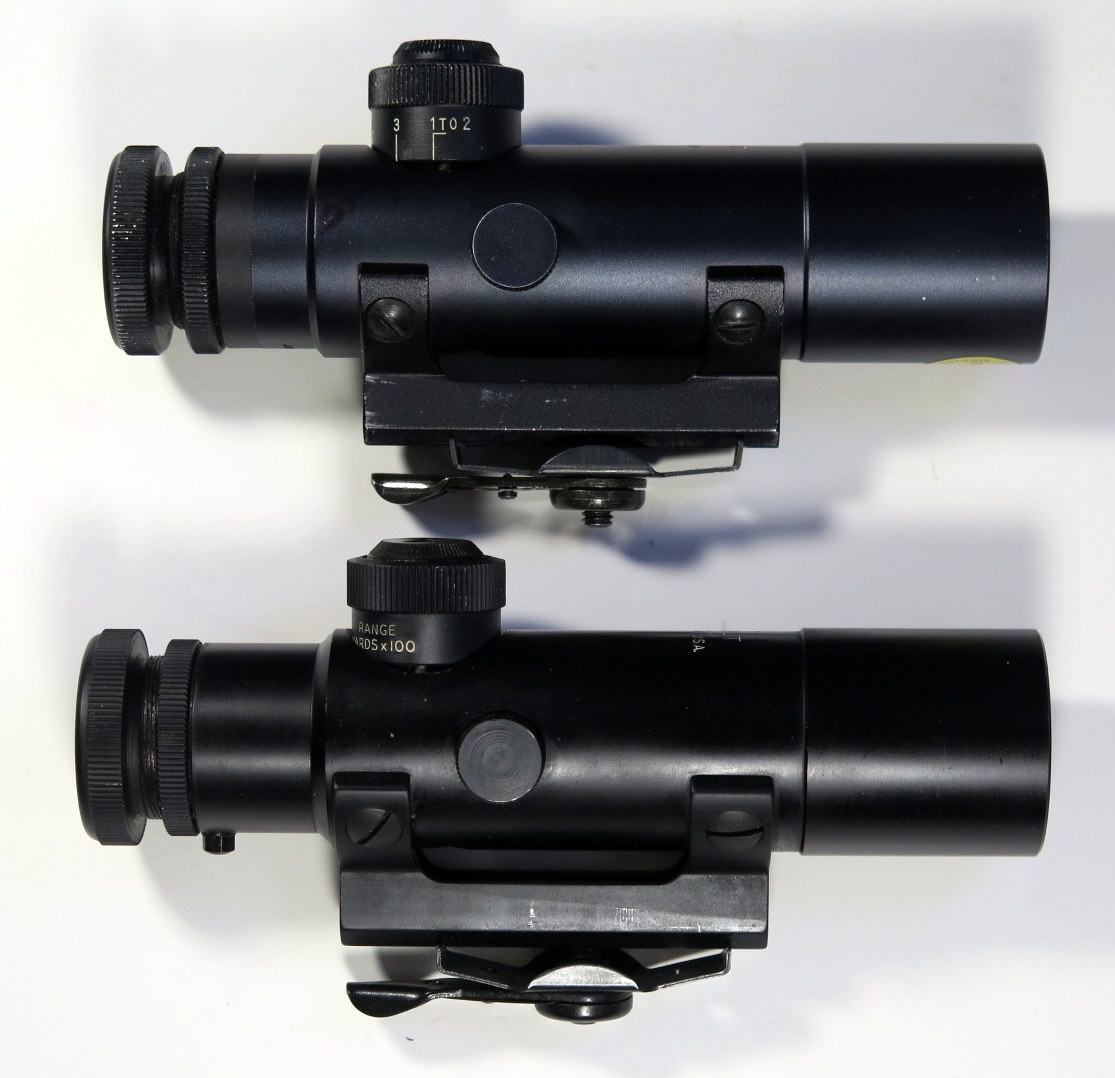
Tasco above, Realist below
Correct early paperwork from 1967
3x20 paperwork labeled 'Colt Industries' which
would be found with a 1960s Realist scope in a Red Realist box
For the best experience, please view this Colt website
with a format larger than a cell phone