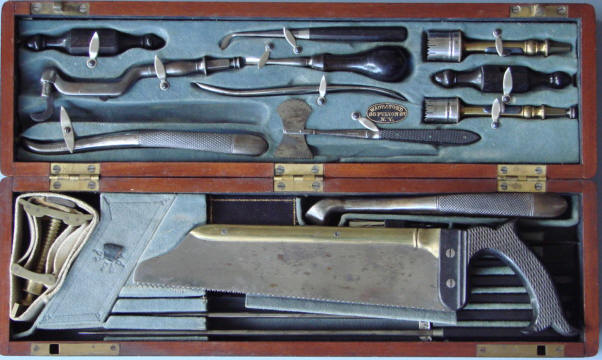
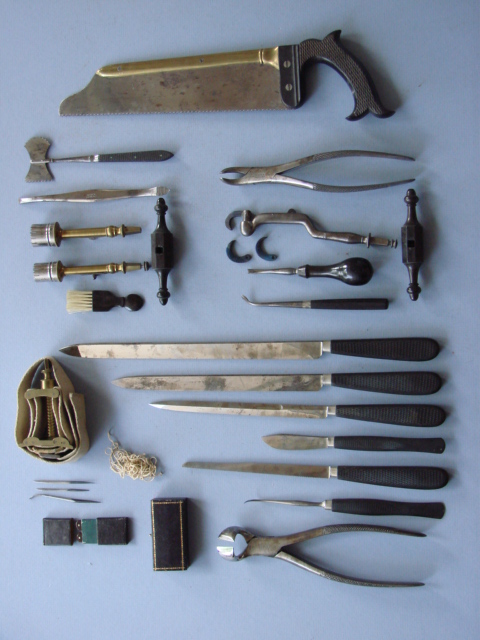
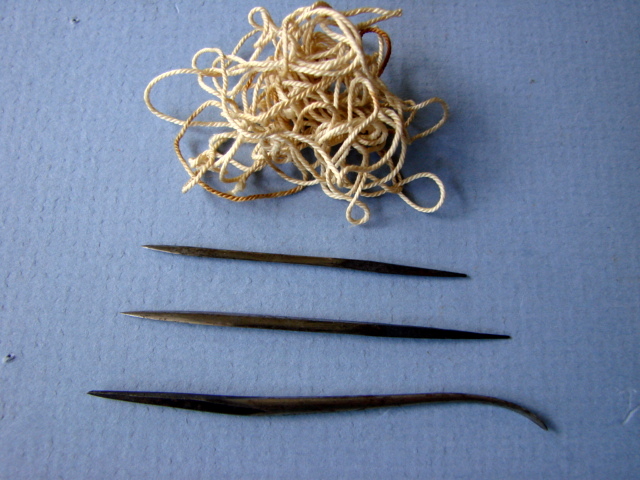
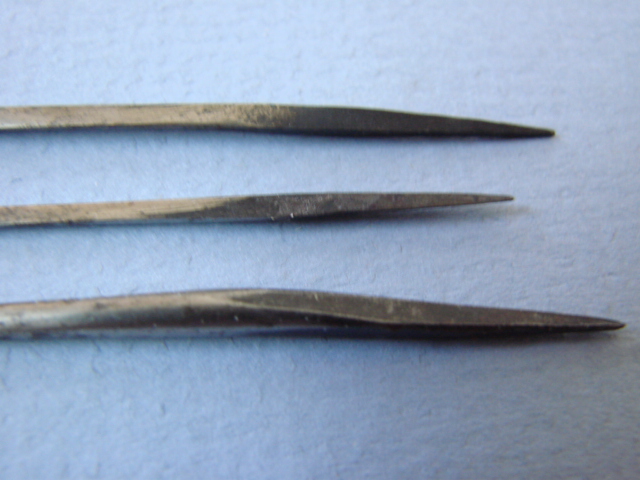
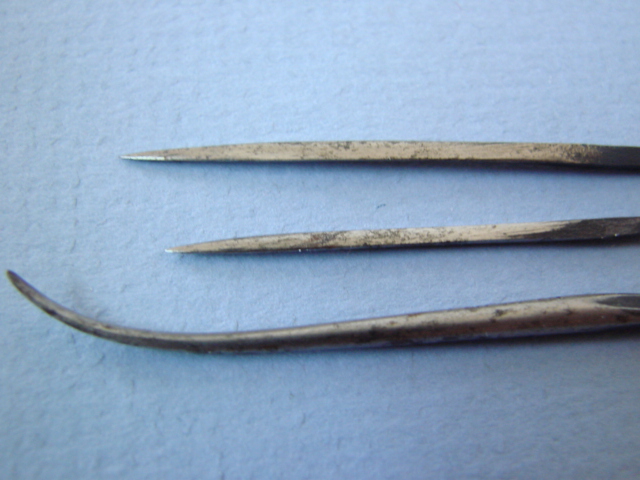
Wade and Ford, Civil War Military Surgical Set c. 1861Owned by Navy Steward, Lewis Whiting
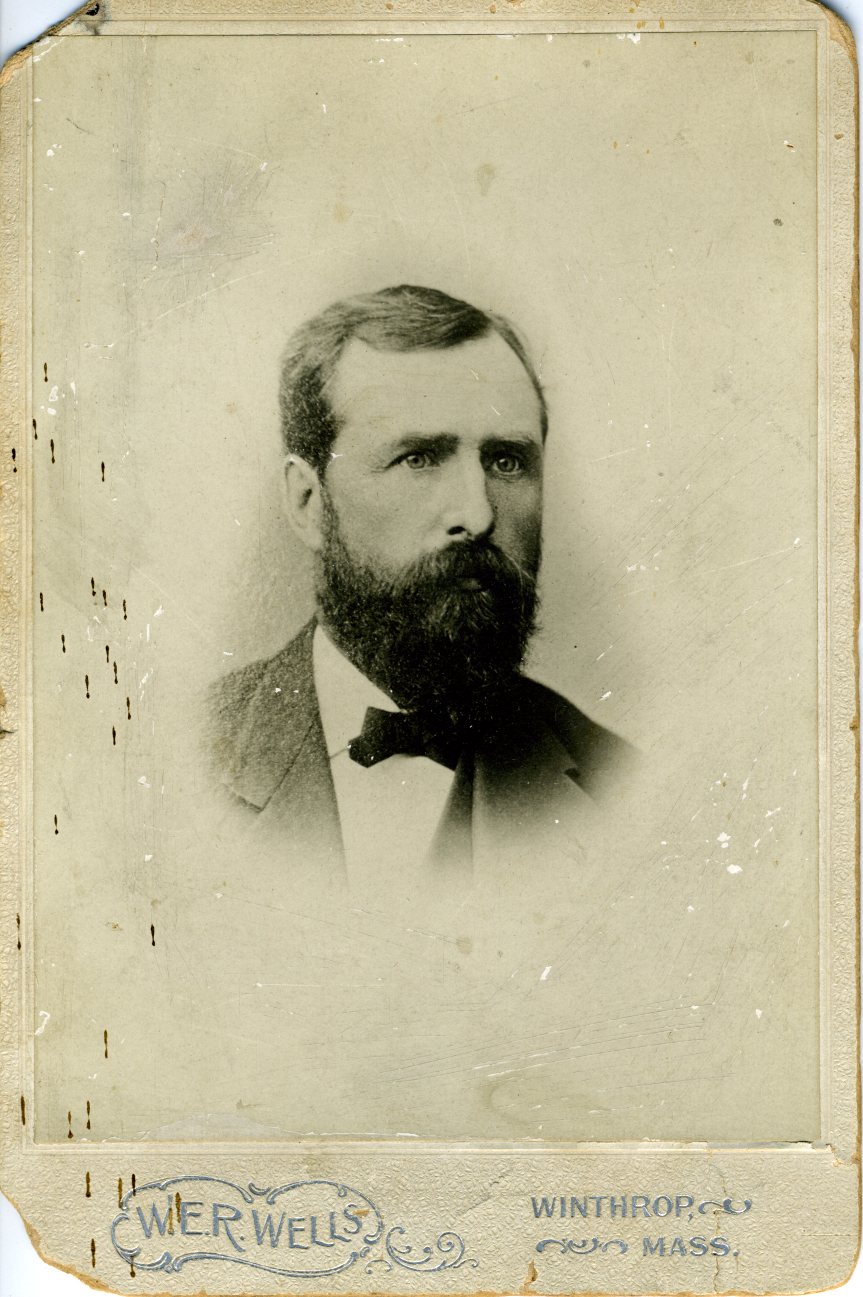
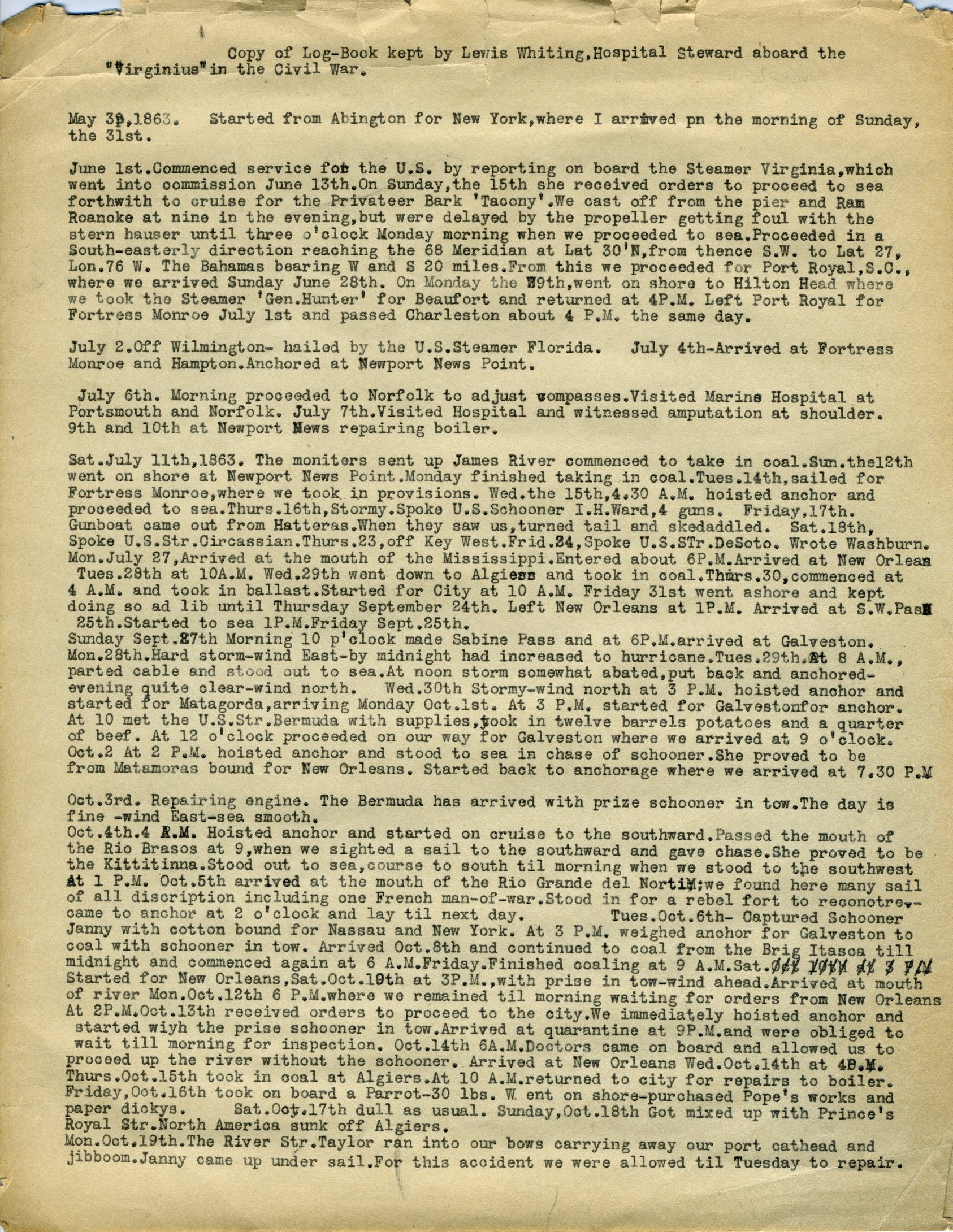
Dr. Lewis Whiting practiced in Danvers, Massachusetts after the Civil War. His biography as published by Essex County Mass., 'The Historical Collections of the Danvers Historical Society': Dr. Lewis Whiting was born in Hanover, Jan 24, 1832, the son of Oran and Mary (Jones) Whiting. He graduated from the Abington Academy in 1849, Bridgewater Normal School in 1850, and Bellevue Hospital Medical College in 1862, College of Physicians and Surgeons in 1864 ( most likely1863 not 1864), and the New York Homeopathic Medical College in 1865. He served as a Surgeon's Steward in the United States Navy in the Civil War, on the U.S.S. "Virginia". In 1868 he came to Danvers, where he began the practice of medicine, and had the distinction of being one of the first homeopathic physicians in the county. On Oct. 10, 1868, he Married Miss Clara M. Smith of Somerville. For a period of over twenty years, he enjoyed a large practice in this town, from which he was obliged to retire in 1890 on account of ill health. He spent much of the remainder of his life in the south and passed away in Coant, Florida. He was a member of the Massachusetts and Essex County Homeopathic Medical Societies and the Hahnemanian Club of Boston. The documents and images obtained with this surgery set indicated Whiting was a surgeon's steward serving on the 'Virginia' during the early days of the War during 1863 - 64. It also documents where Whiting was on dates in the Naval history of the 'Virginia' before he left the Navy and entered New York Homeopathic Medical College, in 1865 after the War where he apparently completed his medical training in homeopathic medicine. See this article for more on Aleopathic vs Homeopathic physicians
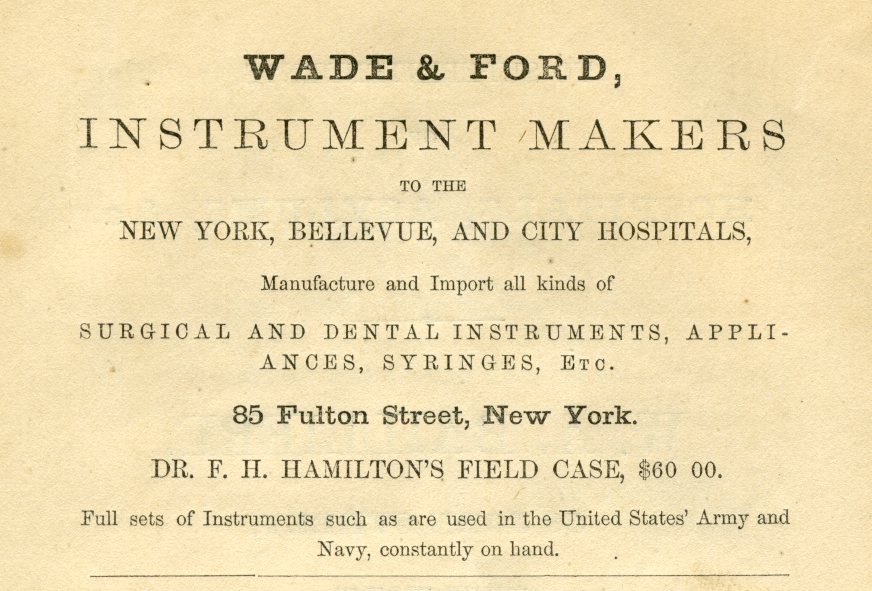
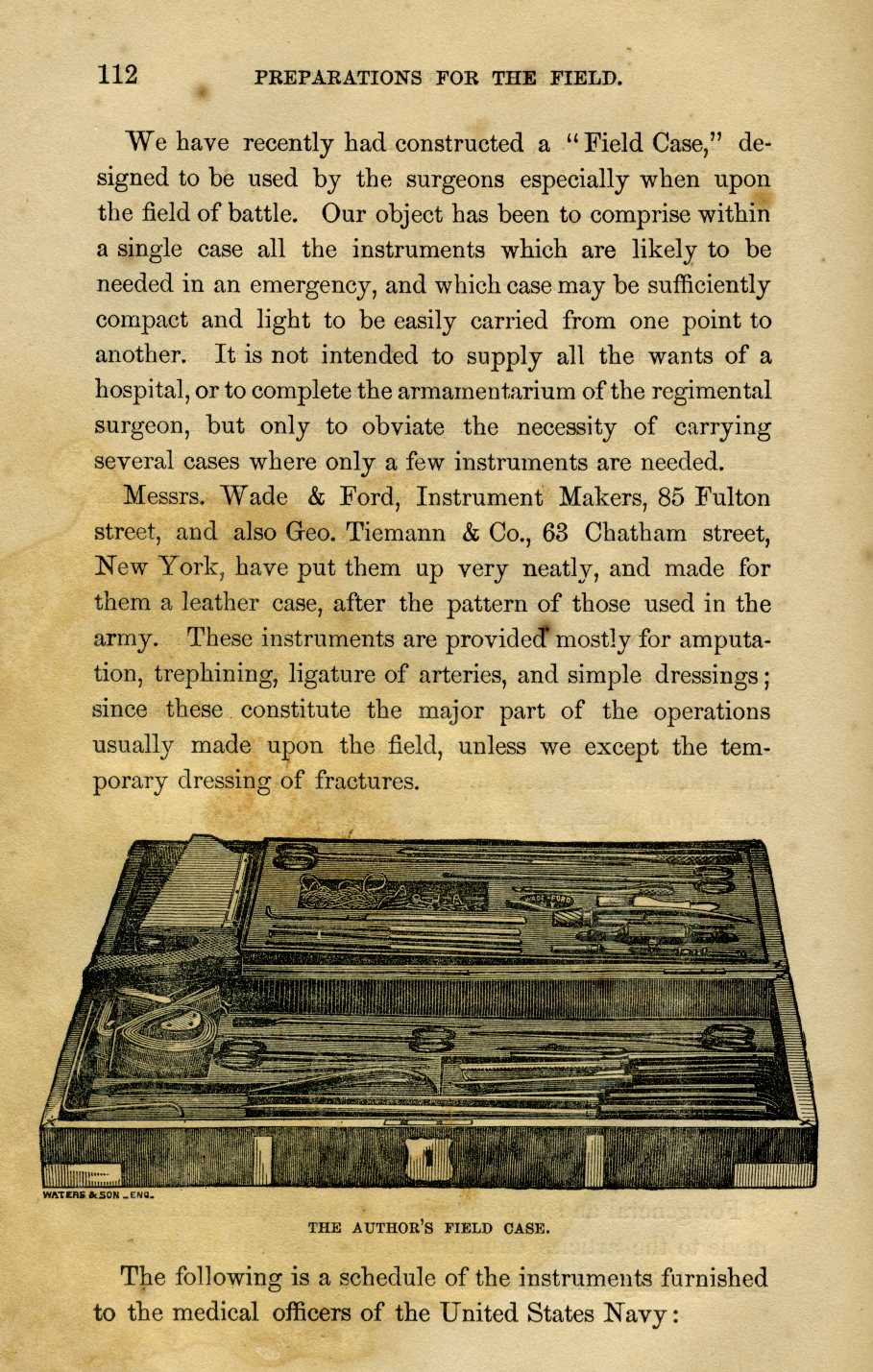
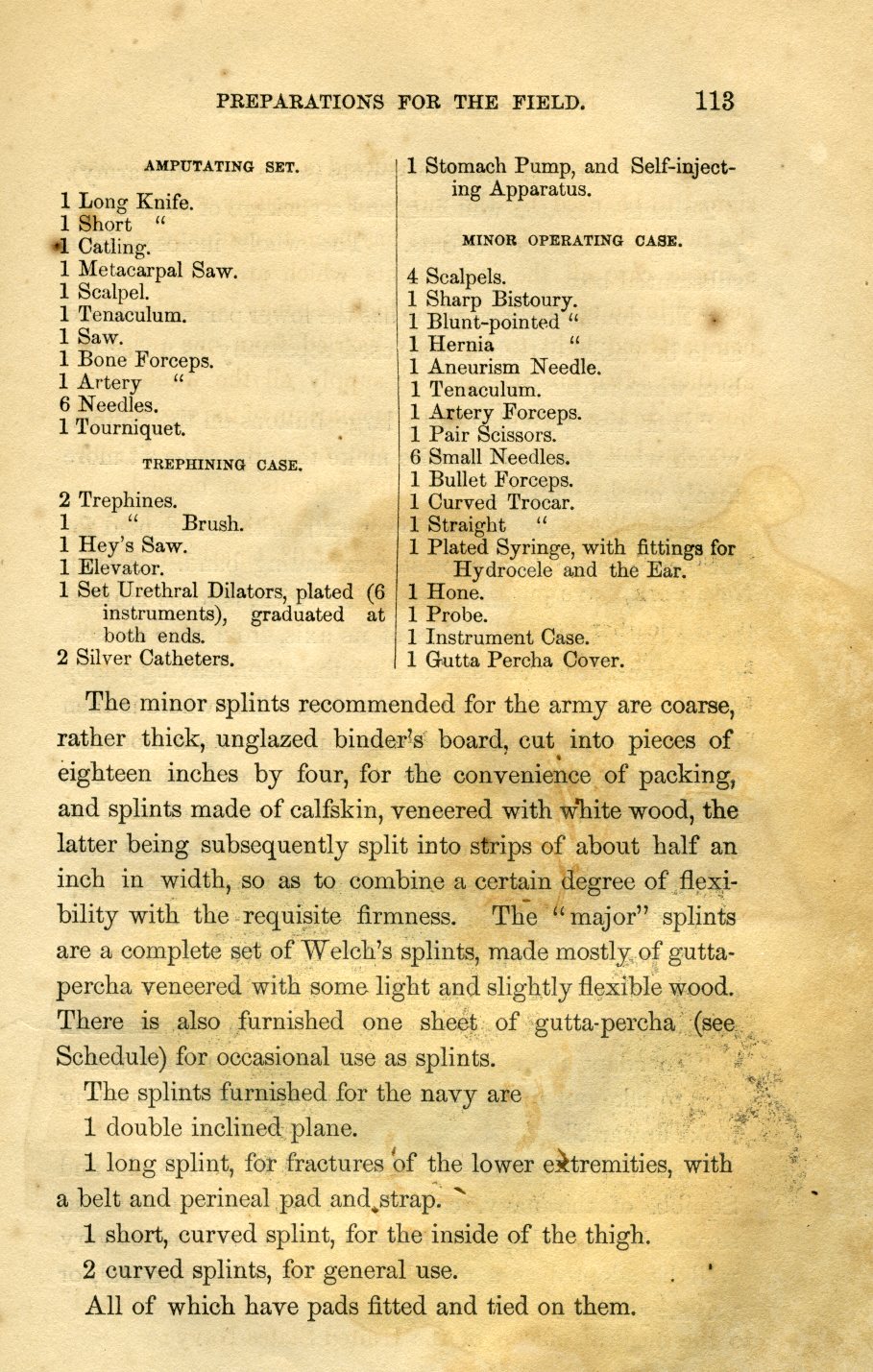
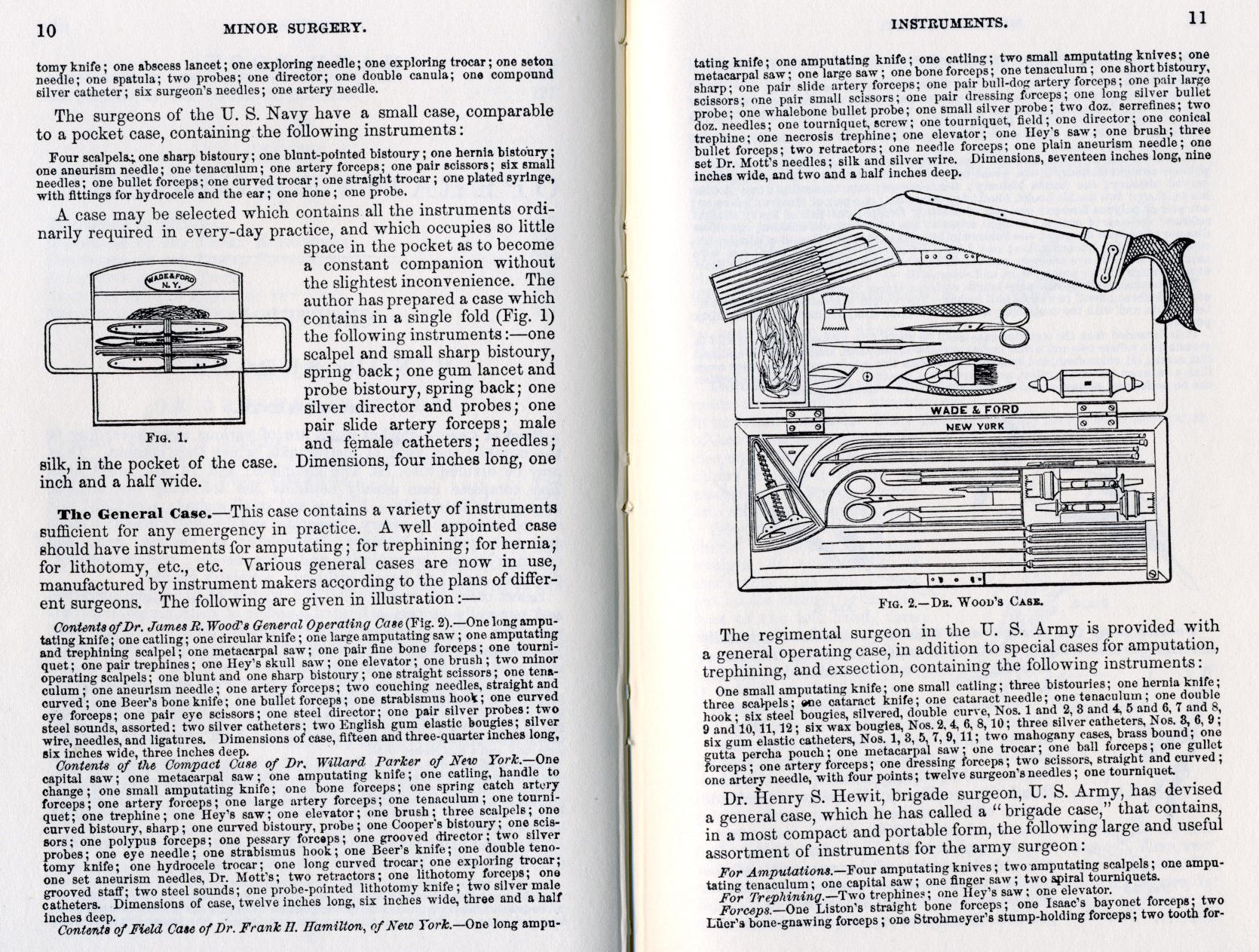
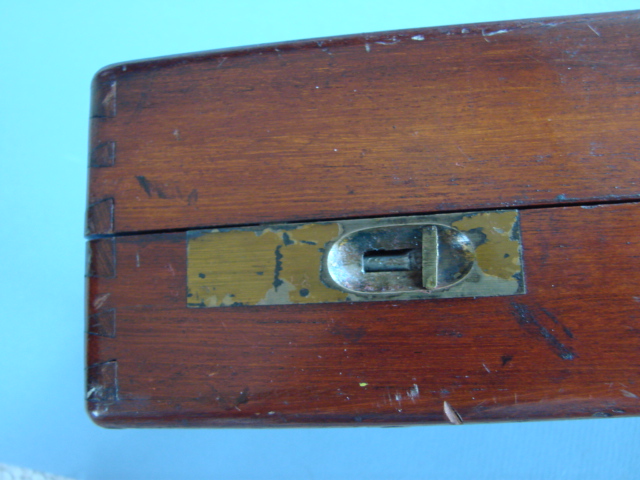
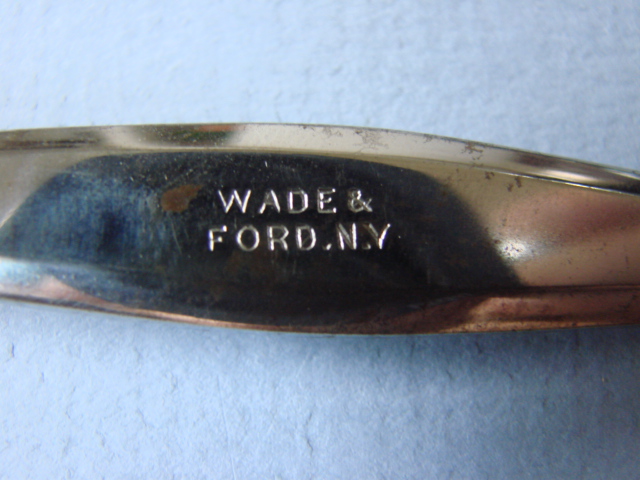
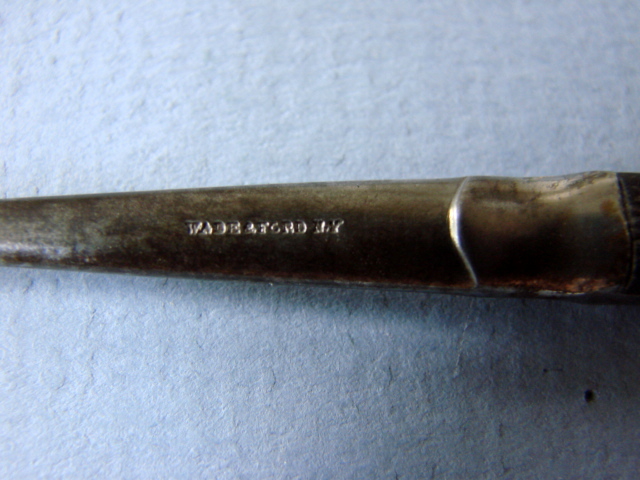
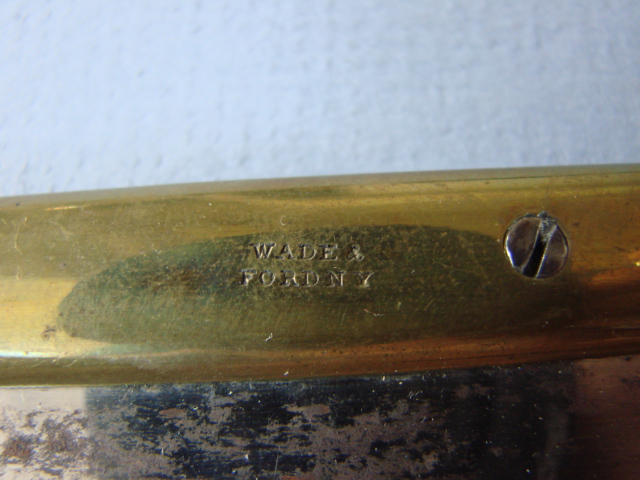
The maker of this surgery set was Wade and Ford, New York City, who were in business during all years of the Civil War and were known suppliers to the Union purveyors for the various medical department contract orders: Surgeon Whiting was in medical training in New York City during the War and would have had access to Wade and Ford;s office if he wished to personally order the surgical set of his choice. He was also in the area post-War where he could have purchased a set as military surplus, but the lack of an engraved brass plate on the set top is the big question...why was an obviously limited military constructed set not marked for the service which owned it...the U. S. Navy? Of course we don't know if the Navy actually had their sets marked as did the Army Hospital Department. The question: did Whiting order the set that way or did the Navy Department order them that way...with no brass plate? There are not enough documented Navy sets available for viewing or research to know for sure one way or the other about Federal Navy procured surgical sets, but we know for certain that Wade and Ford as well as Tiemann supplied sets to the Navy.
See another set in this collection owned by Navy surgeon J. H. Culver, who was at Bellevue Hospital at the same time as Whiting: J. H. Culver, Asst. Surg. U. S. Navy, 1862-1863. Both surgeon's possessed Wade and Ford sets during the same time frame. Again, suggesting a close association of Wade and Ford with the surgeons being trained at Bellevue Hospital during the War years.
The working theory on this set is that it would make sense a Navy set would contain both surgical and dental instruments, especially since this collector has never seen a single Union military set with dental instruments in any size set. (Note: French maker Charriere's sets are seen with both surgical and dental instruments in their cases.)
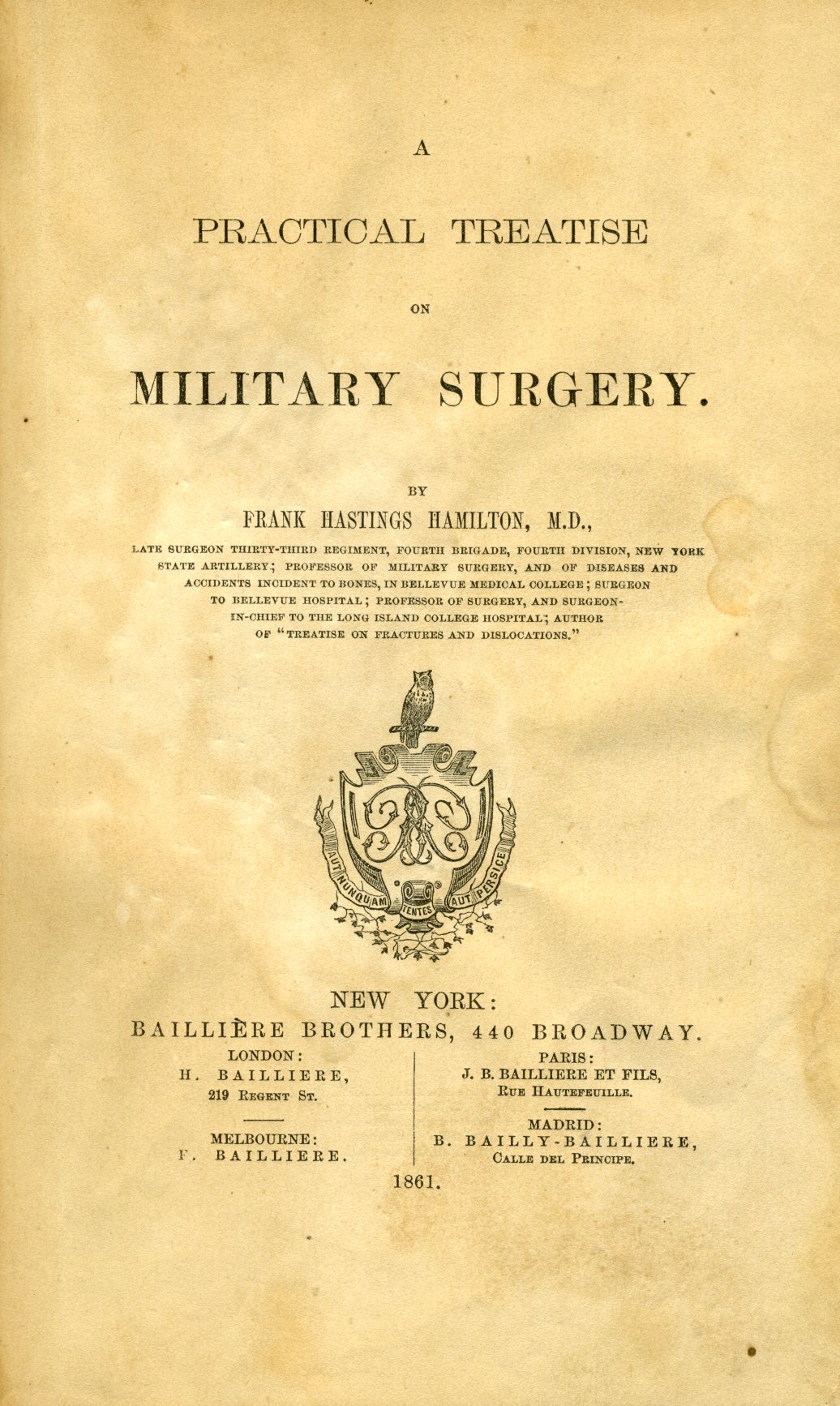
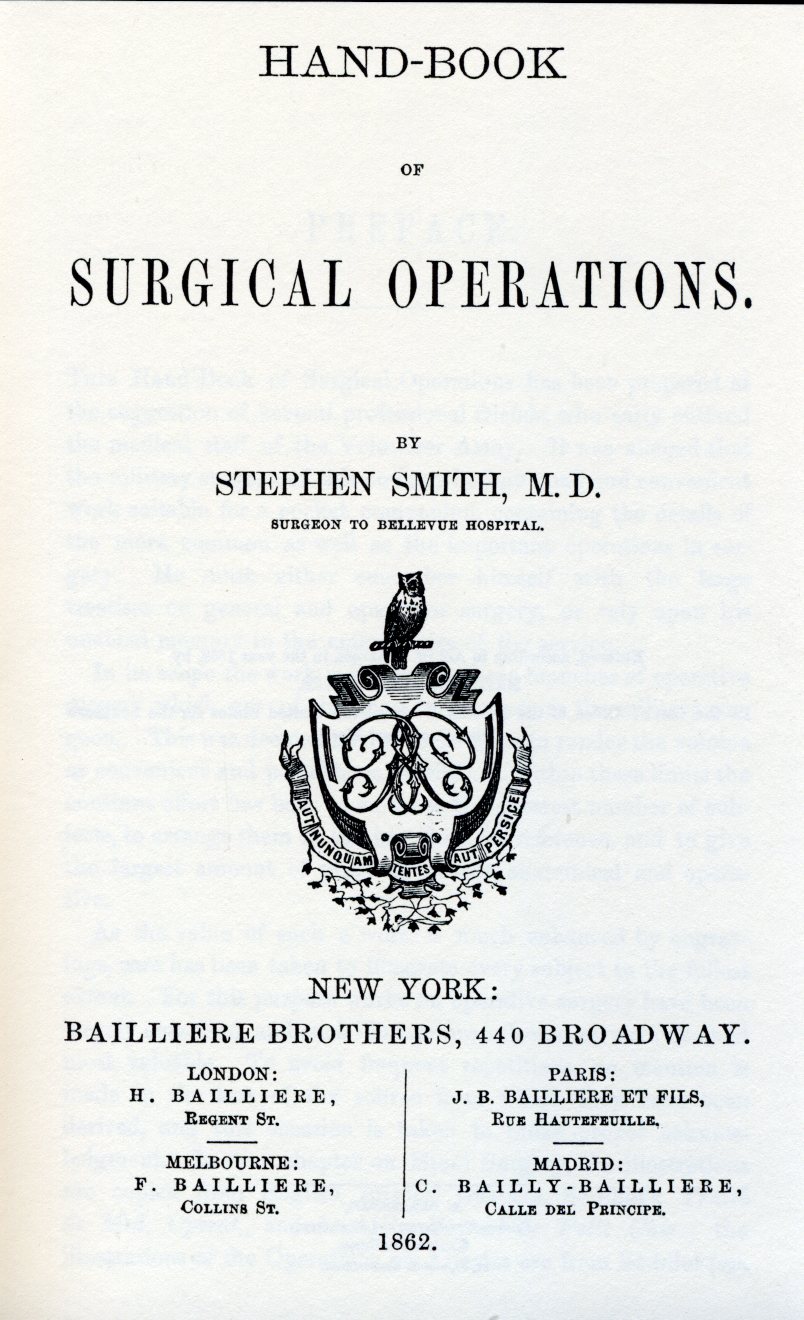
We'll never know for sure, but the bottom line is this set was in the hands of the Whiting family and it was sold at auction in 2008 by a Boston auction house with a photo and written provenance for Whiting. We know for sure Lewis Whiting was at Bellevue Hospital before serving in the Navy as a steward, and he most likely was influenced by a local instrument maker: Wade and Ford in New York City. Wade and Ford obviously had connections with the faculty at Bellevue via Steven Smith, M.D. and Frank Hamilton, M.D., both of whom were writing textbooks on surgery and influencing selection and design of surgery sets by the military for whom Wade and Ford produced surgical sets during the War years under contract and military specifications.
See an article on Steven Smith, M.D. and his association with Wade and Ford from drawings in his book on surgery.
See these articles for much more on: The Federal Navy Medical Department during the Civil War or on the Confederate Navy Office of Medicine and Surgery.
See an original signed letter by William Whelan, Secretary of the Navy, Bureau of Medicine & Surgery
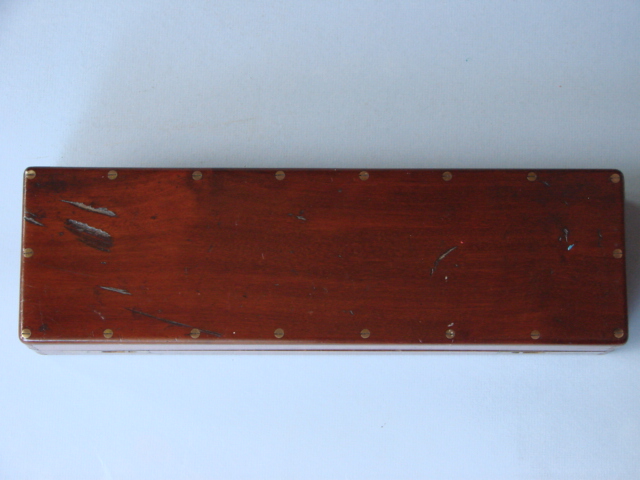
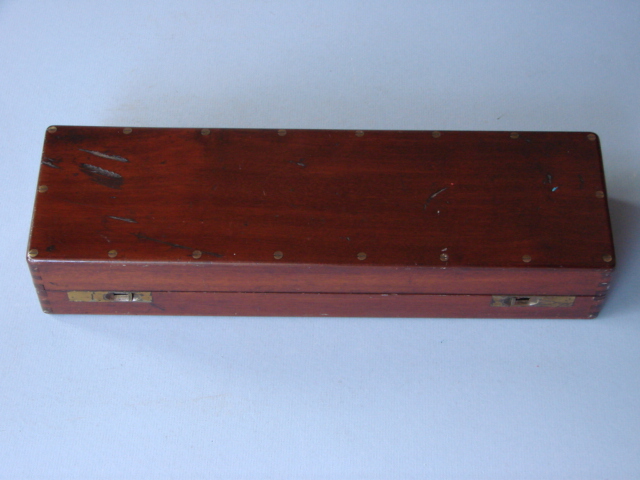
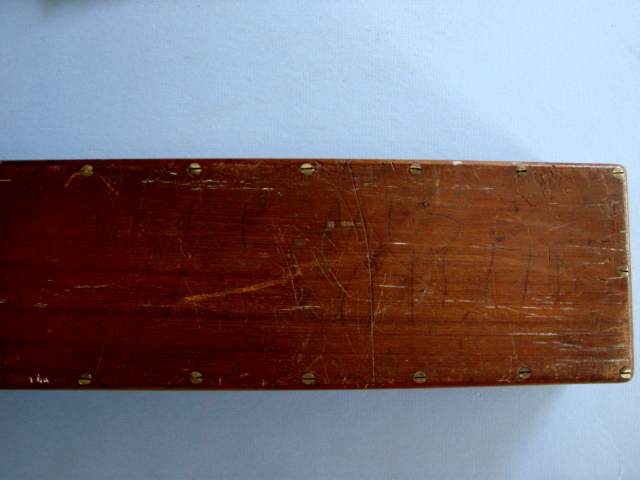
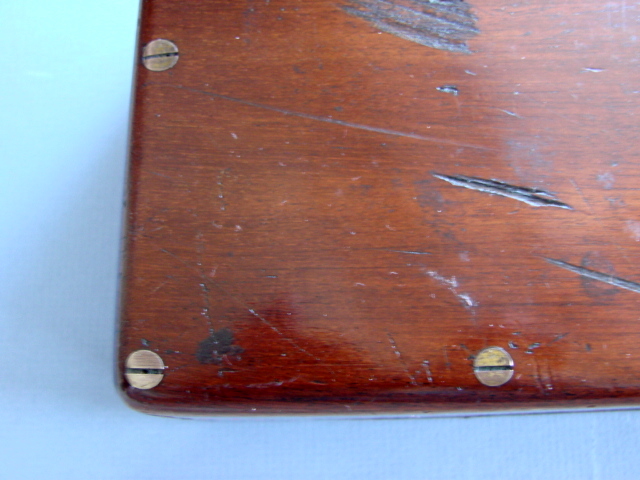
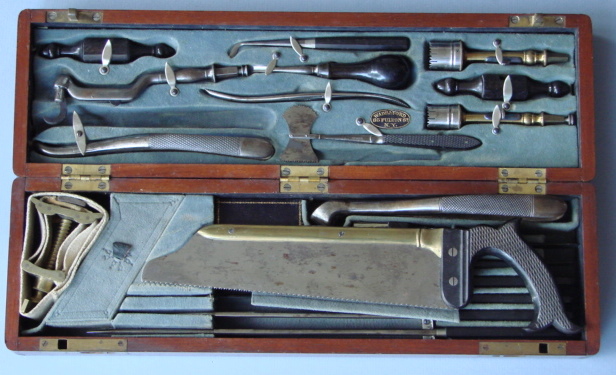
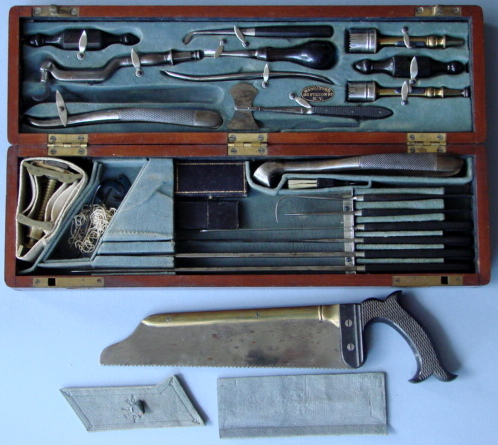
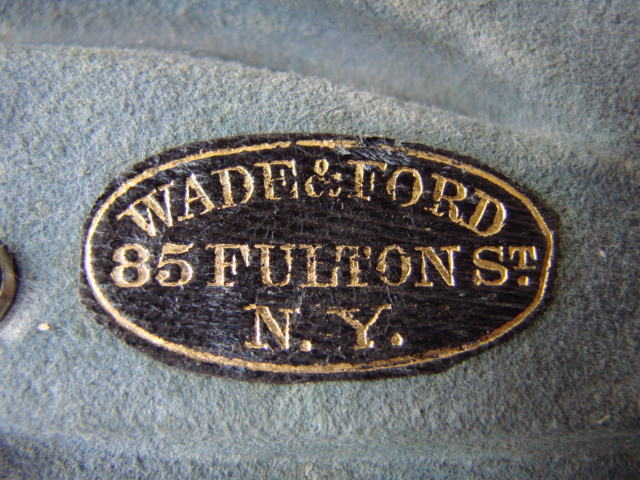
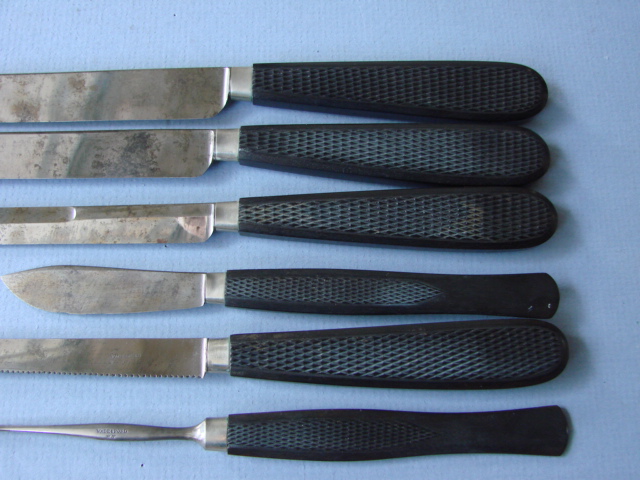
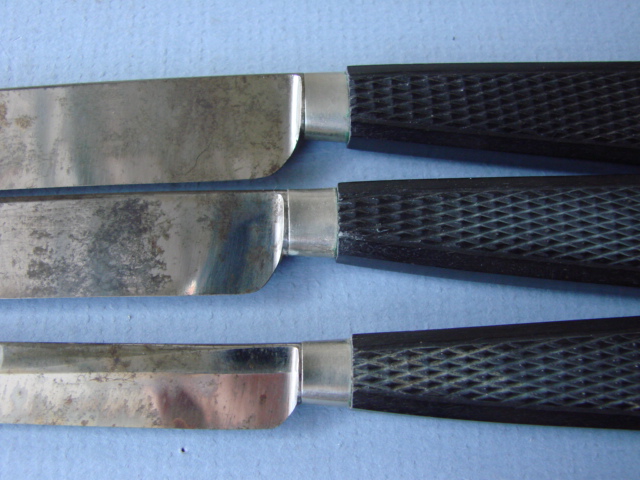
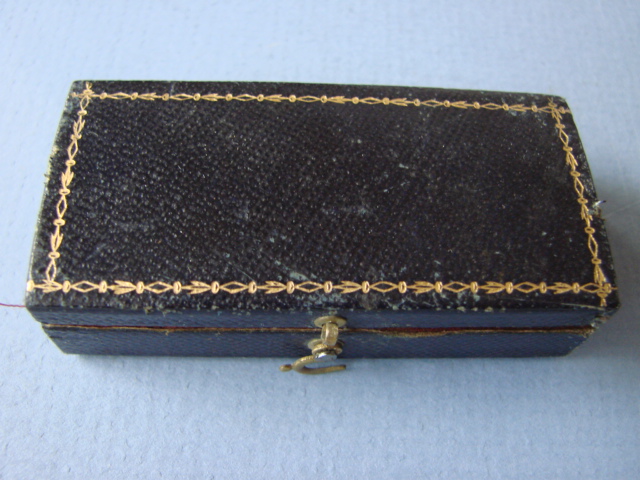
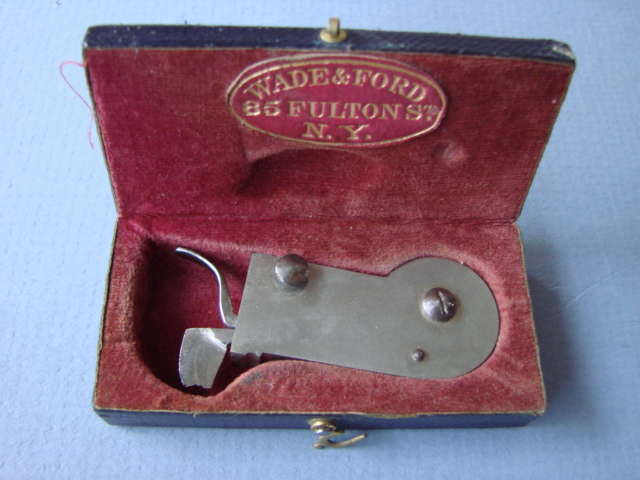
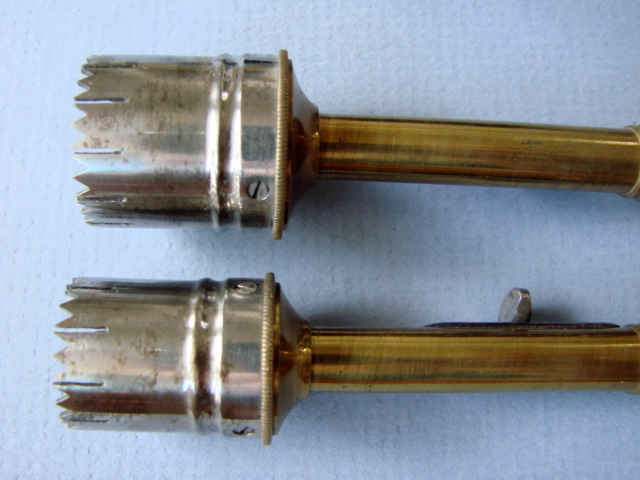
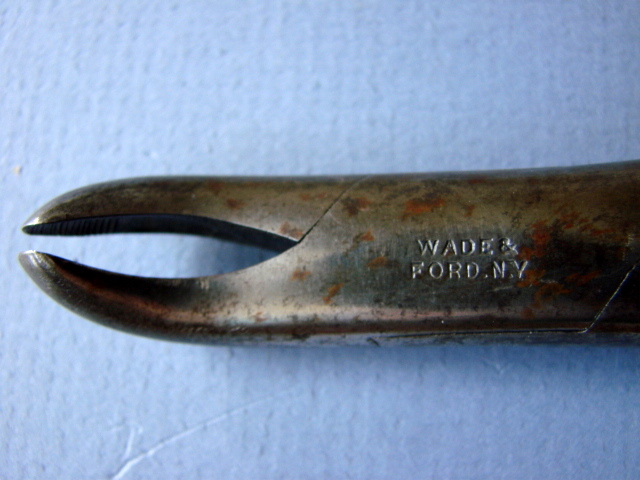
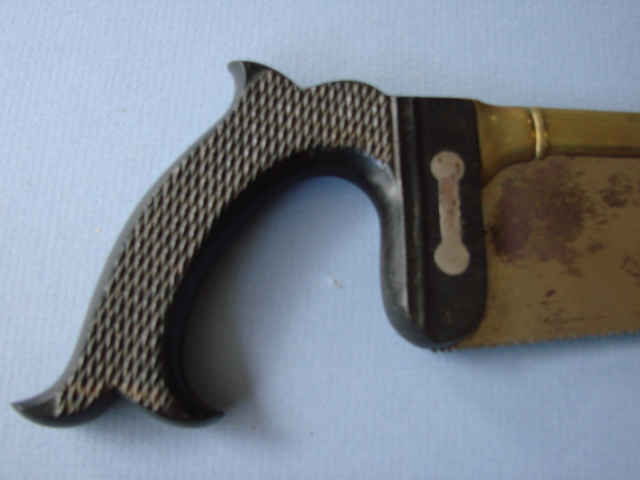
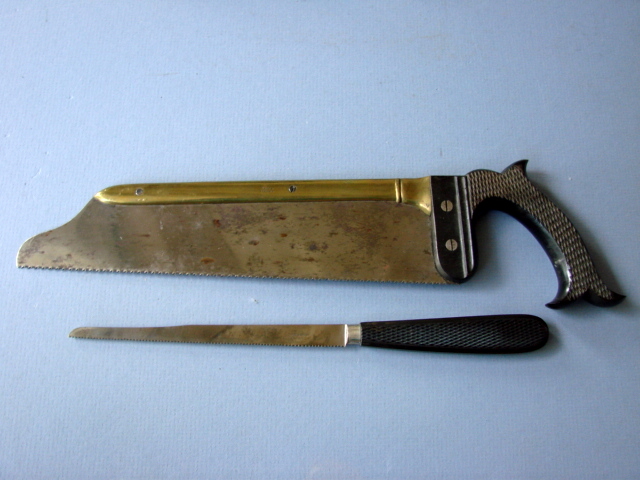
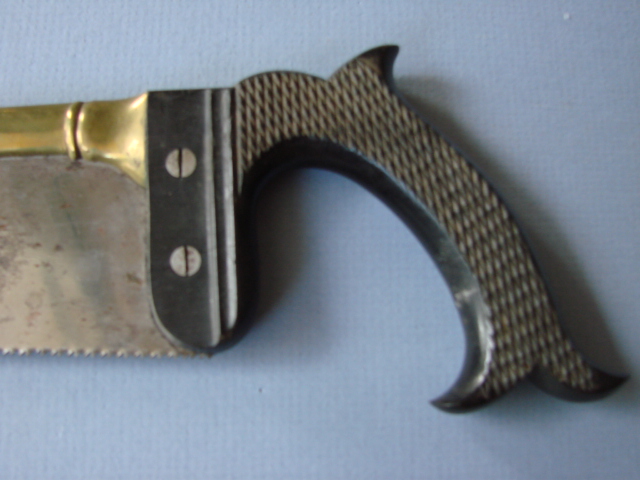
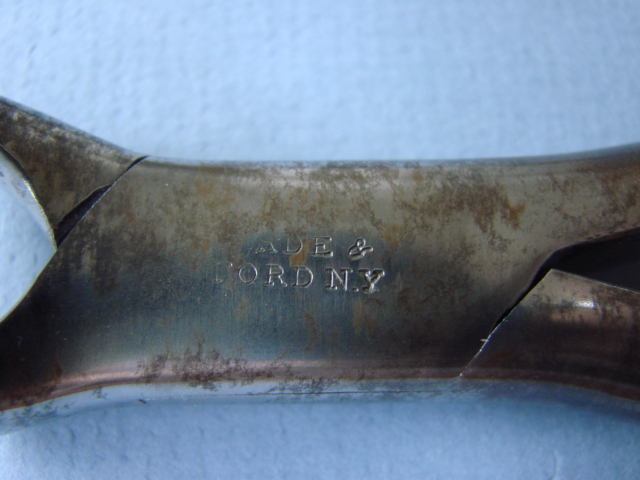
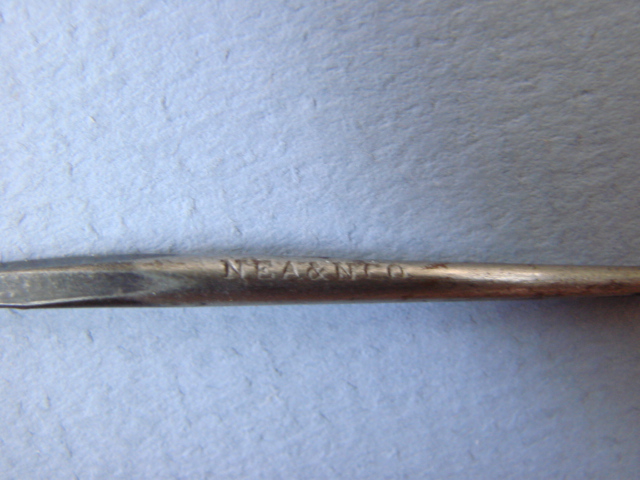
This Wade & Ford surgical set has a maker label marked: 85 Fulton St., N.Y., which dates it solidly during the Civil War. The instruments are in a military style case with bilateral sliding latches, no key, multiple brass screw re-enforced lid, made of mahogany, and has all major pieces, which are marked Wade & Ford/ N.Y. The presence of the English style amputation saw with brass back, the early style trephine crowns, and the design of the ferrules on the knives leads me to believe this is an earlier (1861) rather than a later set. I think the the Culver set, linked below, is the later (1863) set because the ferrules on the knives are later, the engraved date, and the set shows up in Smiths book. See: An 1863 Wade and Ford Surgical Set owned by Civil War Federal Naval Officer J. H Culver, M. D. As mentioned before, it is of particular interest this set has both dental and the usual instruments expected in an amputation set. Its small size indicates use was intended for mobility and for treating limited medical issues as one would expect on a ship, not those of a surgeon in a hospital.
Military sliding latch (left), brass screws (right) for heavy military use
Case open (left), partitions and saw removed (center), all contents (right)
Wade and Ford's Civil War address
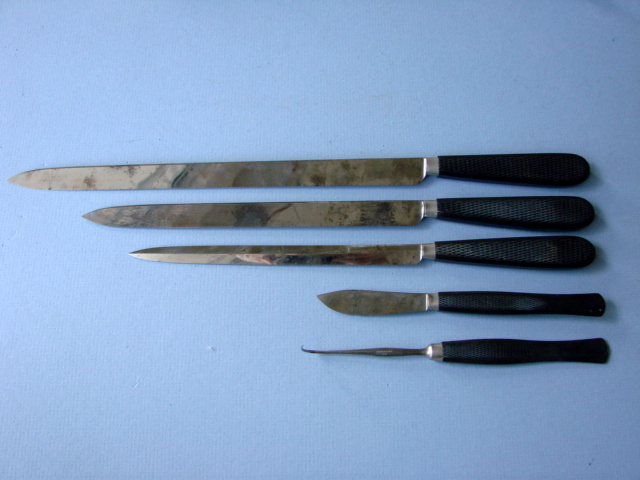
Amputation knives, tenaculeum, note the ferrules joining the blade and handle
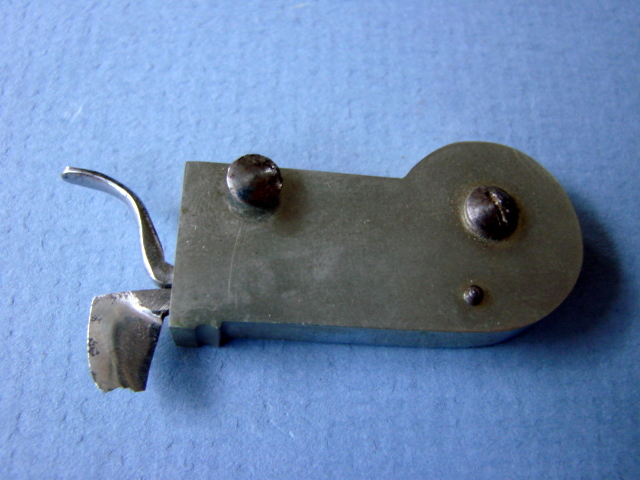
Wade and Ford bleeder (scarificator)
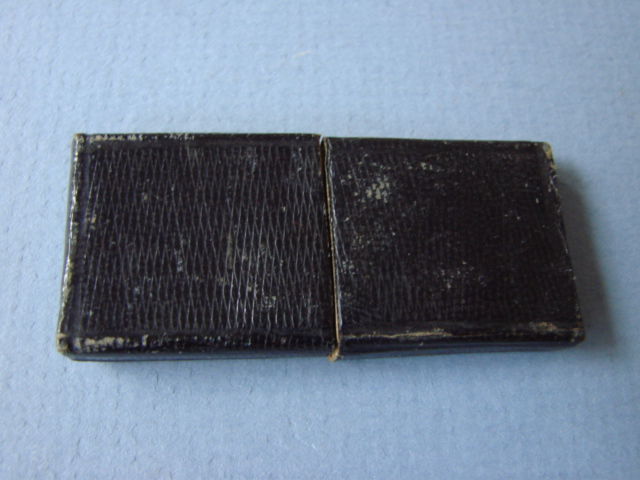
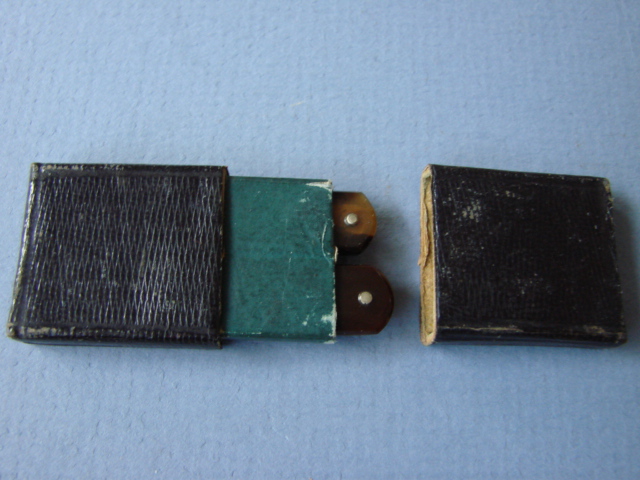
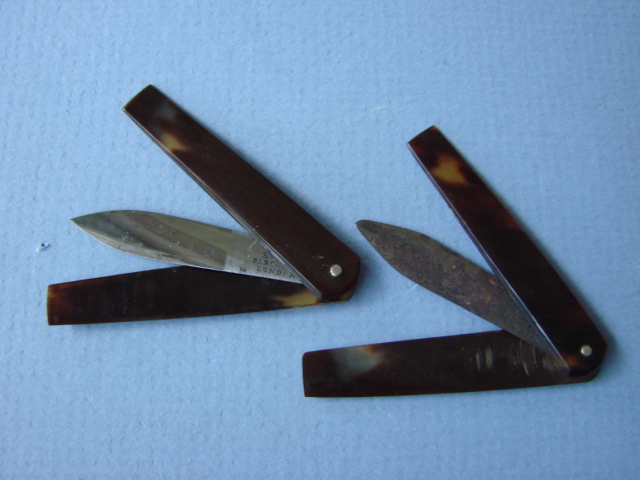
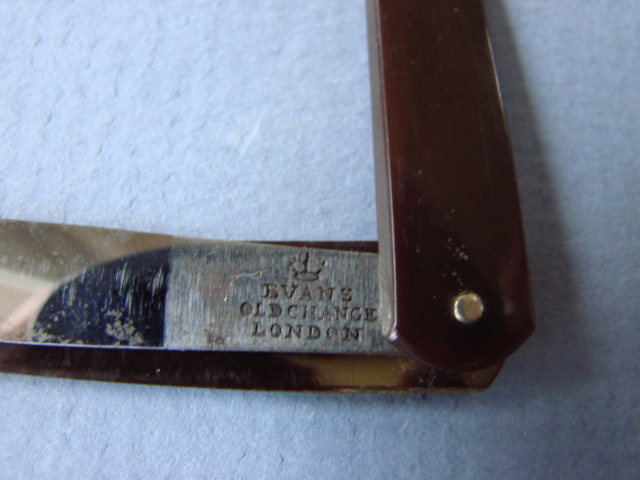
Thumb blade bleeder lancet, set of two, marked with Evans/London maker (not uncommon)
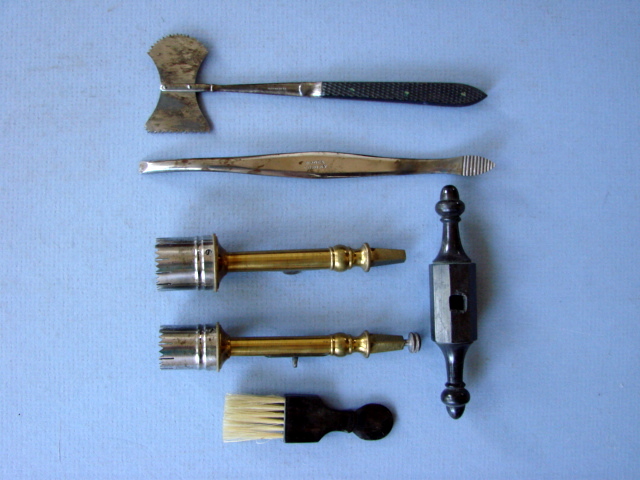
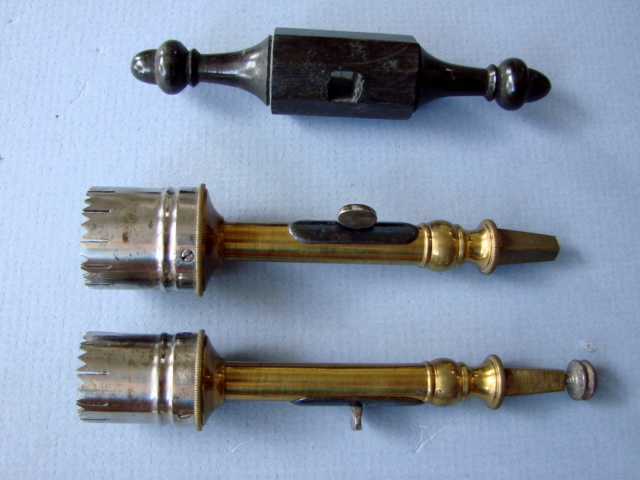
Trepanning group
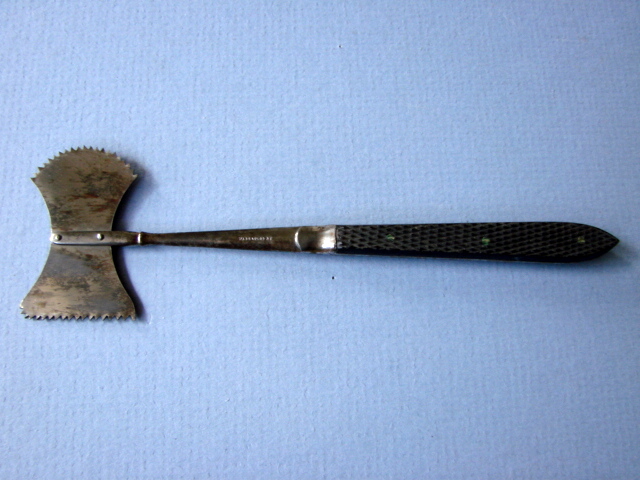
Lenticular/rasp, and Hey saw
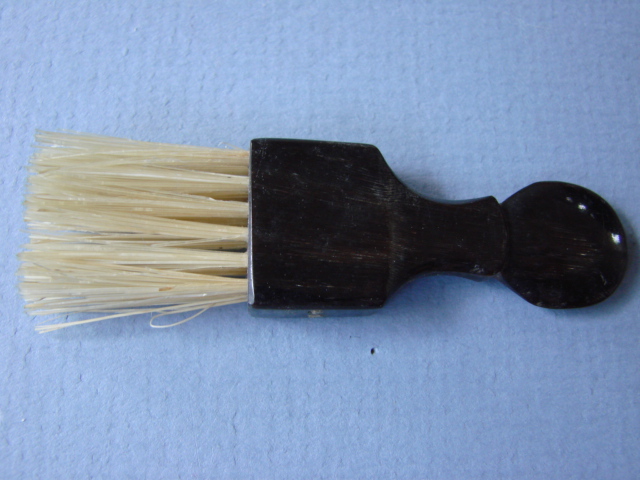
Bone brush, trephines (early crown design)
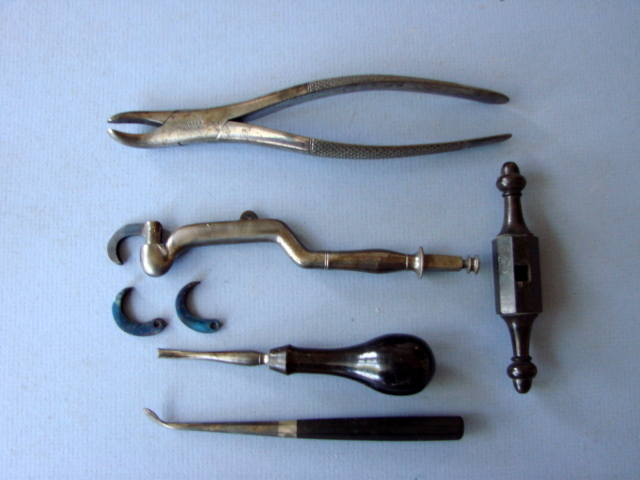
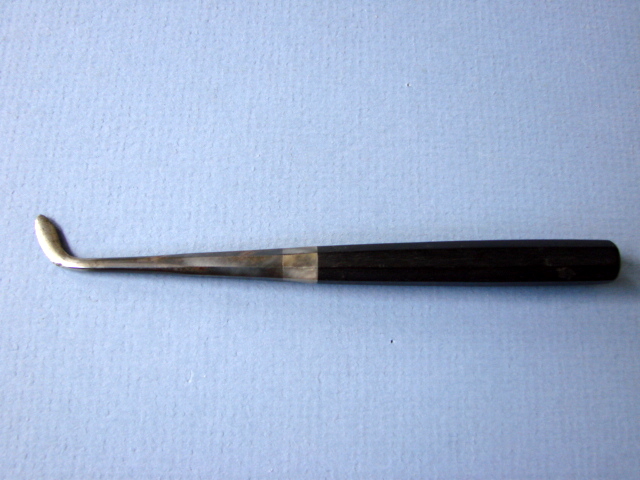
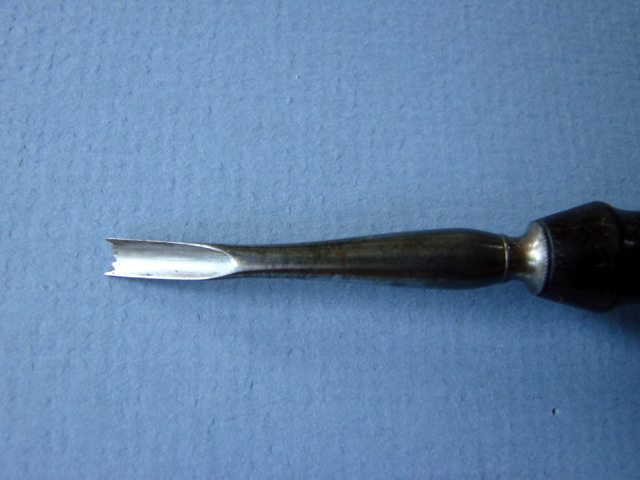
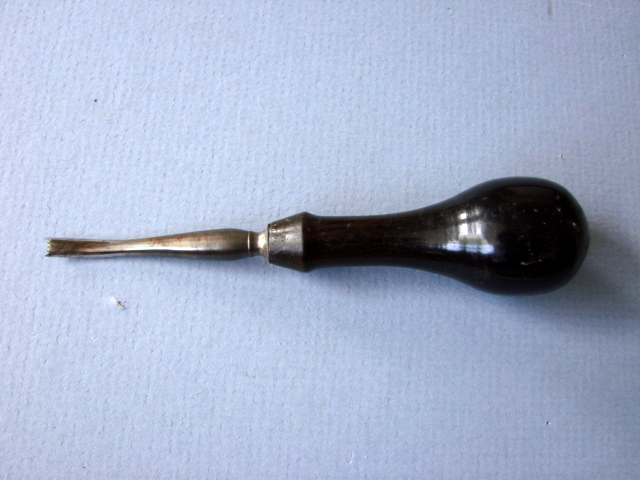
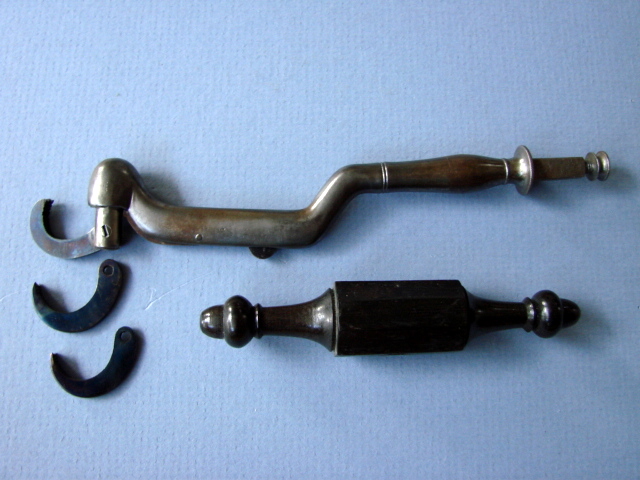
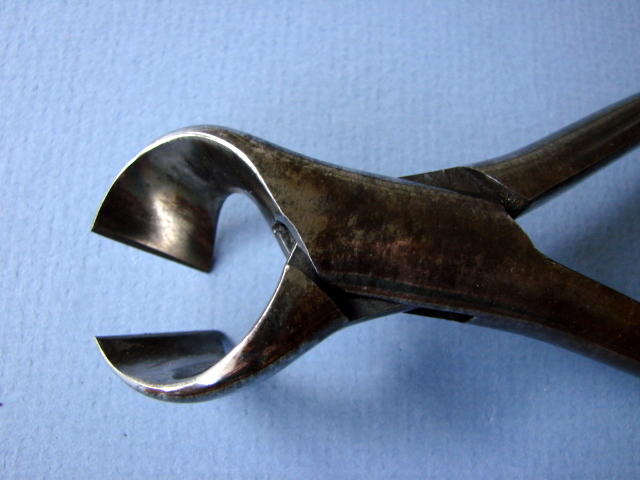
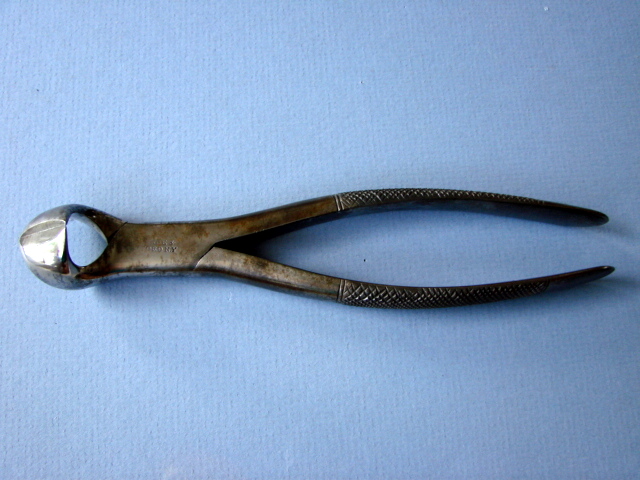
Dental group
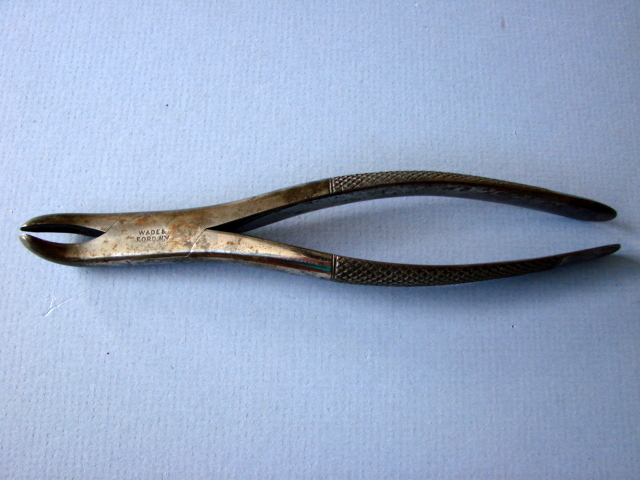
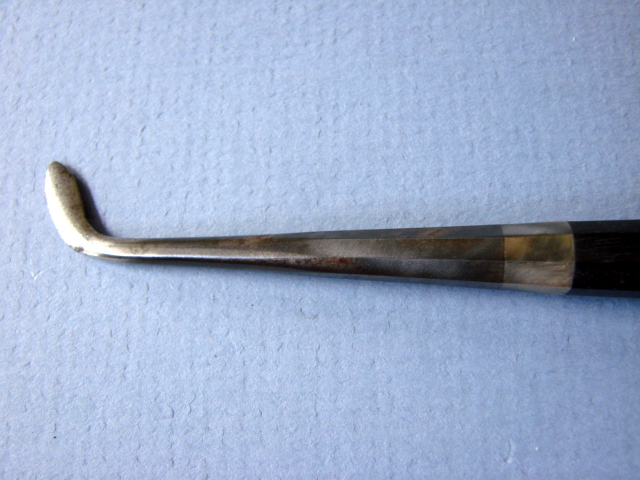
Left, one of two anterior extraction forceps (one missing). Right , gum lancet or elevator
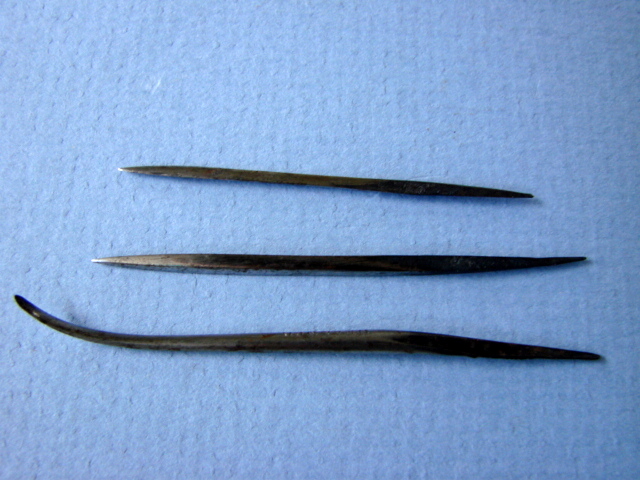
Left, root elevator. Right, molar key for extractions with extra tips
English style capital amputation saw with brass frame
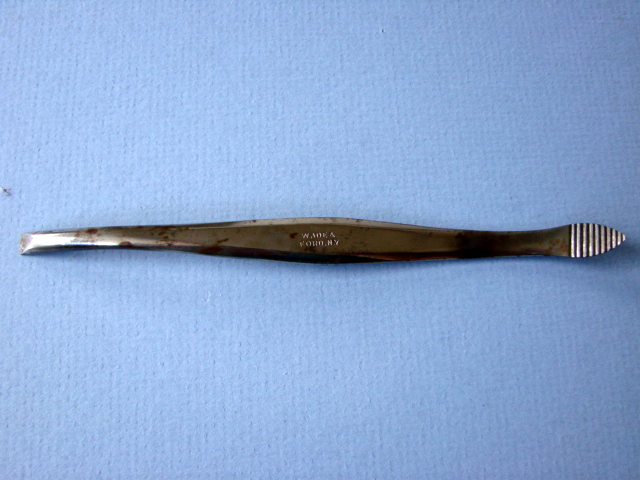
Bone forceps
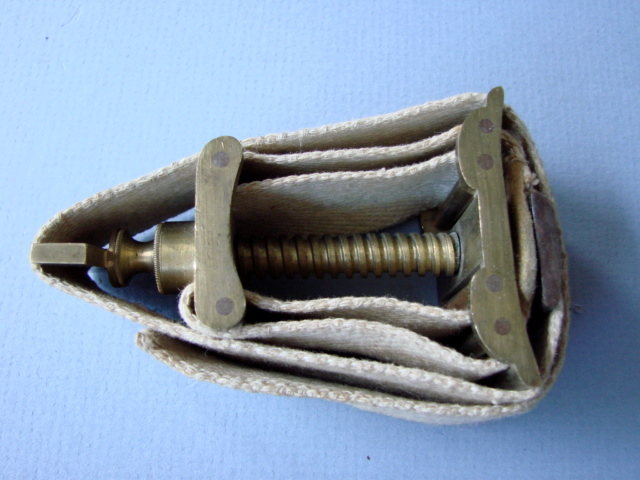
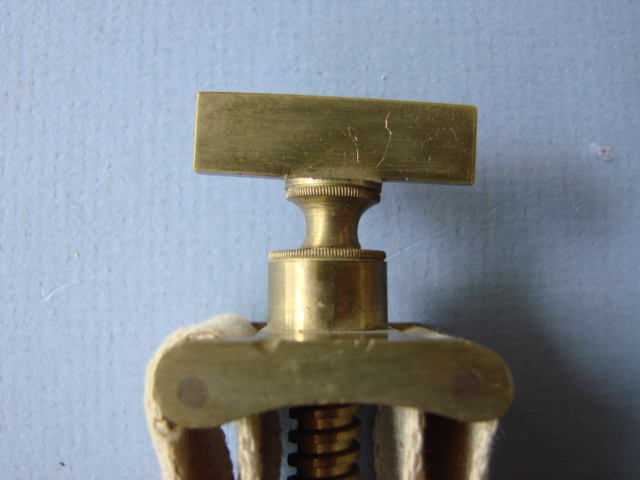
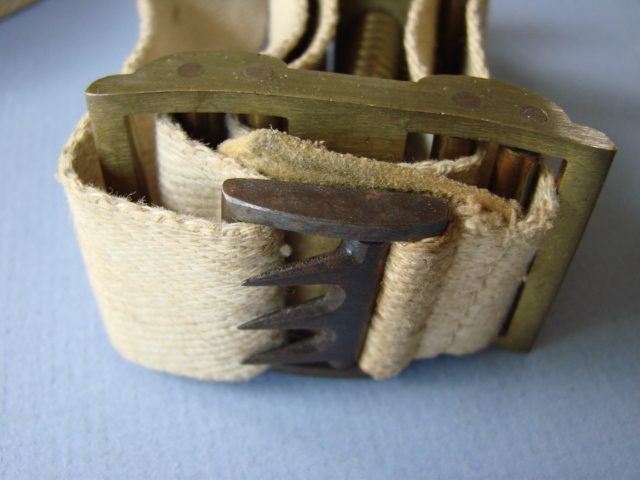
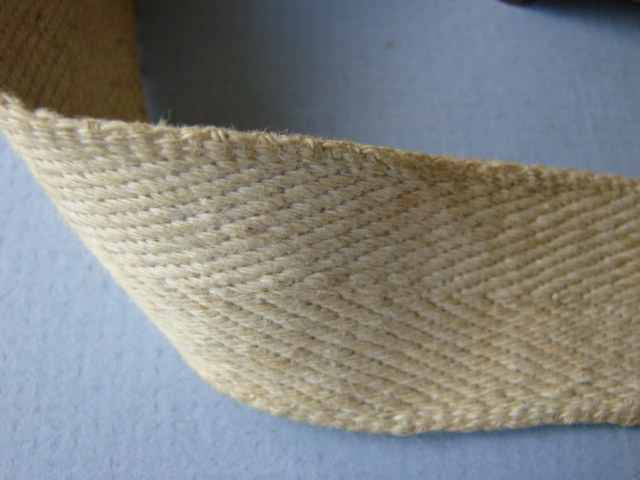
Tourniquet is unmarked, as usual for the maker, early style plain one color strap, cast iron buckle (early style)
|