|
GRADING:
Fact: Everyone has
problems when grading older (pre-1940) lures or boxes because it is totally
subjective.
(Subjective: an
adjective; of or resulting from the feelings of the person thinking; not
objective; a personal feeling or opinion)
VISUAL VALUES:
Visual values vary
considerably from person to person. As we all know, not everyone has good
taste or appreciation for details. (What other explanation is there for people
who buy ugly dogs?) Being old is no excuse for poor condition. I don't
know how many times I've heard a guy lecture me on the fact that: "these lures
are over 80 years old you know, so you have to expect a few chips and
scrapes". And I reply, "True, sir, but the price will have to adjust
accordingly for the chips and scrapes!" If you've got chips and scrapes, then
we are not talking excellent condition or excellent prices.
Mint or New In The
Box:
-
Mint means perfect and
untouched, new, unfished, no crazing, and unused.
-
Mint is as new from the
factory. New! No flaws whatever, even the varnish is completely
clear.
-
Mint is the way they looked
the day they were put in the box at the factory.
Excellent :
-
Excellent means an almost new
lure. It has some minor, and I do mean minor, defects like tiny
pointers or a tiny varnish flake. These lures will be in almost
new condition and most likely never having seen water.
-
You don't have to make
excuses for a lure in excellent condition.
-
Excellent means there is
nothing missing from the paint or varnish. The paint will be shiny and not
dull. Dull dirty paint or baits exposed to gasoline will not have a
glossy finish.
-
With Excellent, there are no
paint chips, no varnish flakes, but there may be a ring around the belly
weight. Expect very minor unopened age cracks or some 'crazing' of the
varnish which is exampled below.
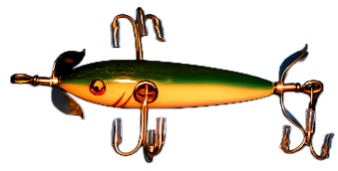
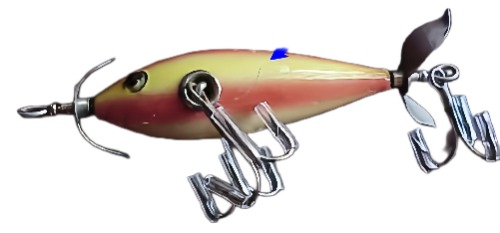
Examples: below an early c. 1913-1920 Shakespeare underwater minnows in absolute Excellent
condition. The paint is glossy or "lipstick shiny". There is no crazing, no
chips near the tail or nose prop, no hook drags, and no varnish flakes. The
hardware is shiny and there is no rust. This is really into the level of
Excellent plus or mint.
Excellent has two parts:
-
An Excellent plus lure means
there are no hook pointers in the paint, absolutely no hook scrapes, no
paint off the belly weight, no paint chips and no varnish flakes. The paint
is shiny, but there may be some age related crazing or very minor fracture
cracks in the varnish or paint.
-
Excellent minus allows for
some minor varnish defects, but no paint loss other than maybe very, very
minor chips at the tail or belly weight, and no hook drags. Hooks should be
consistent with the paint finish.
DEFINITIONS AND
TERMS:
The following are
terms and illustrations of defects which alter the grade of a lure. No one
defect will set the grade, but these are the types of problems which
differentiate between excellent and excellent minus or between excellent minus
and very good.
|
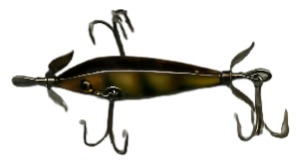
In the photo
there is one pointer near the tail area on the black
back.
Depending on the extent
and number, pointers are not a huge factor unless the
bait is being passed as mint or excellent. The
more pointers the lower the grade. Large and
deep pointers like those on this red and black spotted
lure can drop a grade to Very Good quickly.
|
 |
-
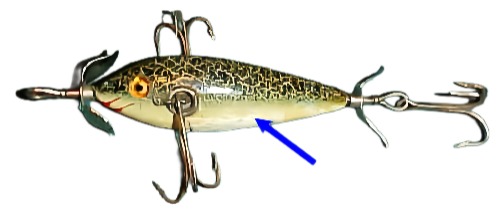
Flakes:
Usually in reference to varnish flakes which are the result of the varnish
sticking to something and being pulled off the paint, or an actual varnish
chip down to, but not including the paint color. Varnish flakes can
and will down-grade a lure if there are more than just a few and it also
depends on the extent of the area covered by the flakes and where they
occur.
|
The photo illustrates multiple (severe) varnish flaking on the
belly. Flakes can be a big factor in down-grading depending on
the extent. How much you count paint off the belly weight is a
personal call since so many baits have this problem it almost seems the be
the norm, but that is no excuse. Paint off is paint off...downgrade it.
This lure would grade Below Average. |
 |
|
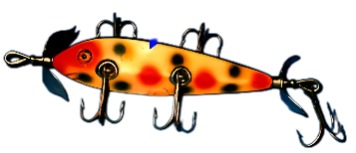
The red and green spotted, five sided, Heddon series 00 below is notorious
for flaked varnish due to all the sharp edges. This one is in Excellent
minus or perhaps Very Good plus, plus due to a couple of light varnish
rubs (lighter areas) between the cups. There is a ring around the belly
weight, but no paint loss (yet!). There are no hook drags, no chips into
the paint, no significant cracks. |
 |
|
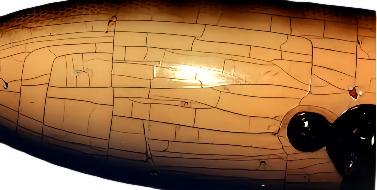
The
photo exhibits extensive, rather than minor or micro crazing. It's a
personal choice as to the effect on the grading. As it gets more
extensive, it is a detriment. In older Heddon's, if minor, it can
be an asset to determine authenticity. |
 |
|
This
example shows a semi circular mark made by the hooks as they swing
around. Typically this problem quickly down-grades the condition
into the Very good range. |
 |
|
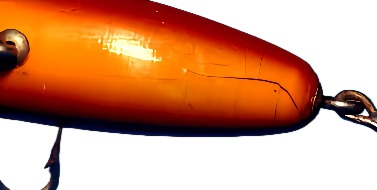
In
this illustration, there are both age crazing and the one deep crack
into the wood. This is more a personal problem than a big deal in
the grading. It depends on the extent of the crack, but usually a reason
to down grade the lure. |
 |
-
Chip:
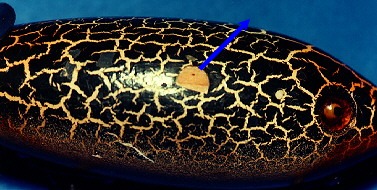
Paint loss in varying sizes, but usually down to the wood. The chip in this
green crackleback paint is typical of one down to the wood.
Paint chips are the biggest single problem which will down-grade a lure.
If there are paint chips down to the wood, then the lure is not going to
grade much above Very Good condition.
|
A
chip this size starts this lure grade at very good minus and other
factors might take it down further. Chips or paint loss are a very big
deal in grading. You got chips down to the wood, you got problems!
This chip would keep this lure in the Good range at best.
|
 |
-
Shiny:
(a.k.a. lipstick shiny,
slick, wet) A term used to describe the slick, smooth, non-dull, quality of
well preserved paint which has not been subjected to chemicals or intense
light. The opposite of the shiny surface would be dull, dirty, and lifeless
paint as a result of exposure to chemicals, light, dirt, or use. Degree in
either direction determines plus or minus grade. This is a factor you
want to see on excellent grade lures.
-
Beater: a lure that is in less
than Average condition. Not collectible, but useful for parts.
-
Rub:
Smooth paint or varnish loss
via rubbing, not a chip, not a flake, but more than likely due to rubbing
against a hard object like a box top or being deeply cleaned. Depending on
the extent, a factor, but not a big deal sometimes.
-
Touch-up: Typically adding new
varnish, gill marks, or an attempt to match the existing antique paint with
new paint to hide a defect. A no-no and automatically removes the lure from
being a collectible.
-
Repaint:
a lure body that has been
repainted by an arts and crafts person. Not something that should be in the
tackle collecting scene. If properly marked, a curiosity fit for shadow box
displays used by interior decorators and walls in sports bars. Is that
clear?
-
Worm burn:
The result of a plastic
worm being left against lure paint for an extended time. Typically the paint
melts and leaves a messy goo where the worm was in contact. Causes a burn
like mark similar to what a cigarette does to Formica or a laminated
furniture surface. Typically earns the lure a 'hangs well' grade, but
eliminates it from anything above average.
-
Stupid:
What some of us get when
we start rationalizing how valuable a ratty old lure is because of its age.
Following are some
examples of Lesser Quality lures:
Below, is a Heddon
100 that has a number of problems which would rate it as only Good to Average
at best.
Problems: Large
areas of varnish flakes, scrapes, pointers to the wood. When this much varnish
and paint are scraped or flaked off, then you are into Average at best.
This 100 has a
couple of problems. Note the paint chips to the wood on the tail.
The usual fine cracks are too extensive. Although 'crazing' is
normal for baits this age, in this case it's too extensive.. It appears the
larger cracks are deep and most likely there will be future flaking of the
paint because the cracks are so large and extensive. This bait would then only
grade There are multiple pointers, and flaking of the varnish.
Average.
Below, is a
Shakespeare 5 hook Musky as an example of a great old rare (c. 1907) bait
which has been subjected to cleaning the varnish as well as some of the paint
off down to the white primer. (Many Shakespeares get cleaned to the point
where they become "white" lures.) There are hook drags into the paint. It has
paint off the sides, belly weight, and tail down to the wood. No matter how
you grade this bait, it grades as Fair to Poor.
|